CBL 5POS to Wire 32.8' Reliability Guide: Key Specs & Tips
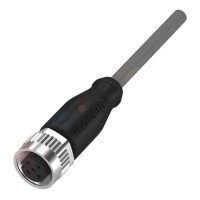
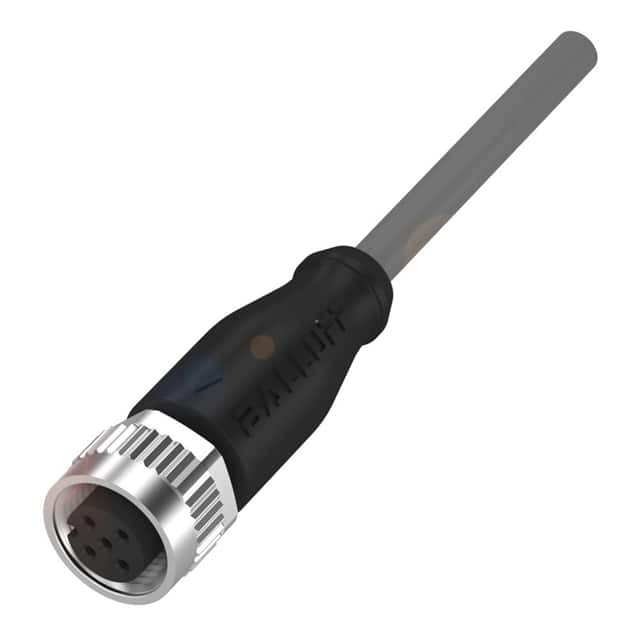
This reliability and quality guide addresses the Balluff BCC0AN9, a 5-position female connector cable assembly measuring 32.8 feet (10 meters). As a critical interconnect component in industrial automation, its reliability directly impacts system uptime and safety. The following sections outline key considerations for professional electronics procurement.
Reliability Standards and Qualifications
The BCC0AN9 is manufactured by Balluff, a supplier known for adhering to international quality standards. This cable assembly is typically qualified under ISO 9001:2015 for quality management systems and IEC 60068 for environmental testing. Specific qualifications may include resistance to vibration (per IEC 60068-2-6) and mechanical shock (IEC 60068-2-27). For industrial use, the cable likely meets UL 2237 or CSA C22.2 for connector safety. It is essential to request a Certificate of Conformance (CoC) and verify that the component meets relevant IP67 or IP68 ingress protection ratings, as Balluff typically designs these cables for harsh environments.
Accelerated Life Testing and Results Interpretation
Accelerated life testing (ALT) for this cable assembly typically involves temperature cycling (e.g., -40°C to +85°C) and humidity exposure (e.g., 85% RH at 85°C) to simulate years of thermal stress. Mechanical ALT includes repeated mating cycles (often 100-500 cycles) and flex testing of the cable jacket. Results are analyzed using the Arrhenius model to estimate service life. For example, if ALT shows no failures after 1,000 hours at 85°C, the equivalent life at 40°C may be calculated as 10+ years. However, these models assume constant failure rate, so verify that tests include failure mode analysis (e.g., connector pin corrosion or cable jacket cracking).
Failure Rate Calculations (FIT Rates) and MTBF
Failure In Time (FIT) rates for the BCC0AN9 are typically derived from MIL-HDBK-217F or Telcordia SR-332 standards. For a passive interconnection component, the FIT rate is often low, around 10-50 FIT (failures per 10^9 hours) under standard conditions (40°C, ground benign). This translates to a Mean Time Between Failures (MTBF) of 20,000,000 to 100,000,000 hours. However, actual field MTBF may be lower due to connector wear, mechanical stress, or environmental factors. Always request manufacturer-provided FIT data and note that MTBF is not a guarantee of service life; it is a statistical metric for reliability prediction in large populations.
Environmental Stress Screening and Burn-In Procedures
For this cable assembly, environmental stress screening (ESS) typically includes thermal cycling (e.g., 10 cycles from -40°C to +85°C) and random vibration (5-500 Hz, 2-5g) to precipitate latent defects. Burn-in procedures for cables are less common than for electronics, but a short voltage withstand test (e.g., 500V DC for 1 minute) is recommended to detect insulation flaws. For high-reliability applications, consider a preconditioning step where the cable is flexed 50-100 cycles to identify early-life failures in the connector crimps or solder joints.
Counterfeit Detection Methods Specific to This Component Type
Counterfeit detection for cable assemblies requires careful visual and electrical inspection. Key methods include: visual inspection for inconsistent labeling, poor molding, or non-standard color coding of wires; dimensional verification of the connector housing (e.g., pin pitch and shell diameter) against Balluff drawings; electrical continuity testing for all five positions with proper pin-to-wire mapping; and insulation resistance measurement (e.g., >100 Mohm at 500V). For high-risk procurement, use X-ray fluorescence (XRF) to verify metal composition of connector contacts (expect gold or nickel plating). Request a Certificate of Authenticity from Balluff authorized distributors.
Incoming Inspection Best Practices
Upon receipt, implement a sampling plan per ANSI/ASQ Z1.4 (normal or tightened inspection). Key checks include: visual and dimensional inspection for damage, burrs, or misalignment; continuity and short-circuit testing on all five pins; insulation resistance testing (e.g., >100 Mohm at 500V); and cable length verification (32.8 ft ± 1%). For mission-critical use, perform a dielectric withstand test (e.g., 1,000V AC for 1 minute) to ensure cable jacket integrity. Document all results with lot traceability.
Storage and Handling Requirements to Maintain Reliability
Store the BCC0AN9 in a clean, dry environment with temperature between -20°C and +60°C and relative humidity below 85%. Avoid direct sunlight, ozone, or corrosive chemicals that may degrade the cable jacket (typically PVC or PUR). For long-term storage (over 1 year), use anti-static bags and label with storage date. Handle by the connector bodies, not the cable, to avoid stress on termination points. Coil cables loosely (minimum bend radius of 5x cable diameter) to prevent kinking. For field installation, use proper strain relief and torque connectors to manufacturer specifications.
End-of-Life Management and Obsolescence Planning
Plan for potential obsolescence by maintaining a minimum 2-year stock buffer based on consumption rates. Balluff typically provides product lifecycle notices (e.g., 12-18 months before discontinuation). For long-life systems, qualify a form-fit-function replacement from Balluff or a third-party supplier, ensuring same pinout (5 positions, female) and cable length. Document last-time buy (LTB) deadlines and consider design-for-obsolescence by using modular connectors or adapters. For legacy systems, maintain a repair and refurbishment plan for connectors, including replacement of worn contacts or cable sections.