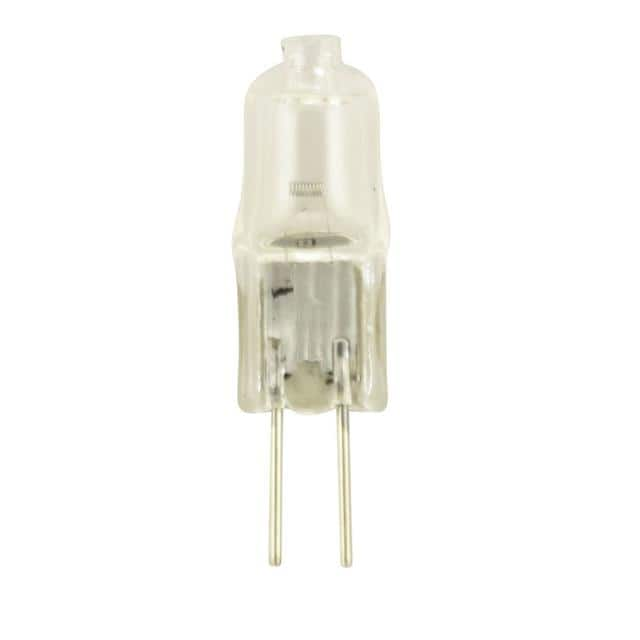
M3302DM Replacement: A Reliability Guide for Swift WW-58C0-6
When considering the REPLACEMENT FOR SWIFT M3302DM (Brand: Interlight, SKU: WW-58C0-6), a component used in professional electronic systems, reliability and quality assurance must be approached with rigorous standards. This guide covers critical areas to ensure the component meets performance expectations over its intended lifecycle.
Reliability standards and qualifications for this component should be aligned with industry-recognized frameworks such as JEDEC, IPC, and MIL-STD. Given that it is a replacement part for an original Swift model, the Interlight offering must be qualified to at least the same level as the original. Key qualifications include JEDEC JESD47 for stress-test-driven qualification, which covers temperature cycling, humidity bias, and solder heat resistance. Additionally, IPC-9592 for power conversion devices may apply if the M3302DM is part of a power management circuit. Ensure the component's datasheet explicitly states compliance with these standards, or request a qualification test report from Interlight.
Accelerated life testing (ALT) is essential to predict long-term reliability. For this component, typical ALT conditions include elevated temperature (e.g., 125°C to 150°C) and voltage stress (e.g., 1.2x to 1.5x rated voltage) applied for 1000 to 2000 hours. The results, often expressed as activation energy (Ea) and time-to-failure distributions, allow extrapolation to normal operating conditions using the Arrhenius model. A common Ea value for semiconductor devices is 0.7 eV. If ALT results show a median life of 5000 hours at 125°C, the estimated life at 55°C could exceed 100,000 hours. However, such projections require careful interpretation of the acceleration factor, which varies with temperature and voltage.
Failure rate calculations involve FIT (Failures In Time) rates and MTBF (Mean Time Between Failures). For the Interlight replacement, request a FIT rate per MIL-HDBK-217F or Telcordia SR-332. Typical FIT rates for similar components range from 10 to 100 FIT (failures per 10^9 hours). MTBF is the inverse of the failure rate (e.g., 10 FIT equals 100,000,000 hours MTBF). However, MTBF for non-repairable systems is often misleading; instead, focus on B10 life (time at which 10% of units fail) from ALT data. For professional procurement, demand a reliability prediction report that accounts for operating temperature, duty cycle, and voltage derating.
Environmental stress screening (ESS) and burn-in procedures are critical to weed out infant mortality. For this component, recommend a burn-in at 85°C and 85% relative humidity for 168 hours under nominal voltage, followed by functional testing. ESS may include temperature cycling (-40°C to 85°C for 100 cycles) and vibration testing (5g RMS random vibration for 1 hour per axis). These screens should be applied to 100% of units destined for high-reliability applications (e.g., medical, aerospace). Document the pass/fail criteria, such as leakage current < 1 µA or output voltage drift < 2%.
Counterfeit detection methods are vital for this replacement component, as Interlight is a third-party supplier. Start with visual inspection for inconsistencies in marking, laser etching, or mold flash. Use X-ray fluorescence (XRF) to check lead-free compliance and detect non-standard materials. Scanning acoustic microscopy (SAM) can reveal internal delamination or voids. For electrical testing, compare IV curves on a curve tracer to known good samples. If the component is an IC, perform decapsulation and die inspection to verify foundry markings. Always request a Certificate of Conformance (CoC) with lot traceability from Interlight, and cross-reference against original Swift datasheets.
Incoming inspection best practices should follow ANSI/ESD S20.20 standards. Upon receipt, visually inspect packaging for tampering or moisture damage. Use a programmable multimeter or LCR meter to measure key parameters (e.g., resistance, capacitance, or threshold voltage) against datasheet limits. For active components, functional test at 25°C, 0°C, and 70°C to verify performance over temperature. Sample size per MIL-STD-1916 or ANSI/ASQ Z1.4 should be at least 20 units or 10% of lot (whichever is larger) for critical parameters. Document all results with a First Article Inspection (FAI) report.
Storage and handling requirements must maintain reliability. Store this component in ESD-safe bags or trays at 15-25°C and 30-60% relative humidity. If it is moisture-sensitive (per IPC/JEDEC J-STD-020), ensure a Moisture Barrier Bag (MBB) with desiccant and humidity indicator card. For semiconductor devices, bake at 125°C for 24 hours if the card shows >20% humidity. Avoid exposure to UV light and volatile organic compounds (VOCs). Implement a first-expiry-first-out (FEFO) inventory system, and limit shelf life to 2 years from date of manufacture unless requalified.
End-of-life management and obsolescence planning require proactive strategies. Since the Swift M3302DM is a replacement part, the original may have been discontinued. Request a Product Change Notification (PCN) from Interlight for any revisions. For long-term programs, secure a last-time buy (LTB) with a 2-5 year supply. Alternatively, source from a qualified aftermarket supplier with a reliability track record. Develop a risk mitigation plan that includes a form, fit, and function (FFF) replacement from multiple vendors. Regularly monitor obsolete component databases (e.g., SiliconExpert or IHS Markit) for updates. Finally, maintain a reliability test database for the Interlight replacement to track field returns and adjust qualification criteria over time.