MEMS Oscillators Revolutionize 155.52MHz LVPECL Timing: Industry Insights
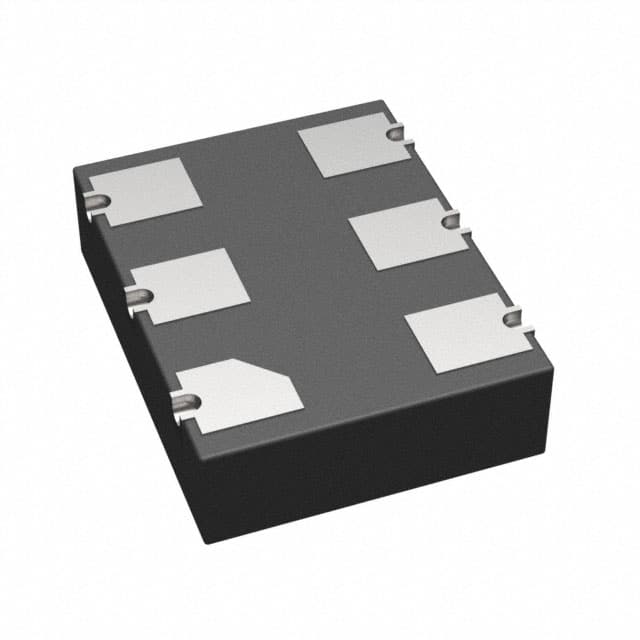
In the rapidly evolving landscape of high-performance electronics, the precision timing component market is undergoing a significant transformation, with MEMS (Micro-Electromechanical Systems) oscillators steadily displacing traditional quartz-based solutions. A prime example of this shift is the SiTime SIT9365AI-1B3-28E155.520000, a 155.5200 MHz LVPECL oscillator. This specific SKU is not just a component; it is a bellwether for the industry’s move toward greater reliability, smaller footprints, and enhanced performance in demanding applications.
The Technology Behind the Component: Resilience and Precision
The SIT9365AI leverages SiTime’s proprietary MEMS resonator technology, which is a fundamental departure from quartz crystal oscillators. Instead of relying on a mechanically vibrating quartz crystal, this device uses a silicon MEMS resonator that is photolithographically defined. This manufacturing process offers inherent advantages: superior resistance to shock and vibration, a wider operating temperature range, and dramatically improved reliability. The 155.5200 MHz frequency is critical for high-speed data communications, particularly in Synchronous Optical Networking (SONET) and Ethernet standards. The LVPECL (Low-Voltage Positive Emitter-Coupled Logic) output ensures low jitter and fast rise/fall times, which are essential for maintaining signal integrity in 10GbE and 100GbE networks. Recent innovations in this space, particularly from SiTime, include TurboCompensation™ and TempFlat™ technologies, which actively calibrate the oscillator in real-time to deliver industry-best stability over temperature, rivaling even high-end quartz OCXOs (Oven-Controlled Crystal Oscillators) in many performance metrics.
Market Trends and Demand Drivers
Demand for components like the SIT9365AI is being propelled by several macro trends. The relentless expansion of data center bandwidth, driven by AI and cloud computing, requires precise clocking for switches, routers, and line cards. The 5G infrastructure buildout, particularly in small cells and baseband units, creates a massive need for low-jitter, high-frequency oscillators that can withstand outdoor environmental stress. Additionally, the industrial Internet of Things (IIoT) and edge computing demand components that combine high performance with small size and low power consumption. We are observing a clear market shift away from traditional quartz for new designs, especially when engineers are specifying frequencies above 100 MHz and require LVPECL or LVDS output formats. The primary driver is that MEMS offers a single, programmable platform that can cover a wide range of frequencies and voltages, simplifying inventory management.
Supply Chain Dynamics: Global Sourcing and Lead Times
The supply chain for MEMS oscillators is structurally different from that of quartz. While quartz relies on specialized crystal growing and cutting processes with long lead times, MEMS oscillators are manufactured using standard semiconductor fabrication (CMOS) processes. This gives suppliers like SiTime a distinct advantage. Following the global chip shortage of 2020-2022, lead times for MEMS oscillators have normalized significantly faster than for quartz. Currently, lead times for the SIT9365AI are typically 8 to 12 weeks for standard configurations, compared to 16-26 weeks for many quartz-based equivalents. Pricing, however, has seen some upward pressure due to rising silicon wafer costs and packaging substrate shortages. However, the long-term pricing outlook is favorable for MEMS. As volumes increase and process nodes mature, MEMS oscillators are expected to achieve parity with, or even undercut, quartz pricing for high-frequency, high-performance parts. The key risk in the supply chain is not the MEMS resonator itself, but the advanced packaging (e.g., hermetic ceramic packages) and the availability of high-speed ASICs used for the compensation circuitry.
Emerging Applications Driving New Demand
Beyond traditional telecom and networking, new applications are creating incremental demand for the SIT9365AI’s specific performance profile. Automotive ADAS (Advanced Driver-Assistance Systems) and autonomous driving platforms require extremely reliable, low-jitter clocks for high-speed sensor fusion (LIDAR, RADAR, cameras) and in-vehicle Ethernet backbones. The MEMS oscillator’s robustness against vibration and thermal shock makes it ideal for under-hood and chassis-mounted modules. Another burgeoning area is high-precision test and measurement equipment, where the 155.52 MHz frequency is a standard reference for jitter analysis and bit error rate testing. Furthermore, aerospace and defense electronics, which previously relied exclusively on expensive, screened quartz, are now qualifying MEMS oscillators due to their superior reliability (estimated 500 million hours MTBF) and ability to operate in high-G environments.
Technology Roadmap: What’s Next for MEMS Oscillators
The roadmap for this component category is aggressive. The next frontier is the integration of multiple output clocks into a single MEMS device, eliminating the need for multiple oscillators on a board. We are already seeing products that combine a high-frequency core (like 155.52 MHz) with lower-frequency outputs for system management. Future innovations will focus on sub-100 femtosecond (fs) RMS jitter performance, which would allow MEMS to compete directly with the best SAW (Surface Acoustic Wave) and quartz OCXOs. Additionally, we anticipate the development of MEMS-based programmable clock generators that can replace entire crystal oscillator can banks. For the specific LVPECL segment, expect to see lower power consumption (sub-100 mW) and smaller package sizes (2.0 x 1.6 mm) while maintaining high frequency stability.
Impact of Industry Regulations
Compliance is a non-negotiable factor in component selection. The SIT9365AI, like all SiTime products, is fully RoHS (Restriction of Hazardous Substances) and REACH (Registration, Evaluation, Authorisation and Restriction of Chemicals) compliant. This is a given for modern semiconductor components. However, the critical regulatory trend is the push for automotive qualifications. The industry standard for automotive-grade components is AEC-Q100. Many MEMS oscillators, including the SIT9365AI family, are now available with AEC-Q100 qualification (Grade 2 or Grade 1). This certification is becoming a mandatory requirement for any component entering the automotive supply chain, and procurement teams must verify that the specific part number suffix includes the automotive qualification. For the SIT9365AI, ensure the suffix denotes the appropriate automotive grade if the end application is a vehicle. This regulatory shift is a strong tailwind for MEMS, as quartz oscillators often require costly and time-consuming additional screening to meet AEC-Q100 standards.
Strategic Recommendations for Procurement Teams
For procurement professionals sourcing the SIT9365AI or similar high-frequency MEMS oscillators, a proactive strategy is essential. First, prioritize design-in of MEMS over quartz for all new projects, especially those requiring frequencies above 100 MHz. This reduces supply chain risk and often yields a lower total cost of ownership due to fewer field failures. Second, negotiate annual blanket purchase agreements with authorized distributors. While lead times are stable, securing a guaranteed allocation for high-volume SKUs like the 155.52 MHz LVPECL variant provides price protection and supply assurance. Third, leverage the programmable nature of MEMS. Work with your engineering teams to identify a single, programmable SiTime device that can be used across multiple projects to reduce SKU complexity. Finally, monitor the AEC-Q100 qualification status if your company has any exposure to automotive or industrial markets, as this certification will become a gatekeeper for future business. By adopting a MEMS-first strategy, procurement teams can secure a more resilient, predictable, and high-performance supply chain for the critical timing needs of next-generation electronics.