Innovations in Flux Gate Residual Current FG-R01-4A: Industry Insights
Navigating Precision: The Strategic Value of KEMET’s FG-R01-4A Flux Gate Residual Current Sensor
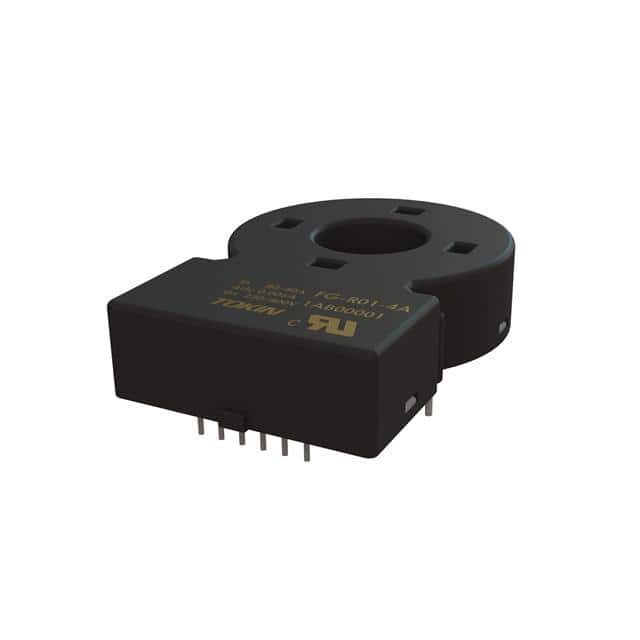
In the evolving landscape of electrical safety and monitoring, the flux gate type residual current sensor has emerged as a critical component for applications demanding high precision and reliability. The KEMET FG-R01-4A, a standout product in this niche, exemplifies the convergence of advanced magnetics and robust packaging. Understanding the technology, market forces, and supply chain realities surrounding this component is essential for procurement teams aiming to secure a competitive edge.
Technology and Innovation in Flux Gate Residual Current Sensing
The FG-R01-4A leverages the flux gate principle, which offers exceptional sensitivity to residual currents—down to the milliampere range—without the drift or temperature sensitivity issues common in Hall-effect or shunt-based sensors. Recent innovations in this category have focused on miniaturization and integration. KEMET has refined the FG-R01-4A’s core material and winding geometry to reduce size while maintaining a wide dynamic range. The use of a closed-loop flux gate design minimizes hysteresis and provides a linear output, crucial for real-time monitoring in smart grid and EV charging infrastructure. Additionally, advancements in ASIC technology have allowed for direct digital interfaces, simplifying system integration and reducing external component count.
Market Trends and Demand Drivers
The demand for flux gate residual current sensors like the FG-R01-4A is being propelled by multiple macro-trends. First, the rapid electrification of transportation—particularly electric vehicle (EV) onboard chargers and DC fast-charging stations—requires high-precision ground fault detection to ensure user safety. Second, the expansion of renewable energy micro-inverters and battery storage systems demands reliable residual current monitoring to prevent fire hazards. Third, industrial automation and robotics are adopting more sensitive leakage detection to protect sensitive electronics and comply with stringent safety norms. The global push for enhanced electrical safety standards, especially in Europe (e.g., VDE-AR-N 4100) and China (GB/T standards), is further accelerating adoption. As a result, the market for flux gate sensors is projected to grow at a compound annual growth rate (CAGR) exceeding 10% through 2028.
Supply Chain Dynamics: Sourcing, Lead Times, and Pricing
The supply chain for flux gate components like the FG-R01-4A remains constrained by the specialized nature of the raw materials—particularly high-permeability amorphous or nanocrystalline cores. Global sourcing is concentrated in a few key regions, with Japan, Germany, and China dominating core manufacturing. Lead times for the FG-R01-4A have stabilized after a period of volatility during the 2021-2023 semiconductor crisis, currently averaging 12 to 16 weeks for standard orders. However, custom variants or high-volume commitments may extend to 20 weeks. Pricing has seen upward pressure due to inflation in cobalt and nickel used in alloy cores, as well as rising energy costs in manufacturing. We expect a moderate 3-5% price increase annually over the next two years, driven by demand and raw material volatility. Procurement teams should lock in fixed-price contracts for 6-12 months to mitigate risk.
Emerging Applications Driving New Demand
Beyond traditional AC residual current monitoring, the FG-R01-4A is finding new life in DC microgrids and solid-state transformers. In these environments, the ability to detect both AC and DC residual currents (Type B or Type B+ protection) is critical. Another emerging application is in medical equipment, where ultra-low leakage current detection is required for patient safety in devices like MRI machines and ventilators. Additionally, the rise of building energy management systems (BEMS) is integrating flux gate sensors for predictive maintenance, detecting insulation degradation before it leads to failures. These use cases demand the FG-R01-4A’s high bandwidth and low offset, differentiating it from lower-cost alternatives.
Technology Roadmap: What’s Next for Flux Gate Sensors
The roadmap for flux gate residual current sensors points toward greater intelligence and connectivity. KEMET and competitors are developing sensors with embedded diagnostics, such as self-calibration and fault logging, using I²C or SPI interfaces. The next generation will likely integrate temperature and voltage monitoring on-chip, reducing PCB space. Another frontier is the use of MEMS-based flux gate structures, which could drastically shrink footprint to SMD packages, enabling integration into compact power modules. Furthermore, improvements in core materials—such as nanocrystalline ribbons with lower coercivity—promise to extend the detection range down to microamps. These advancements will make flux gate sensors more accessible for consumer-grade applications like smart plugs and power strips.
Impact of Industry Regulations
Compliance with RoHS and REACH is a given for the FG-R01-4A, as KEMET ensures all materials are free from restricted substances like lead, mercury, and phthalates. However, the automotive sector introduces additional hurdles. The FG-R01-4A is designed to meet AEC-Q200 qualifications, including rigorous thermal shock, vibration, and humidity testing. This qualification is becoming a non-negotiable requirement for EV charging station OEMs. Emerging regulations like the EU’s Ecodesign for Sustainable Products Regulation (ESPR) are also pushing for longer product lifetimes and recyclability. For procurement, verifying that the FG-R01-4A holds current automotive-grade certifications (e.g., IATF 16949) is essential to avoid costly redesigns.
Strategic Recommendations for Procurement Teams
Given the specialized nature of the FG-R01-4A, procurement should adopt a proactive strategy. First, forecast demand at least 12 months out and place non-cancellable, non-returnable (NCNR) orders to secure allocation. Second, engage with KEMET’s authorized distributors for early access to engineering samples of next-generation variants, enabling faster time-to-market for new product lines. Third, diversify suppliers by qualifying secondary sources for the core material, even if the final sensor remains single-sourced. Fourth, invest in buffer inventory for high-priority programs, as lead times can spike during peak EV production cycles. Finally, negotiate price escalation clauses tied to raw material indices (e.g., nickel or cobalt) to protect margins. By understanding the technology and market dynamics, procurement can transform this component from a commodity buy into a strategic asset.