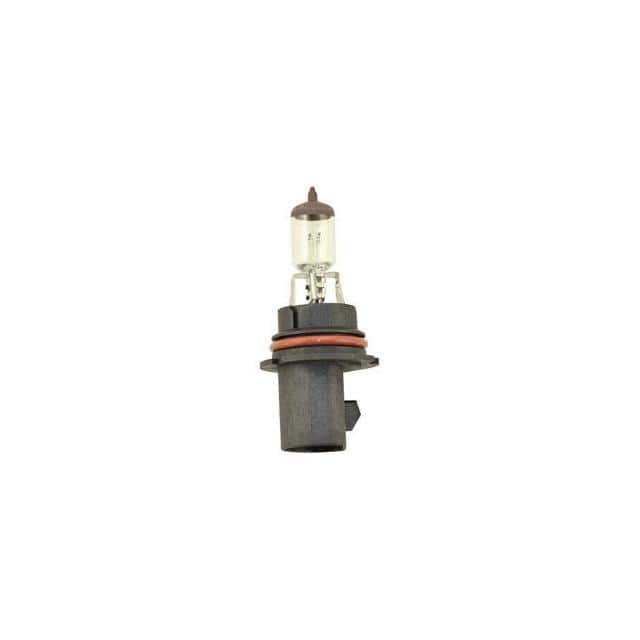
MAX Reliability: MINIATURE HB1 12.8V 45/65W Guide
When evaluating the MINIATURE HB1 12.8V 45/65W component from Interlight (SKU: 10PAK:WW-VEQX-4), a procurement professional must consider its specific application as a dual-filament halogen headlamp bulb. Reliability standards for this component are typically governed by automotive industry regulations, such as SAE J1383 and ECE R37, which define photometric performance, durability, and mechanical fit. Additionally, the manufacturer should meet ISO 9001 or IATF 16949 quality management systems to ensure consistent production. Qualification testing under these standards includes vibration resistance, thermal cycling, and moisture ingress protection, all critical for a component exposed to harsh vehicle environments.
Accelerated life testing (ALT) is essential to predict the operational lifespan of the HB1 bulb. Tests often involve voltage overstress (e.g., 14.5V continuous), rapid thermal cycling between -40°C and +125°C, and high-frequency vibration simulating road conditions. Results from ALT are used to estimate a baseline lifetime under normal conditions—typically 500 to 1,000 hours for halogen bulbs. A failure analysis of ALT outcomes, such as filament breakage or glass envelope cracking, helps identify weak points in the design or manufacturing process. Procurement teams should request ALT data from Interlight to verify that the 45/65W rating meets expected performance under real-world electrical and thermal stresses.
Failure rate calculations for this component are often expressed in FIT (Failures In Time) rates, where one FIT equals one failure per billion hours of operation. For a halogen bulb, FIT rates are influenced by filament temperature, vibration, and voltage fluctuations. A typical FIT rate for a well-manufactured HB1 bulb might range from 100 to 500 FITs, but this can vary widely. Mean Time Between Failures (MTBF) is less applicable here due to the bulb’s wear-out failure mode (not random failures); instead, Mean Time To Failure (MTTF) is more appropriate, often calculated as the reciprocal of the failure rate. For procurement, understanding that halogen bulbs exhibit a bathtub curve with early infant mortality and eventual wear-out is key to planning replacement cycles.
Environmental stress screening (ESS) and burn-in procedures are critical to weed out early failures. For the HB1 bulb, burn-in typically involves powering the bulb at 13.5V to 14.0V for 10 to 30 minutes, cycling the high and low beams (45W and 65W) to detect filament defects, poor welds, or gas leakage. Temperature cycling from -20°C to +85°C in a non-powered state further exposes seal weaknesses. ESS data should show a failure rate below 0.1% to 0.5% after screening, indicating a robust process. Reject any lot where burn-in failures exceed 1% as this suggests material or assembly issues.
Counterfeit detection is paramount for automotive lighting components, as fake bulbs can cause safety hazards and legal non-compliance. For the Interlight HB1, verify the packaging and bulb markings: authentic units have clear laser-etched part numbers, voltage/ wattage ratings (12.8V, 45/65W), and a manufacturer logo. Weigh the bulb and measure dimensions precisely; counterfeits often have lighter glass or imprecise filament placement. Perform a spectral analysis using a spectrometer to ensure the light output matches halogen color temperature (around 3,200K). X-ray inspection can reveal internal filament alignment and welds—counterfeits may show irregular or missing filament supports. Cross-reference the lot number with Interlight’s database to confirm traceability.
Incoming inspection best practices should include a sampling plan per ANSI/ASQ Z1.4 (AQL 0.65 for critical defects, 1.0 for major). Check for physical damage like cracks in the glass envelope, bent base pins, or discoloration. Electrical testing at 12.8V must measure current draw: approximately 3.5A for the low beam (45W) and 5.1A for the high beam (65W), with a tolerance of ±5%. Photometric testing using a goniometer ensures beam pattern compliance to SAE J1383. Document all results and reject lots exceeding defect thresholds.
Storage and handling directly affect reliability. Store HB1 bulbs in a clean, dry environment at 15°C to 30°C with relative humidity below 60%. Avoid direct sunlight and high temperatures, which can degrade the halogen gas fill. Use anti-static packaging to prevent electrostatic discharge damage to the base. Handle bulbs with clean gloves to avoid oil contamination on the glass, which causes hot spots and premature failure. Never touch the quartz envelope with bare hands; use the base only during installation.
End-of-life management and obsolescence planning require proactive monitoring. Halogen bulbs are being phased out in some regions due to LED and HID alternatives. For the Interlight HB1, maintain a 12- to 24-month safety stock based on forecasted demand. Identify second-source suppliers for the same form factor and electrical specs. Plan for a transition to LED equivalents, but verify compatibility with the vehicle’s electronic control units, as LEDs may require load resistors. Establish a last-time buy trigger at 18 months before manufacturer discontinuation and audit Interlight’s obsolescence policy to ensure they provide a 90-day notice. Engage with the supplier for failure analysis feedback to improve future procurement strategies.