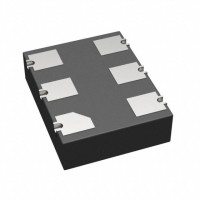
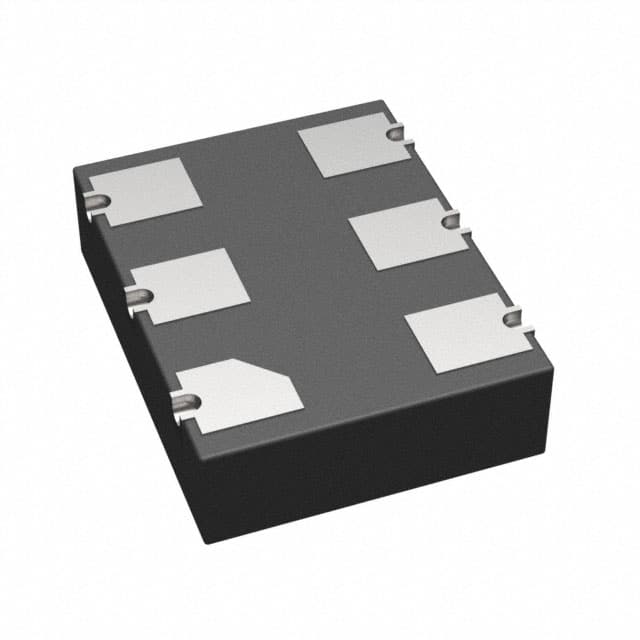
MEMS VCXO Reliability: 345.6MHz HCSL Oscillator Guide
When procuring the SiTime SIT3373AC-4B3-30NH345.600000, a MEMS-based VCXO operating at 345.6000 MHz with HCSL output, rigorous reliability and quality assurance are paramount. This guide addresses critical areas for professional electronics procurement, focusing on the unique attributes of silicon MEMS (Micro-Electro-Mechanical Systems) oscillators compared to traditional quartz-based devices.
Reliability Standards and Qualifications: This component is typically qualified to the AEC-Q100 standard for automotive-grade integrated circuits, which is more stringent than the generic JEDEC standards applied to many quartz oscillators. Key qualifications include JESD22-A104 for temperature cycling, JESD22-A103 for high-temperature storage life (HTSL), and JESD22-A102 for biased highly accelerated stress testing (HAST). For the 345.6000 MHz HCSL variant, specific attention is paid to phase noise stability under thermal and mechanical stress. Always request the manufacturer's Qualification Test Report to verify that the specific package (likely a 3.2x2.5mm or 5.0x3.2mm) has passed these tests without parametric drift.
Accelerated Life Testing (ALT) and Results: SiTime leverages its MEMS First™ process, which involves hermetic wafer-level packaging. ALT is performed using High-Temperature Operating Life (HTOL) at 125°C for 1000 hours, with a typical activation energy (Ea) of 0.7 eV for MEMS structures. The results indicate that the frequency stability across the -40°C to +85°C range should not degrade more than ±25 ppm over 20 years. The Arrhenius model is used to extrapolate: for every 10°C increase in operating temperature, the aging rate doubles. A successful ALT shows zero catastrophic failures and less than 1 ppm frequency shift, confirming the device's intrinsic reliability against stiction or fatigue in the MEMS resonator.
Failure Rate Calculations (FIT) and MTBF: SiTime provides FIT (Failures in Time) rates per Telcordia SR-332 or MIL-HDBK-217F. For the SIT3373 series, typical FIT rates are in the 0.5 to 1.0 FIT range (1 FIT = 1 failure per 109 hours) at 55°C and 50% electrical stress. This translates to a Mean Time Between Failures (MTBF) of approximately 1.0 to 2.0 billion hours. It is critical to note that these figures assume a steady-state failure rate after burn-in, and the MEMS structure has a negligible wear-out mechanism compared to quartz. Always request the FIT report with the specific confidence level (usually 60% or 90%) and the calculation method used.
Environmental Stress Screening (ESS) and Burn-In: Unlike quartz oscillators, MEMS VCXOs are less susceptible to mechanical shock and vibration, but they require specific ESS. A typical burn-in procedure is dynamic burn-in at 125°C for 168 hours with the output loaded and the control voltage (Vc) swept. This screens for infant mortality in the CMOS ASIC and the MEMS resonator's hermetic seal. Temperature cycling from -55°C to +125°C for 10 cycles is recommended to expose package interconnect defects. For HCSL output, monitor for jitter degradation and duty cycle distortion during screening, as these are common failure modes under thermal stress.
Counterfeit Detection Methods: Given the high performance and cost of this 345.6000 MHz VCXO, counterfeit risks include remarking of slower devices or substitution with non-MEMS oscillators. Key detection steps include:
- X-Ray Inspection: Authentic SiTime MEMS oscillators show a distinct, small MEMS die (typically <1mm²) and a larger ASIC die inside the package. Counterfeits may show a single quartz blank or a different die layout.
- Acoustic Microscopy (C-SAM): Verifies the hermetic seal at the wafer level. Any delamination indicates a repackaged or damaged component.
- Electrical Test: Measure frequency pull range (absolute pull range, APR) at nominal Vc (1.65V). Counterfeits often fail to meet the ±1600 ppm pull range specified for the SIT3373.
- Visual Inspection: Check for laser marking quality, inconsistent date codes, or pinholes in the package. SiTime uses a specific font and logo that is difficult to replicate.
Incoming Inspection Best Practices: Upon receipt, perform the following:
- Sample Electrical Test: Using a spectrum analyzer or time interval analyzer, verify frequency accuracy (within ±10 ppm at 25°C), output voltage swing (HCSL: 700-900 mV peak-to-peak), and rise/fall times (typically < 500 ps).
- Phase Noise Measurement: At 12 kHz offset, the phase noise should be better than -140 dBc/Hz. Any significant deviation suggests a counterfeit or damaged unit.
- Thermal Shock: Subject a small sample (e.g., 3-5 pieces) to 5 cycles of -40°C to +85°C with a 30-minute dwell. Measure frequency before and after; a shift greater than ±5 ppm indicates a reliability risk.
- Moisture Sensitivity Level (MSL): Verify the MSL level (typically MSL 1 for SiTime MEMS). If the packaging is damaged, bake the components at 125°C for 24 hours before reflow.
Storage and Handling Requirements: To maintain reliability, store in a dry, nitrogen-purged environment at 15°C to 35°C and <30% relative humidity. Since the package is hermetic, it is not moisture-sensitive, but ESD precautions are critical—the component is Class 1C (1000V to 2000V HBM). Use conductive trays or antistatic bags. Avoid exposing the device to ultrasonic cleaning or high-pressure water, as the MEMS structure can be damaged by resonant frequencies. If rework is required, use a hot air nozzle with a temperature profile not exceeding 260°C peak for less than 10 seconds.
End-of-Life Management and Obsolescence Planning: SiTime generally issues a Product Change Notification (PCN) at least 12 months before discontinuation, but for a 345.6000 MHz VCXO, the risk is moderate due to its niche application. To mitigate obsolescence:
- Maintain a 2-year buffer stock based on average consumption, as replacement parts may require redesign of the PCB layout or power supply filtering.
- Identify second-source alternatives from SiTime's own portfolio (e.g., SIT3372 for different supply voltage) or other MEMS manufacturers, but verify that the HCSL output and pull range are identical.
- Request lifecycle status directly from SiTime or an authorized distributor. If the part enters "Last Time Buy" status, secure a final purchase order and consider a lifetime buy analysis using the component's FIT rate to estimate spares.
- For legacy systems, plan for a drop-in replacement qualification at least 18 months before the end-of-life date, including full electrical and environmental re-testing.