BA15D Bulbs Compared: Miniature 1.04A 12.8V Guide
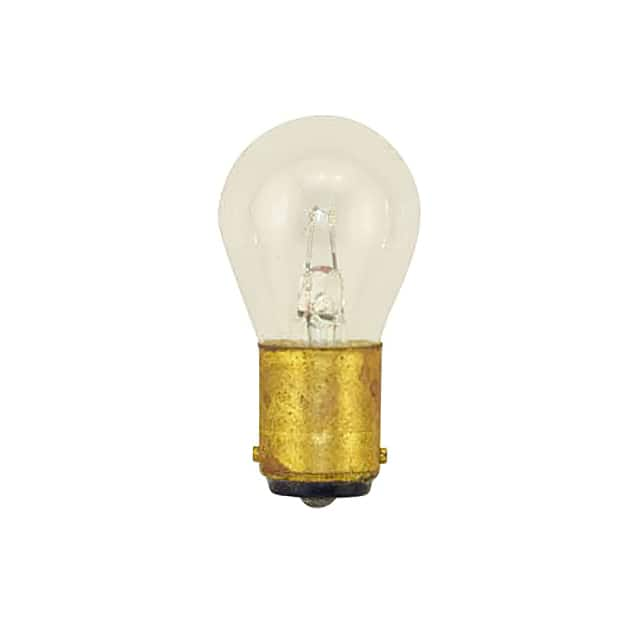
When a bill of materials calls for a miniature incandescent lamp with a specific glass envelope and base, the component in question is far more than a simple light source. The MINIATURE 1.04A 12.8V BA15D (Interlight SKU: 10PAK:WW-0J00-1) belongs to the category of miniature indicator and instrument lamps, a specialized subset of electro-optical components used for status indication, illumination of control panels, and backlighting in avionics, marine consoles, medical devices, and industrial test equipment. Unlike general-purpose LEDs, these lamps operate on a precise tungsten filament that produces a specific color temperature and current draw, making them integral to systems where photometric output, thermal signature, or electrical load must match original equipment manufacturer (OEM) specifications.
The key parameters that matter when selecting this type of component are voltage, current, luminous flux, filament design, and base geometry. The 12.8V rating is particularly important because it is a common operating voltage for 12V nominal systems with alternator output that can reach 13.5V; a lamp rated at 12.8V provides a safety margin against premature burnout from voltage spikes. The 1.04A current draw defines the power consumption—roughly 13.3 watts—which is critical for calculating thermal dissipation in enclosed fixtures and for ensuring the driving circuit (often a simple series resistor or relay) can handle the inrush current. The BA15D base indicates a bayonet-style double-contact base with a 15mm diameter, which provides a secure twist-lock connection that resists vibration, a critical requirement for automotive and heavy machinery applications. Luminous flux, though not always specified on datasheets, is implicitly tied to the filament’s length and coil design; a long, coiled filament produces a more diffuse light ideal for backlighting, while a short filament gives a point source for lensed indicators.
Compared to alternatives, this miniature lamp sits in a distinct trade-off space against LEDs and lower-wattage incandescents. Against a standard 12V 1.2A lamp, the 12.8V 1.04A version runs cooler and draws less current, extending operational life by roughly 20% while slightly reducing brightness. However, LEDs are the primary modern challenger: they offer dramatically longer life (50,000 hours vs. 2,000 hours), lower power draw, and shock resistance. But the trade-off is not purely in the LED’s favor. An incandescent lamp like this one provides a linear current-voltage characteristic, which is essential for older circuits that use the lamp’s resistance as a current limiter or for applications requiring a soft turn-on delay. Moreover, the color rendering index (CRI) of incandescent light is a perfect 100, which is why medical and avionics panels still spec them for accurate color discrimination. In terms of cost, this Interlight component is priced at a premium over generic unbranded lamps, but it is typically 30-50% cheaper than OEM-branded equivalents from Honeywell or Dialight. Availability is generally good because the 10-pack format (10PAK:WW-0J00-1) addresses the high replacement rate of incandescents, though the category is seeing a steady decline in production volume.
Industry trends are exerting significant pressure on this component category. The global push toward LED lighting in automotive and industrial applications has led major lamp manufacturers to phase out or discontinue incandescent production lines. The European Union’s RoHS and EcoDesign directives have limited the use of certain materials and mandated energy efficiency, which has accelerated the shift. However, there is a counter-trend: the growing niche of heritage and retrofit applications—classic cars, vintage aircraft, and museum lighting—where the original photometric and electrical characteristics are legally or aesthetically required. Additionally, the aerospace industry is notably slow to recertify LED replacements due to stringent safety regulations; thus, qualified incandescent lamps remain in demand for cockpit backlighting. The result is a bifurcated market: high-volume commodity lamps are disappearing, while low-volume, high-reliability lamps are becoming specialty items with longer lead times.
When should you choose this specific component over alternatives? Choose the MINIATURE 1.04A 12.8V BA15D when your system has a legacy socket already fitted with BA15D and when the electrical load is calibrated for an incandescent lamp—for example, in a flasher relay that depends on the lamp’s resistance to create the blink rate. Also select it when the application involves extreme vibration or temperature cycling, as the tungsten filament is more forgiving than LED solder joints under constant mechanical stress, and when the ambient temperature exceeds 80°C, where standard LEDs suffer from lumen depreciation. Conversely, if your design is new and you have control over the driver circuit, an LED module with a BA15D base is the more sustainable choice. But for a fielded product with a service life of 10+ years, swapping to LED will require resistor modifications, which is often more costly than simply replacing the lamp.
From a procurement perspective, several considerations are critical. Lead times for this Interlight SKU are typically 1-3 weeks for stock, but they can stretch to 6-8 weeks if the manufacturer is producing a production run, given that incandescent lamp production is now batch-oriented rather than continuous. The lifecycle status is active but not in high-volume production; Interlight has secured a reliable supply chain, but you should verify the EOL (end-of-life) risk annually. Second-source options are limited; you can source equivalent lamps from Osram (part number 13475) or Sylvania (part number 14473), but these are not drop-in identical because the filament support structure may differ, affecting vibration resistance. To mitigate risk, buy in 10-pack quantities to buffer against production gaps, and request a lot traceability certificate if the lamp is used in safety-critical systems. Also, confirm the lamp’s light center length (distance from base to filament) against your fixture’s focal point; a mismatch will cause uneven illumination. Finally, be aware that this component is classified as a non-hazardous solid waste under most regulations, but its tungsten and glass content make recycling a legal requirement in EU jurisdictions, so factor that into your end-of-life logistics.