MEMS VCXO 148.425MHz: Industry Game-Changer in Timing
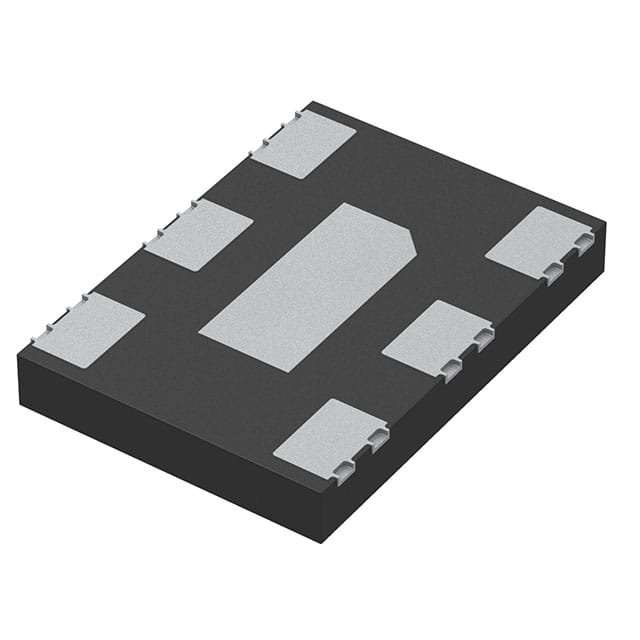
The precision timing industry is undergoing a significant transformation, moving away from legacy quartz-based solutions toward silicon MEMS (Micro-Electro-Mechanical Systems) technology. A prime example of this shift is the SiTime SIT3372AC-1E9-30NG148.425787, a MEMS VCXO (Voltage-Controlled Crystal Oscillator) operating at a specific frequency of 148.425787 MHz. This component is not just a commodity part; it represents a strategic pivot in how high-frequency, low-jitter clocking is achieved in demanding electronic systems.
Technology Behind the Component and Recent Innovations
Unlike traditional quartz crystal oscillators that rely on mechanical resonance of a sliced crystal, MEMS oscillators use a silicon-based resonator that is hermetically sealed and manufactured using standard semiconductor photolithography. The SIT3372 series leverages SiTime’s proprietary DualMEMS™ and TurboCompensation™ technologies. These innovations allow for a temperature-compensated architecture that delivers exceptional stability across -40°C to +85°C, without the frequency jumps or micro-jumps associated with quartz. The key differentiator is the integration of a programmable analog PLL (Phase-Locked Loop) in the IC, which allows this single component to support a wide range of frequencies—here, precisely 148.425787 MHz—while maintaining ultra-low phase noise. Recent innovations have focused on reducing supply current, shrinking package sizes (from 3.2x2.5mm down to 2.0x1.6mm), and improving long-term aging characteristics, making these parts superior in reliability and performance compared to their quartz predecessors.
Market Trends and Demand Drivers
The demand for high-frequency VCXOs is being driven by the insatiable need for higher data rates and lower latency. In networking equipment, the 148.425787 MHz frequency is often used in high-speed SerDes (Serializer/Deserializer) for 100GbE and 400GbE optical modules. The market is seeing a clear shift from standard clock ICs to precision oscillators that can provide "clean" clocks with sub-picosecond jitter. Another major driver is the industrial IoT sector, where devices require high reliability in harsh environments (vibration, shock, thermal cycling) where quartz is prone to failure. The shift is also propelled by the need for multi-frequency programmability; OEMs can now use a single PCB footprint with a single SKU to support multiple data rates, simplifying inventory and design flexibility.
Supply Chain Dynamics: Sourcing, Lead Times, and Pricing
The supply chain for MEMS timing is fundamentally different from that of quartz. Quartz relies on raw crystal materials from limited sources (primarily Japan and China) and has long, unpredictable lead times (often 16-20 weeks). In contrast, MEMS oscillators are produced on standard 200mm CMOS wafers, leveraging the vast semiconductor foundry ecosystem. This provides a significant supply chain resilience advantage. Current lead times for the SIT3372 series are trending at 8-12 weeks, which is stable and predictable. Pricing, while historically a premium over commodity quartz, is now reaching parity in the mid-to-high frequency ranges. The pricing outlook is favorable for buyers: as wafer volumes increase and the technology matures, we expect a steady 3-5% annual price decline for high-volume SKUs, whereas quartz pricing remains volatile due to raw material shortages and labor-intensive assembly.
Emerging Applications Driving New Demand
Beyond traditional telecom, the 148.425787 MHz VCXO is finding critical roles in autonomous vehicles (ADAS), particularly in LiDAR and high-resolution radar systems. These applications require extremely precise time synchronization for FMCW (Frequency Modulated Continuous Wave) signal processing. Additionally, the rise of Artificial Intelligence (AI) accelerators and high-performance computing (HPC) clusters demands low-jitter clocks to synchronize data between GPUs and memory controllers across multiple nodes. Another emerging area is aerospace and defense, where the MEMS oscillator’s resistance to high levels of g-force and vibration makes it ideal for drone guidance systems and satellite communication payloads, where a 148.425787 MHz reference ensures precise beamforming.
Technology Roadmap: What’s Next
The roadmap for MEMS VCXOs is clearly defined. The next generation will integrate fractional-N PLLs directly on-chip, enabling even more granular frequency synthesis without the need for external components. We are also seeing the convergence of oscillators and clock buffers into single "clock-system-on-chip" devices. Expect to see an increase in the maximum frequency range (beyond 1 GHz) and the introduction of integration with power management to reduce overall system power consumption. Furthermore, the industry is moving toward "any-frequency" parts, where the customer can program the output frequency via a one-time-programmable (OTP) memory, reducing the need for hard-coded SKUs like the 148.425787, although this specific frequency will remain a standard for legacy high-speed interfaces.
Impact of Industry Regulations
The SIT3372 series is fully compliant with RoHS (Restriction of Hazardous Substances) and REACH, ensuring no lead, mercury, or phthalates are used in the manufacturing process. For automotive applications, SiTime’s parts are qualified to AEC-Q100, the stringent stress test qualification for integrated circuits, which is a significant advantage over quartz oscillators that often only meet the less stringent AEC-Q200 passive component standard. This compliance simplifies the approval process for Tier-1 automotive suppliers and ensures the component can withstand the high-temperature, high-vibration environments of engine compartments. Procurement teams must verify that the specific SKU variant (the "30NG" suffix) matches the required temperature grade and pull range to ensure automotive-grade compliance.
Strategic Recommendations for Procurement Teams
For procurement professionals, the strategic recommendation is to dual-source with a MEMS-first policy. Given the supply chain volatility of quartz, we advise transitioning high-volume, high-frequency designs to MEMS parts like the SIT3372AC-1E9-30NG148.425787. Specifically, we recommend: 1) Locking in annual pricing agreements now to secure favorable pricing before the next semiconductor upcycle. 2) Requesting die-level traceability from your distributor to ensure authenticity and avoid counterfeit parts in a market that is increasingly targeted by fakes. 3) Utilizing SiTime’s online frequency configurator to verify that the 148.425787 MHz output with the specific pull range (E9) matches your system’s APR (Absolute Pull Range) requirements. Finally, maintain a buffer stock of 6-8 weeks of this SKU, as lead times can stretch during peak AI and automotive production cycles, even with MEMS’ superior manufacturing flexibility.