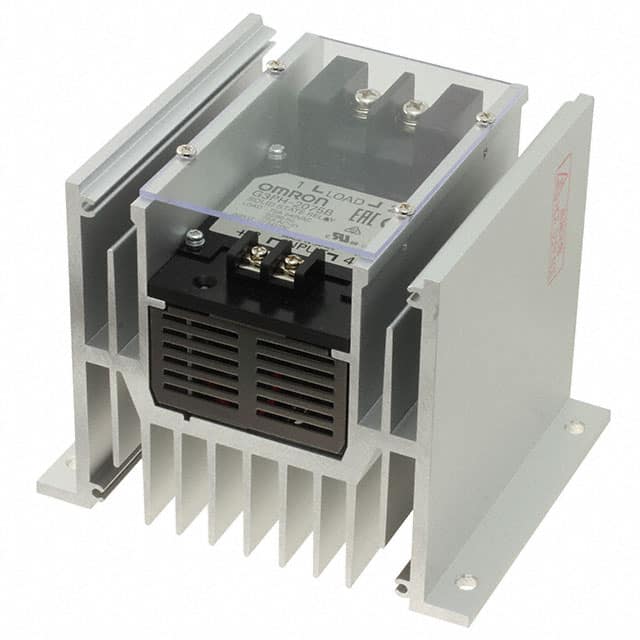
SSR Relay 150A Comparison: G3PH-2150B vs Alternatives
This guide focuses on the Omron G3PH-2150B AC100-240, a high-power solid-state relay (SSR) with a single-pole, single-throw, normally-open (SPST-NO) contact configuration, rated for 150 amps and a control voltage of 100-240 VAC. In the hierarchy of electronic systems, this component belongs to the power switching and load control category. Unlike electromechanical relays (EMRs) or contactors, an SSR uses semiconductor devices—typically thyristors or triacs for AC loads—to switch power without moving parts. Its role is to provide a robust, silent, and highly reliable interface between low-power control logic (like a PLC or thermostat) and a high-current AC load, such as industrial heaters, large motors, or lighting banks. The G3PH series is specifically designed for three-phase or single-phase heavy industrial applications where thermal management and surge handling are critical.
When selecting an SSR of this caliber, several key parameters demand attention. The first is load current rating, which is 150A here—but this must be derated based on ambient temperature and heatsink size. Never assume a 150A SSR can continuously carry 150A without proper thermal management. Second is blocking voltage, or the maximum AC voltage the SSR can withstand in the off state; this unit handles up to 240 VAC, which is standard for North American industrial mains. Third is control voltage range (100-240 VAC), which dictates the input signal required to turn the SSR on—this makes it suitable for direct connection to line-voltage control circuits without a separate DC power supply. Fourth, on-state voltage drop and leakage current in the off state are critical for efficiency and safety. Fifth, surge current capability (often 10x the rated current for one cycle) determines how well it handles inrush from motors or cold heater elements. Finally, switching speed—typically 1-2 ms for zero-crossing SSRs—and thermal resistance (junction-to-case) dictate heatsink sizing. The G3PH series excels in these areas, with a built-in snubber circuit and zero-crossing turn-on to minimize EMI and inrush.
Comparing this Omron SSR to alternatives reveals a clear trade-off landscape. The primary alternatives are electromechanical contactors, mercury displacement relays (now largely obsolete), and cheaper SSRs from brands like Crydom (now Sensata), Carlo Gavazzi, or generic Chinese manufacturers. Against a 150A contactor, the Omron SSR offers superior longevity—no contacts to wear out, no arc-induced pitting, and silent operation. It also switches faster and can handle millions of cycles versus tens of thousands for an EMR. However, the SSR has a higher upfront cost (typically $150-$250 for this SKU versus $50-$100 for a contactor) and requires a properly sized heatsink, adding expense. In terms of performance, the SSR’s zero-crossing switching reduces electrical noise, but its on-state resistance generates heat, requiring forced or convection cooling. Compared to cheaper SSRs, the Omron commands a premium, but it offers superior thermal cycling robustness, better surge handling, and a proven track record in harsh industrial environments. Availability is generally good from major distributors like Digi-Key, Mouser, and Newark, with stock levels fluctuating but usually available within 1-2 weeks. Cost per unit is higher than generic alternatives, but the total cost of ownership (TCO) is lower due to reduced maintenance and downtime.
Industry trends are reshaping this component category. The push toward Industry 4.0 and smart factories is driving demand for SSRs with diagnostic capabilities—like load monitoring and overtemperature alarms—which the G3PH lacks (it’s a basic model). However, the trend toward silicon carbide (SiC) and gallium nitride (GaN) semiconductors is slowly entering the SSR market, offering lower on-state losses and higher switching frequencies. For high-current AC switching, though, thyristor-based SSRs remain the workhorse due to cost and maturity. Another trend is the miniaturization of power electronics, but at 150A, physical size is still dictated by thermal dissipation. Additionally, environmental regulations (RoHS, REACH) and the push for energy efficiency favor SSRs because they eliminate coil power consumption (though they have leakage current). The G3PH series, while not the newest, benefits from Omron’s continuous quality improvements and remains widely specified in OEM designs.
When should you choose this specific Omron component over alternatives? Choose it when you need high reliability in a continuous-duty application—for example, controlling a 150A three-phase heater in a plastics molding machine or a large industrial oven. It is ideal when switching frequency exceeds what a contactor can handle (e.g., PID temperature control cycling every few seconds) or when you need silent, arc-free operation in a clean room or explosive atmosphere (with appropriate enclosures). It is also the right pick when your control signal is already 120/240 VAC, eliminating the need for a DC power supply. However, if you are on a tight budget and switching frequency is low (e.g., once per hour), a contactor might be more cost-effective. If you need 150A but with DC control (e.g., 4-20 mA or 24 VDC), you would select a different G3PH variant (e.g., G3PH-2150B DC). This specific AC-controlled unit is best for retrofits where existing line-voltage control wiring is present.
From a procurement perspective, several factors are critical. The Omron G3PH-2150B has a mature lifecycle status—it is an active, non-discontinued part, but Omron periodically refreshes the series. Check the latest datasheets for any revisions. Lead times are typically 4-6 weeks for factory orders, but major distributors often hold stock, so immediate delivery is possible. Be aware that during global semiconductor shortages, SSR lead times can extend to 12+ weeks, so plan ahead. Second-source options include Crydom’s H12D4850 (50A, not directly equivalent) or Carlo Gavazzi’s RGC3A series (up to 100A), but for 150A AC-controlled SSRs, the options narrow. A close alternative is the OPTO 22 240D45 (45A, not enough) or the TE Connectivity SSRL-240-150, but the Omron is the industry benchmark. Always verify UL/CSA/CE certifications for your target market. For critical applications, consider buying from an authorized distributor to ensure traceability and warranty support. Also, factor in the cost of a proper heatsink (e.g., a 0.5°C/W rated unit) and thermal interface material, which can add $30-$60 to the total. Finally, because this is an industrial component, purchase in batches to secure pricing and stock, and monitor Omron’s product change notices (PCNs) to stay ahead of any specification changes.
SSR RELAY SPST-NO 150A 100-240V
Omron Automation and Safety | G3PH-2150B AC100-240 | $681.75