Reliability Guide: 2200pF 50V C0G 0603 MLCC
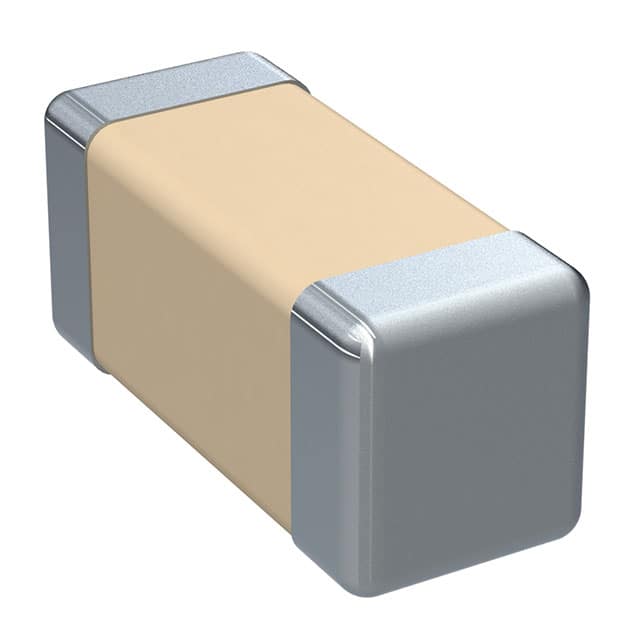
The KEMET C0603C222J5GAC7867 is a 2200 pF, 50V, C0G/NP0 dielectric, 0603 case size ceramic capacitor. Its reliability profile is fundamentally defined by its Class I (C0G) dielectric, which offers exceptional temperature stability (drift of ±30 ppm/°C) and, critically, no piezoelectric or aging effects. This makes it suitable for timing, filtering, and coupling circuits where capacitance drift over time or voltage is unacceptable. The component is manufactured under KEMET’s commercial-grade qualification, which aligns with the general requirements of IPC-9592 (Performance Parameters for Power Conversion Devices) and the passive component sections of MIL-STD-202 for test methods, though it is not a fully MIL-spec part. Its qualification includes standard moisture resistance, solderability, and thermal shock testing per JESD22 methodologies.
Accelerated life testing (ALT) for this capacitor is performed using a temperature-humidity-bias (THB) test, typically at 85°C/85% RH with rated voltage applied for 1000 hours, and a high-temperature life (HTL) test at 125°C with 1.5x rated voltage for 1000 hours. For C0G ceramics, the failure mechanism is primarily dielectric breakdown due to ionic migration or micro-cracks. The results are expressed as a Weibull slope; for KEMET’s C0G series, a typical shape parameter (β) > 1.0 indicates a wear-out mechanism is present after a long period, but in practice, the failure rate is extremely low. A successful ALT run (zero failures out of 1000 units) allows an extrapolated failure rate below 0.1% per 1000 hours at 125°C, which translates to a FIT rate (failures per 10^9 device-hours) of less than 1 at a 60% confidence level under normal operating conditions (e.g., 50°C, 25V). For MTBF, this yields a mean time between failures exceeding 1 billion hours for a single component, but system-level MTBF must account for derating factors, solder joint fatigue, and board flexure.
Environmental stress screening (ESS) is not typically performed by the end user for MLCCs of this type, as they are not electronic assemblies but discrete components. However, for high-reliability applications, a pre-conditioning burn-in is sometimes applied to weed out early failures. This involves a 24-hour soak at 125°C with no voltage, followed by 10 temperature cycles from -55°C to +125°C (10°C/min ramp). Then, a 48-hour voltage stress at 2x rated voltage (100V) at room temperature is applied. While this can reveal latent defects such as internal delamination or electrode misalignment, it is not recommended for C0G parts without manufacturer approval because extreme thermal cycling can induce mechanical stress on terminations, potentially creating micro-cracks that later lead to failure. For most commercial applications, the manufacturer’s own 100% electrical screening at 200% rated voltage (as per KEMET’s internal test) is sufficient.
Failure rate calculations for this component follow the Telcordia SR-332 or MIL-HDBK-217F reliability prediction models. For a C0G capacitor, the base failure rate (λb) is extremely low, typically 0.0005 failures/10^6 hours at 50°C and 50% rated voltage. Applying a quality factor (πQ) of 3.0 for commercial-grade, a voltage stress factor (πCV) of 1.0 at 50% derating, and a temperature factor (πT) based on Arrhenius activation energy of 0.7 eV, the final FIT rate is approximately 0.5 to 1.5 FIT. This equates to an MTBF of 667 to 2000 million hours. However, these numbers assume ideal board mounting. Real-world failures are dominated by mechanical stress from board flexure (cracking) and thermal cycling fatigue of solder joints, not intrinsic capacitor failure. Therefore, for procurement decisions, the FIT rate should be used for comparison, not as an absolute guarantee.
Counterfeit detection for this specific 0603 ceramic capacitor is challenging due to its small size. The most effective method is X-ray fluorescence (XRF) spectrometry to verify the termination material (tin over nickel over silver-palladium) and dielectric composition. Counterfeit parts often use a lower-grade dielectric (e.g., X7R) mislabeled as C0G, which can be detected by measuring capacitance drift against temperature using a precision LCR meter with a thermal chamber. Visual inspection under 10x magnification should show uniform termination solder plating, no chips or cracks, and consistent laser marking (though KEMET does not mark this size part, the reel and label must have consistent lot codes). A destructive physical analysis (DPA)—cross-sectioning the part to check for electrode layer count and continuity—is the definitive test, but it destroys the sample. For incoming inspection, a simpler electrical test is to measure the quality factor (Q) at 1 MHz; a genuine C0G will have a Q > 1000, while a counterfeit with moisture absorption will show a lower Q.
Incoming inspection best practices for this component should include: 1) Visual inspection for physical damage, discoloration, or incorrect termination finish. 2) Electrical verification of capacitance (within ±5% tolerance, i.e., between 2090 pF and 2310 pF at 1 kHz, 1Vrms), dissipation factor (<0.1%), and insulation resistance (>10,000 MΩ at 50V). 3) Sampling per IPC-9592 with an AQL of 0.1% for critical parameters. 4) Solderability testing per J-STD-002 (wet balance method) for a sample from each new lot. 5) Verify the reel and packaging labels against the C of C (Certificate of Conformance) from an authorized distributor. If any parameter fails, quarantine the lot and perform 100% electrical testing or return to supplier.
Storage and handling are critical to preserve reliability. KEMET recommends storing in the original moisture barrier bag (MSL 1, but still protected) at 5-30°C and 40-70% relative humidity, away from direct sunlight and corrosive gases. The parts must be kept on the original reel and not removed until ready for placement. After opening the bag, if the humidity indicator card shows >60% RH, bake the parts at 125°C for 24 hours before use. ESD sensitivity is low (Class 0, >1000V HBM), but normal ESD precautions are still advised. Avoid any mechanical shock—dropping the reel can cause internal micro-cracks. For shelf life, there is no expiration date if stored properly, but solderability degrades after 24 months; re-verify solderability before use after that period.
End-of-life and obsolescence planning for this part is straightforward because KEMET’s C0G 0603 series is a high-volume commodity. However, KEMET periodically revises its product line. To mitigate risk, maintain a strategic safety stock of 6-12 months of usage for critical products. Monitor KEMET’s PCN (Product Change Notification) system for material or process changes. Since there are many second-source equivalents from Murata, TDK, and Samsung, qualify a cross-reference part (e.g., Murata GRM1885C1H222JA01) with identical electrical and mechanical specs. If obsolescence occurs, purchase last-time-buy quantities and consider die-bank storage (unterminated ceramic wafers) only if you have advanced assembly capability. For long-term sustainability, design a second pad layout compatible with both 0603 and 0805 sizes to allow future substitution with a larger case if needed.