K11KAC-P16LCC0-6500 vs Alternatives: Solder Cup Connector Guide
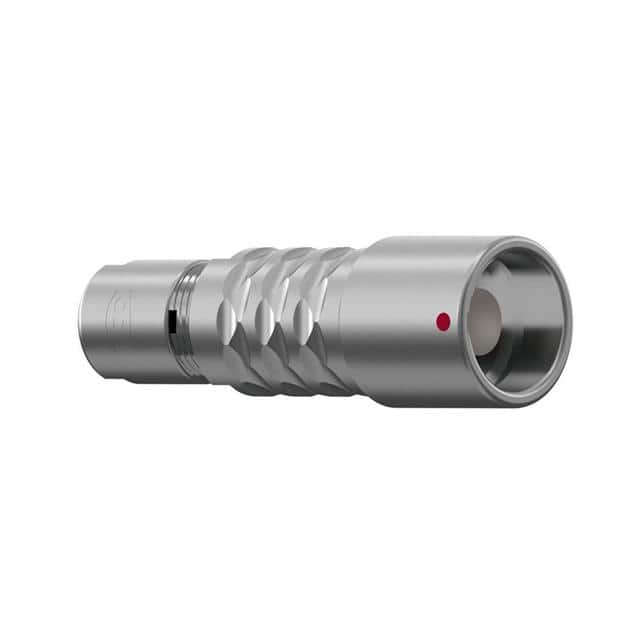
This component, the ODU K11KAC-P16LCC0-6500, belongs to the category of circular industrial connectors, specifically a 16-position female receptacle with solder cup termination. Its role in electronic systems is to provide a rugged, secure, and repeatable electrical interface between a cable assembly and a panel, chassis, or device enclosure. Unlike simple board-to-board headers, this connector is engineered for environments where vibration, moisture, thermal cycling, and mechanical shock are real threats. It is the critical electromechanical junction that carries power, signals, or both, and its failure mode—intermittency, corrosion, or pull-out—can bring an entire system down. As such, it is a reliability-defining component, not a commodity pass-through.
When selecting a connector of this type, several key parameters demand scrutiny. First is contact rating and current capacity—the ODU unit typically handles up to 10A per contact depending on gauge, but you must verify derating curves at elevated temperatures. Second is IP rating and sealing; this ODU series often achieves IP68 when mated, meaning dust-tight and protected against continuous immersion. Third is mechanical endurance—cycles to failure for mating/unmating, which is critical for field-serviceable equipment. Fourth, contact resistance stability over time, especially under vibration; solder cup termination offers a gas-tight joint if done correctly, but it requires skilled labor. Fifth is shell material and plating—ODU uses high-grade brass or stainless steel with nickel or passivation, offering excellent corrosion resistance. Finally, keying and polarization prevent mis-mating, and the locking mechanism (push-pull in ODU’s case) must be evaluated for release force and accidental disconnection resistance.
Comparing this ODU connector to alternatives in the circular connector space—such as MIL-DTL-38999, LEMO, Fischer, or lower-cost Japanese brands like Hirose or JAE—reveals distinct trade-offs. In terms of performance, ODU’s push-pull design offers a lower mating torque and faster blind-mating capability compared to threaded 38999 types, making it superior for applications requiring frequent disconnect. Its solder cup termination, while more labor-intensive than crimp or PCB-tail, provides excellent vibration resistance and a lower profile than many crimp contacts, which require backshells and strain reliefs. However, cost is a significant factor: ODU is a premium brand, typically 30-50% more expensive than equivalent LEMO or Fischer parts, and 2-3x the price of Japanese industrial connectors. Availability is generally good for standard SKUs like this one, but custom keyways or plating options extend lead times. In contrast, 38999 connectors are ubiquitous in defense and aerospace, with massive aftermarket support, but they are bulkier and slower to mate. LEMO offers similar performance but with a different latch mechanism that some engineers find less intuitive. The ODU part sits in a sweet spot for medical, test & measurement, and broadcast equipment where reliability and mating speed outweigh cost sensitivity.
Industry trends are reshaping this connector category. The move toward miniaturization and higher density is pushing 16-position designs to handle higher frequencies and mixed-signal (power+data) in the same shell. ODU’s newer generations integrate coaxial or fiber-optic contacts alongside standard pins, but this specific SKU is a legacy all-signal version. Another trend is the adoption of push-pull latching as a de facto standard in medical and industrial IoT, replacing threaded types for faster field service. Additionally, there is a growing emphasis on environmental compliance and recyclability—RoHS and REACH are non-negotiable, and ODU meets these, but buyers must verify the specific plating (e.g., gold over nickel) for any upcoming restrictions on PFAS or hexavalent chromium. Finally, the supply chain is moving toward digitalized traceability—each connector may have a laser-marked QR code for lot-level history, which is valuable for quality audits. However, the biggest disruptive trend is cable assembly integration—many OEMs now buy pre-terminated overmolded cables, reducing the demand for loose receptacles like this one.
When should you choose this specific ODU part over alternatives? Choose it when your application demands high cycle life (over 5,000 mating operations), compact size with high pin count, and easy blind-mating in tight spaces. It is ideal for portable medical devices (patient monitors, surgical instruments), field-deployable test equipment, and professional audio/video broadcast cameras where a secure, quick-locking connector is essential. You should also choose it if your assembly process already has soldering expertise and you need a low-profile rear exit for cable strain relief. However, if your application is high-volume consumer electronics or automotive under-hood, this part is over-engineered and over-priced—a simple rectangular connector or sealed header will suffice. Likewise, if you require crimp contacts for field-replaceable pins, or if you need a firewall-sealed bulkhead feed-through, other designs are better suited.
From a procurement standpoint, several critical considerations apply. Lead times for ODU standard SKUs typically run 6-10 weeks from order, but for this specific part, which is a semi-standard variant (K11KAC series), you may see 8-12 weeks depending on plating and keying options. It is not a stocked item at most distributors, so plan your forecast accordingly. Lifecycle status is active but mature—ODU has not announced obsolescence, but the series has been in production for over a decade, so watch for periodic design revisions (e.g., changes in contact material from beryllium copper to alternative alloys). Second-source options are limited: while LEMO’s B-series is mechanically intermateable with ODU’s MEDI-SNAP (but not this standard K series), there is no direct drop-in replacement. You would need to redesign the panel cutout if you switch brands, so it is wise to lock in a multi-year frame agreement with ODU or their authorized distributor. I recommend securing a buffer stock of at least 10% of annual usage, as global electronics supply chain volatility can extend lead times to 16+ weeks during peak demand. Also, verify the solder cup diameter and pin spacing against your PCB footprint—ODU provides detailed drawings, but a prototyping run is strongly advised to validate thermal performance during wave soldering. Finally, consider the total cost of ownership: while the unit price may be $18-25, the labor cost of soldering 16 wires and the cost of a field failure are far higher, justifying the premium for a connector that will outlast the equipment it serves.