12-Pin SMD Header: The Small Connector Powering Modern Electronics
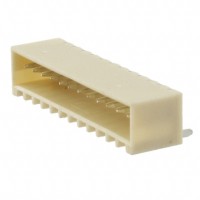
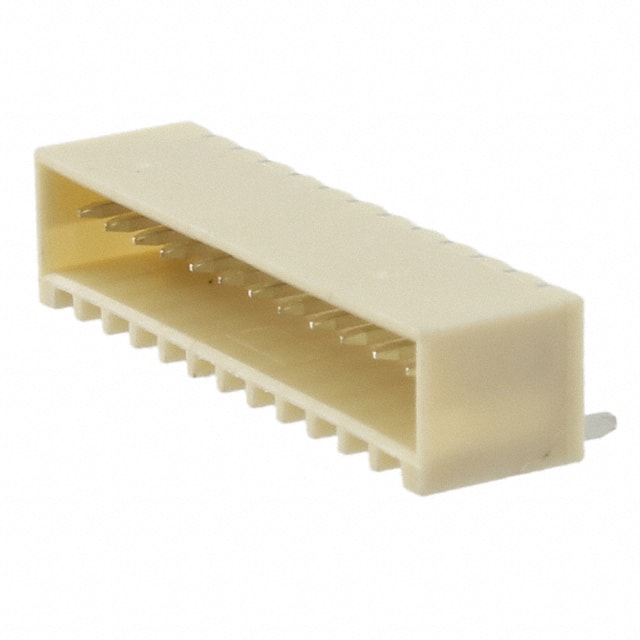
The unassuming board-to-board connector, such as the TE Connectivity AMP Connectors 6-1775444-2 (a 12-position, 1.5mm pitch, right-angle surface-mount header), is a foundational building block of modern electronics. While it may not generate the buzz of a new AI accelerator, its evolution is a direct reflection of the industry's relentless push for miniaturization, higher data integrity, and manufacturing efficiency. This specific part, with its compact 1.5mm pitch and SMD R/A configuration, sits at the intersection of several critical technology trends, making it a bellwether for procurement strategists.
The Technology: Precision in Miniaturization
The 6-1775444-2 is not a commodity part; it is an engineered solution. The 1.5mm pitch allows for a significant board-space reduction compared to legacy 2.0mm or 2.54mm headers, enabling denser PCB layouts in portable and space-constrained devices. The right-angle (R/A) orientation is crucial for low-profile, parallel board stacking or perpendicular connections, optimizing airflow and mechanical stress distribution in enclosures. Recent innovations in this segment focus on contact geometry and plating. TE Connectivity has invested heavily in high-conductivity copper alloys and selective gold or tin plating to ensure low contact resistance and high mating cycle durability. Furthermore, the SMD version of this header often incorporates advanced solder-tail designs—such as extended stand-off leads—that improve solder joint inspection and reduce the risk of cold joints during reflow, a critical factor for high-yield manufacturing.
Market Trends and Demand Drivers
Demand for 1.5mm pitch headers is being propelled by the proliferation of IoT edge devices, industrial sensors, and medical wearables. These applications require robust electrical connections but have severe space and weight constraints. The shift from through-hole to surface-mount technology (SMT) is accelerating, as manufacturers seek to eliminate manual soldering and enable fully automated assembly lines. Additionally, there is a rising demand for high-temperature (HT) versions of these connectors to withstand lead-free reflow profiles. The automotive sector, particularly for infotainment and ADAS (Advanced Driver-Assistance Systems) camera modules, is a major demand driver, requiring headers that can withstand vibration and wide temperature ranges—qualifications that the 6-1775444-2, being an AMP product, typically meets under stringent TE specifications.
Supply Chain Dynamics and Pricing Outlook
The global supply chain for precision connectors remains tight but is showing signs of normalization compared to the 2021-2023 crisis. Lead times for TE Connectivity's 1.5mm headers have retreated from peak levels of 30-40 weeks to a more manageable 12-18 weeks, though custom or non-standard plating options can extend that. The pricing outlook for 2025 is cautiously optimistic. While raw material costs—specifically copper and gold—remain volatile, the easing of energy prices in manufacturing hubs has stabilized production costs. However, procurement teams must be vigilant about regional supply chain shifts. TE Connectivity manufactures in multiple global sites, offering some geopolitical risk mitigation, but the trend toward "China+1" sourcing strategies means that inventory buffers in regional distribution centers are critical. We anticipate a low single-digit price increase annually, driven primarily by labor costs and the premium for automotive-grade certifications.
Emerging Applications Driving New Demand
Beyond traditional consumer electronics, we are seeing explosive growth in two areas: collaborative robotics (cobots) and smart grid infrastructure. In cobots, joint encoders and end-of-arm tooling require compact, high-cycle connectors that can survive constant flexing and mating. The 1.5mm pitch is often used for internal signal routing between the motor controller and sensor boards. In smart grid applications, specifically smart meters and distribution automation units, the demand is for reliable, low-resistance connections that operate in harsh outdoor environments. The R/A SMD format is particularly useful for connecting main control boards to communication modules (Wi-Fi, cellular, or PLC) without increasing the overall enclosure footprint.
Technology Roadmap: The Next Generation
The roadmap for this connector category is defined by hybrid designs and integrated shielding. While the 6-1775444-2 is a signal-only header, the next generation will likely integrate power contacts within the same housing to serve high-density sensor fusion modules. We are also seeing a move toward "floating" or self-aligning SMD connectors that compensate for thermal expansion mismatches between different PCB materials (e.g., FR4 to ceramic). Another key advancement is the integration of thin-film coatings, such as graphene-based lubricants, to reduce insertion force and increase wear resistance, extending the lifecycle for industrial applications that demand 10,000+ mating cycles. For TE, the roadmap emphasizes modularity—allowing the same 1.5mm housing to be used with different terminal designs to support speeds of up to 10 Gbps for next-gen industrial Ethernet.
Regulatory Impact: RoHS, REACH, and Automotive
Compliance is non-negotiable. The 6-1775444-2 is fully RoHS (Restriction of Hazardous Substances) compliant, but the challenge lies in REACH (Registration, Evaluation, Authorisation and Restriction of Chemicals). Recent amendments to REACH have targeted specific per- and polyfluoroalkyl substances (PFAS) used in some connector lubricants. TE has proactively moved to PFAS-free alternatives, but procurement must verify the Date of Manufacturing to ensure they are not stocking older, non-compliant inventory. For automotive, the crucial certification is IATF 16949 and AEC-Q200 for passive components. This header, being an AMP product, is typically designed to meet USCAR-2 standards, ensuring it can withstand under-hood temperature extremes and salt-spray corrosion. Procurement teams should always request the latest PPAP (Production Part Approval Process) documentation to avoid line-down situations due to compliance audits.
Strategic Recommendations for Procurement
First, do not treat this as a pure commodity; qualify a second-source alternative (e.g., Molex or Hirose) but maintain TE as the primary to leverage their global engineering support. Second, given the lead time variability, implement a kanban or VMI (Vendor Managed Inventory) system with your distributor for high-usage SKUs like this one. Third, lock in pricing for 12-month contracts but include a metal-fluctuation clause to share the risk of copper price spikes. Finally, request that your distributor provide date-code traceability to ensure REACH compliance and to avoid counterfeit parts in the gray market. By treating the 6-1775444-2 as a strategic asset rather than a passive buy, you can secure supply resilience and cost predictability in a volatile market.