RHAH-20.R165.14 vs Alternatives: Component Comparison Guide
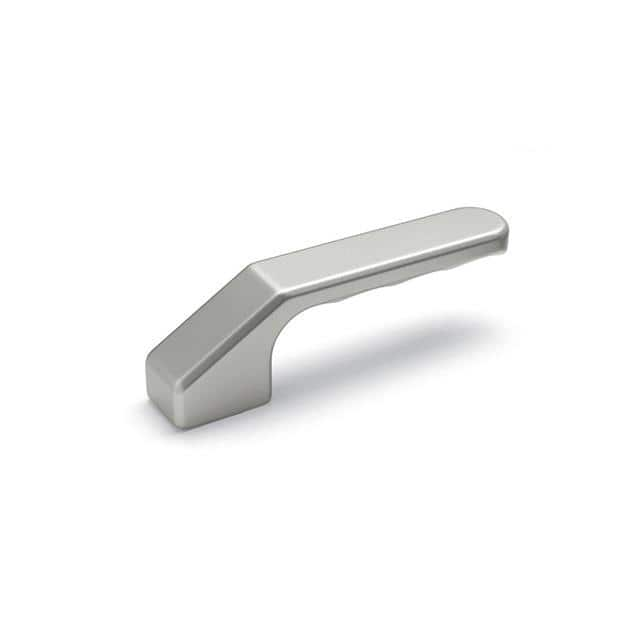
When navigating the vast landscape of industrial electronic enclosures and control panels, buyers often focus on PCBs, microcontrollers, and power supplies, while overlooking the mechanical interfaces that ensure a system’s usability and durability. The component you are evaluating—the RH-AH series, specifically the HANDLES model from Elesa USA Corporation (SKU: RHAH-20.R165.14)—belongs to the category of ergonomic hardware and enclosure accessories. In electronic systems, these handles are not merely structural afterthoughts; they serve as the primary human-machine interface for rack-mounted equipment, industrial controllers, test instruments, and heavy-duty portable devices. Their role is to provide secure, repeatable handling for insertion, extraction, and transport, while also protecting sensitive internal components from shock, vibration, and accidental drops. In high-vibration environments or installations where frequent servicing is required, a properly specified handle can mean the difference between a 30-second module swap and a catastrophic connector failure.
When selecting a handle of this type, several key parameters demand your attention. The first is load capacity—rated in newtons or kilograms—which must exceed the combined weight of the chassis, PCBs, and any attached cabling, with a safety factor of at least 1.5×. The second is mounting geometry: the RHAH-20.R165.14 features a 165 mm center-to-center hole spacing, which is a de facto standard for 19-inch rack sub-panels and 3U to 4U modules. Verify that the handle’s screw thread (typically M5 or M6) and depth match your panel thickness. Third, consider material and surface treatment. Elesa’s RH-AH series is commonly manufactured from glass-fiber-reinforced polyamide (PA) or die-cast aluminum, with either an anodized or powder-coated finish. The glass-filled nylon variant offers excellent electrical insulation, corrosion resistance, and a lower weight, while the aluminum variant provides superior rigidity and a premium feel. Finally, don’t overlook operating temperature range and UV stability—if the equipment will be used outdoors or near high-heat sources, a thermoplastic handle may degrade or become brittle over time, whereas an aluminum handle will maintain its integrity.
How does the RH-AH compare to alternatives? The most common substitutes are fixed metal bail handles, folding or recessed handles, and generic PVC or rubber-coated grips. Compared to a simple fixed metal handle, the RH-AH series offers a fundamentally better ergonomic profile—its shape is contoured to distribute pressure across the palm, reducing fatigue during repeated insertions. In terms of cost, the RH-AH sits in the mid-to-upper tier: a single unit might list for $8–$15, whereas a generic stamped-steel handle costs $1–$3. However, the premium is justified by consistency of quality—Elesa’s tolerance control ensures that the handle seats flush against the panel without rocking, which is critical when aligning high-density backplane connectors. Availability is generally strong for this SKU, as Elesa maintains regional stock through distributors like the one you are sourcing from, but lead times can stretch to 3–6 weeks for non-stocked variants or special colors. In contrast, a folding handle is often less expensive but introduces moving parts that can seize or wear, making it a poor choice for harsh industrial environments where the RH-AH’s monolithic design shines.
Looking at industry trends, the broader electronics manufacturing sector is shifting toward hot-swappable and field-serviceable modules, driven by the need for minimal system downtime in data centers and automation. This trend elevates the importance of handles that are robust, easily cleanable, and compatible with gloved hands. Additionally, there is a growing push toward sustainability and recyclability; Elesa’s PA-based handles are increasingly made from partially bio-based or recycled polymers, which appeals to companies with net-zero procurement policies. Another trend is the miniaturization of enclosures—while handle widths are shrinking, the demand for higher load ratings has not diminished, leading to new composite materials that offer metal-like strength at lower weight. Furthermore, the rise of smart factory IoT devices means that many new enclosures now integrate RFID tags or sensors into the handle area, and the RH-AH’s clean, flat mounting surface can be easily adapted for such retrofits without compromising structural integrity.
So, when should you choose the RHAH-20.R165.14 specifically? Opt for this component when your application demands high repeatability of manual handling—for example, in benchtop calibration equipment, broadcast video switchers, or military-grade portable computers. It is also the correct choice when your design requires a balanced aesthetic and tactile feel, because the Elesa line is known for its smooth, radiused edges that prevent snagging on cables or clothing. If your product will be subjected to cleaning agents, mild solvents, or salt-laden air (such as marine electronics), the corrosion-resistant properties of the PA or anodized aluminum will outperform plain steel. Conversely, avoid this handle if you are working in a cost-constrained consumer device where appearance is secondary, or if your panel uses non-standard hole spacing—the 165 mm dimension is fixed, and custom drilling will void the warranty and reduce strength.
From a procurement perspective, treat the RH-AH as a mature, lifecycle-stable component. Elesa has produced this series for over a decade, and the SKU is listed as active with no end-of-life notices. However, do not assume infinite availability—always request the latest lifecycle status from your distributor before committing to a five-year production run. Lead times are typically 2–4 weeks for small quantities (under 100 units) and 6–8 weeks for larger volumes, depending on the factory’s load. For critical projects, consider second-sourcing with a mechanical equivalent from brands like Ganter or Ergotronix, but be warned that the mounting hole pattern and overall height (often 38–40 mm) may differ slightly, requiring a panel redesign. To mitigate risk, procure a safety stock of 5–10% of your annual volume, especially if your device is subject to field repairs. Finally, always verify the RoHS and REACH compliance certificates from Elesa, as the glass-fiber reinforcement can sometimes contain trace impurities that matter for export to EU or California markets. In summary, the RH-AH is not a commodity component—it is a precision interface that, when chosen correctly, enhances the perceived quality of your equipment and reduces field failures related to mishandling. Buy it with confidence, but buy it with data.