Crystal 18.432MHz vs Alternatives: SMD Comparison Guide
Welcome to our deep-dive comparison guide for a specific, yet widely used, passive component: the CRYSTAL 18.432MHZ 19PF SMD, specifically the Suntsu Electronics SXT21419DC17-18.432MT. As a procurement specialist or design engineer, you know that selecting a timing device is not about picking the cheapest resonator; it is about ensuring system stability, signal integrity, and long-term supply chain reliability. This guide will walk you through the technical trade-offs, market dynamics, and procurement nuances of this particular crystal, and how it stacks up against its alternatives.
First, let’s categorize this component. It belongs to the passive frequency control family, specifically a quartz crystal unit (not an oscillator). Its role is to generate a precise, stable reference frequency—in this case, 18.432 MHz—for microcontrollers, UARTs, USB controllers, Ethernet PHYs, and FPGA clocking circuits. The “19PF” denotes the load capacitance (CL), which is the external capacitance the crystal expects to see across its terminals to oscillate at the specified frequency. This is a critical parameter because mismatched CL causes frequency error, leading to communication bit errors or timing drift. Unlike an active oscillator (which includes a built-in amplifier and outputs a square wave), a bare crystal requires the host IC’s internal oscillator circuit to function, giving designers flexibility in power consumption and PCB layout.
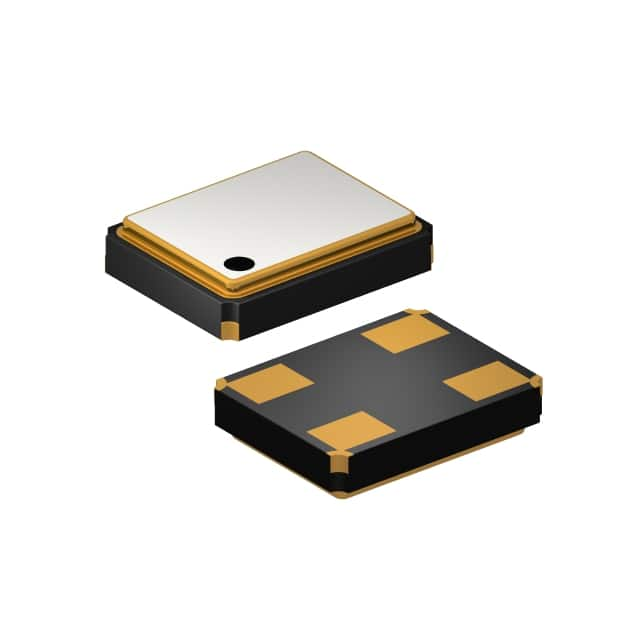
When selecting a crystal of this type, you must evaluate five key parameters: frequency tolerance (initial accuracy), frequency stability over temperature, load capacitance (CL), equivalent series resistance (ESR), and aging rate. The Suntsu SXT21419DC17-18.432MT typically offers ±10 ppm or ±20 ppm initial tolerance, and a stability of ±20 ppm across -20°C to +70°C (or -40°C to +85°C for industrial variants). The 19 pF CL is common for legacy MCU designs that use 18-20 pF load caps. ESR is crucial—lower ESR (typically under 60 ohms for 18.432 MHz) ensures reliable startup and lower drive level. Also, note the package: this is an SMD 2.0x1.6mm (2016) footprint, which is compact but requires careful PCB pad design to avoid parasitic capacitance that shifts frequency.
How does this component compare to alternatives? The main alternatives are: ceramic resonators, MEMS oscillators, and lower-cost fundamental crystals from other brands. Ceramic resonators (e.g., 18.432 MHz with built-in caps) are cheaper and have faster startup, but their initial tolerance is ±0.5% (5000 ppm), which is unacceptable for high-speed serial communication like USB or Ethernet. MEMS oscillators (e.g., from SiTime) offer superior reliability, lower jitter, and programmable frequencies, but they are active devices consuming more power and costing 2-3x more. Traditional 49S through-hole crystals are cheaper and more forgiving, but they are larger and being phased out in high-density designs. The Suntsu 2016 package sits in the sweet spot: cost is moderate—typically $0.20-$0.40 per unit in volume, which is 30-50% cheaper than a MEMS oscillator but 20% more expensive than a larger 3225 package crystal. However, the 2016 size is the industry standard for portable and IoT devices, making it widely available and competitively priced.
Industry trends are significantly affecting this category. The push toward miniaturization is driving demand for 2016 and even 1612 packages, but this also increases manufacturing complexity and fragility. Additionally, the shift to higher-frequency automotive and 5G applications is pushing crystals to operate at higher fundamental frequencies (e.g., 25 MHz, 48 MHz) with tighter ppm specs, making 18.432 MHz a legacy but still high-volume frequency for industrial control and legacy telecom. Another trend is the move to programmable oscillators for low-volume prototyping, but for mass production, discrete crystals remain cost-effective. Also, supply chain disruptions have highlighted the need for multi-sourcing, as quartz crystal suppliers are consolidating, and raw quartz shortages occasionally cause lead-time spikes.
When should you choose this specific Suntsu component over alternatives? Choose it when you require a proven, RoHS-compliant, AEC-Q200 (optional) crystal in a 2016 footprint with a 19 pF load that matches your MCU’s recommended CL. It is ideal for medium-to-high volume production where you need a balance of cost and performance, and where a MEMS oscillator is overkill. It is also a good choice if your design already uses 19 pF load caps—switching to a 12 pF or 8 pF crystal would require changing external components, increasing BOM complexity. Furthermore, Suntsu offers good lot traceability and datasheet support, which is valuable for medical or industrial applications requiring documentation. If your application needs tighter stability (±5 ppm) or wider temperature range (-40°C to +125°C), you should look at a TCXO or a crystal with a different cut, but for typical IoT, consumer, and industrial control, this part is sufficient.
Now, procurement considerations are critical. Lead times for standard 18.432 MHz crystals from Suntsu are typically 8-12 weeks for non-stock items, but this SKU (SXT21419DC17-18.432MT) is often stocked by major distributors like Digi-Key or Mouser, so immediate availability is possible for small quantities. For volume orders, plan ahead. The lifecycle status is active—this is not end-of-life, but be aware that 18.432 MHz is a less common frequency than 12 MHz or 25 MHz, so some manufacturers may prioritize higher-volume frequencies. For second-sourcing, you can directly replace with equivalent 2016 crystals from Epson (TSX-3225 series, but that is 3225 size), Abracon (ABM8 series), or IQD (LFXTAL series)—just ensure the load capacitance and ESR match. However, note that the 2016 package is less universally stocked than 3225, so you may need to validate the footprint of the alternative. Always request the frequency tolerance at 25°C and the shunt capacitance from the datasheet to ensure exact compatibility. Finally, consider anti-counterfeit measures: purchase from authorized distributors only, as counterfeit crystals with wrong CL can cause intermittent failures.
In summary, the Suntsu 18.432 MHz 19 pF SMD crystal is a reliable workhorse for mid-performance timing applications. Its main trade-off is size vs. cost—you pay a slight premium over larger packages for the smaller footprint, but you gain board space and lower parasitic inductance. For most designs, this is the right choice if your MCU’s oscillator circuit is designed for 19 pF and your frequency tolerance needs are within ±20 ppm. Just remember to verify the ESR, plan for lead times, and keep a second-source part number in your approved vendor list. If you need lower jitter or programmability, step up to a MEMS oscillator; if you need absolute lowest cost and have space, consider a 3225 crystal. But for the vast majority of B2B electronics, this Suntsu part delivers the balance of performance, availability, and price that keeps your production line moving.