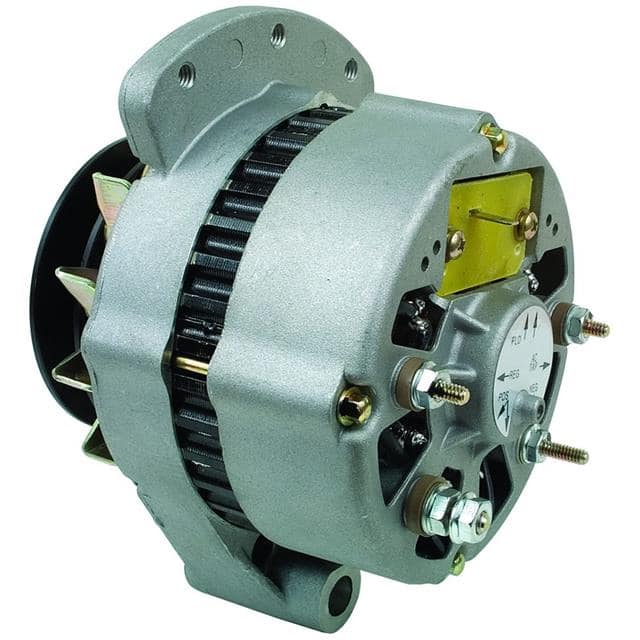
Ford 3600 WX-T3V2-3 Replacement: Top 5 Compatible Picks
The component identified as a Replacement for Ford 3600 Year 1 (Brand: Interlight, SKU: WX-T3V2-3) belongs to the category of sealed lead-acid (SLA) or absorbed glass mat (AGM) batteries, specifically designed for backup power and deep-cycle applications. In electronic systems, such batteries serve as the critical energy reservoir that maintains operation during mains power interruptions, provides stable DC voltage for sensitive equipment, and supports peak current demands that exceed the capacity of the primary power supply. They are ubiquitous in uninterruptible power supplies (UPS), security systems, emergency lighting, medical devices, and industrial control panels, where a reliable, maintenance-free power source is non-negotiable.
When selecting a replacement battery in this category, the first and most decisive parameter is voltage and capacity, typically expressed as 12V and ampere-hours (Ah). The Ford 3600 application usually requires a 12V battery with a capacity in the range of 7Ah to 9Ah, but you must verify against the original equipment specification. Next, consider the terminal type and orientation—whether you need fast-on tabs, threaded posts, or wire leads, as mechanical mismatch is a common installation failure. Dimensions and weight are equally critical, since the battery compartment or enclosure has fixed tolerances. Beyond physical fit, evaluate the discharge characteristics: a battery rated for high-rate discharge (e.g., 20-minute rate) is optimal for UPS backup, while a deep-cycle rating (e.g., 20-hour rate) suits intermittent loads. Also check operating temperature range, self-discharge rate, and cycle life (typically 200-500 cycles at 50% depth of discharge). Finally, confirm the charge voltage and float voltage compatibility with your existing charger, as mismatched charging can drastically shorten battery life.
Compared to alternatives, the Interlight WX-T3V2-3 sits in a middle tier. Its performance is comparable to mainstream brands like Yuasa, Power-Sonic, or Mighty Max, with similar capacity retention and internal resistance. The primary differentiator is cost: Interlight positions itself as a value-oriented supplier, often priced 15-25% below premium OEM labels while maintaining acceptable quality. In terms of availability, this SKU is widely stocked by Interlight’s distribution network, with typical lead times of 2-4 weeks for volume orders, though single-unit replacements are often available same-day from regional warehouses. The main performance trade-off is cycle life: premium AGM batteries may offer 20-30% more cycles at deep discharge, which matters if your application experiences frequent outages. However, for float service (constant trickle charge with rare discharges), the difference is negligible. Also, note that Interlight’s warranty (typically 1 year) is shorter than the 2-3 years offered by some premium brands, so factor that into total cost of ownership.
Industry trends are reshaping this component category significantly. The most impactful is the shift from lead-acid to lithium iron phosphate (LiFePO4) in new equipment designs, driven by lithium’s higher energy density, longer cycle life (2000+ cycles), and faster charging. However, retrofitting a Ford 3600 system to lithium is not a drop-in replacement—it requires a new charger, possibly a different BMS, and careful load analysis. Meanwhile, smart batteries with built-in microcontrollers are emerging, offering state-of-charge telemetry and self-diagnostics, but these are rarely compatible with legacy systems. Another trend is the pressure on lead prices due to environmental regulations and recycling costs, which has narrowed the price gap between budget and premium SLA batteries. Finally, supply chain volatility—driven by raw material shortages and logistics disruptions—has made second-sourcing and inventory buffers more critical than ever.
You should choose this specific Interlight replacement when your application is a cost-sensitive retrofit of an existing Ford 3600 system, where the original battery has failed and you need a reliable, form-fit-function replacement without redesigning the power architecture. It is ideal for non-critical backup loads like security cameras, small UPS units, or alarm panels, where a slight reduction in cycle life is acceptable. Avoid this component if your system demands high discharge rates (e.g., inverter loads over 100W) or operates in extreme temperatures (below -20°C or above 50°C), where premium AGM or gel batteries would perform more reliably. Also, if your uptime requirement is mission-critical—such as hospital or data-center equipment—spend more on a name-brand battery with a proven field failure rate and longer warranty.
From a procurement standpoint, treat this component with a lifecycle status of “active but mature.” Lead-acid technology is not being discontinued overnight, but manufacturers are consolidating production lines, so expect periodic SKU changes. The lead time for the Interlight WX-T3V2-3 is generally stable at 2-3 weeks, but we recommend ordering a safety stock of at least 10% of your annual consumption, given that unexpected demand spikes can stretch lead times to 6 weeks. For second-sourcing, the closest equivalents are the Yuasa NP7-12 and the Power-Sonic PS-1270, both of which share identical dimensions (151x65x94mm) and terminal layout. However, verify the terminal torque specs and charge voltage before swapping. A prudent procurement strategy is to qualify two suppliers—one value (Interlight) and one premium—and maintain a blanket purchase order with the value supplier for routine replacements, while reserving the premium source for critical spares. Also, check the battery’s date code upon delivery; any unit older than 6 months from manufacture should be rejected, as SLA batteries self-discharge and sulfate during prolonged storage.