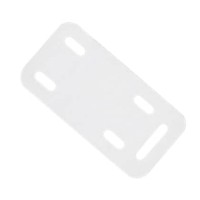
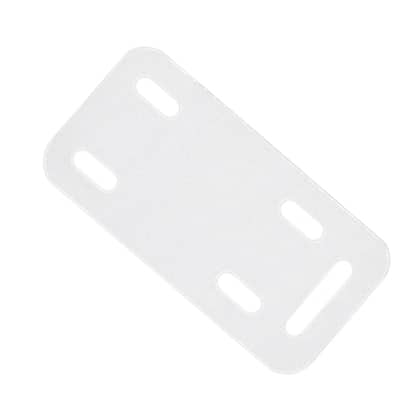
Wire Marker Cables: M200X100Y7T Industry Insights
The unassuming wire marker cable tie, exemplified by the Panduit Corp M200X100Y7T (50.8 x 25.4 mm), is a critical, often-overlooked component in industrial and data center infrastructure. While it appears to be a simple piece of nylon, its engineering, market trajectory, and supply chain dynamics offer a microcosm of the broader electronics and industrial manufacturing landscape. For procurement professionals, understanding this component’s evolution is not about the plastic itself, but about the intelligence and resilience embedded in its specification.
Technology & Innovation: From Identification to Asset Intelligence
The fundamental technology behind the M200X100Y7T is a dual-function solution: a cable tie integrated with a printable identification zone. Panduit’s version utilizes a heat-stabilized, weather-resistant nylon 6.6, which provides mechanical strength and UV resistance. The innovation, however, lies in the marker surface. Recent advances have transitioned from simple ink-jet printable films to laser-markable and thermal-transfer printable substrates that resist smudging, solvents, and extreme temperatures. The 50.8x25.4mm size is optimized for high-density data center patch panels where space is at a premium. The latest evolution is not just about printing labels; it’s about smart manufacturing integration. Newer marker ties are designed to work with automated labeling systems that print, cut, and apply in a single pass, reducing labor time by up to 40% in high-volume assembly. We are also seeing a push toward halogen-free, low-smoke (LSZH) compounds to meet stricter fire safety codes in enclosed spaces.
Market Trends & Demand Drivers
The primary demand driver for this specific SKU is the exponential growth of data centers and edge computing. As hyperscale cloud providers build out capacity, the need for clear, durable identification of fiber optic and copper cabling is non-negotiable for maintenance and troubleshooting. A single mislabeled cable in a modern data center can lead to hours of downtime, making the cost of a high-quality marker tie negligible compared to the cost of network failure. Beyond data centers, the automotive sector is a growing consumer. With the rise of electric vehicles (EVs) and autonomous driving systems, the wiring harness complexity has exploded. Each vehicle now requires hundreds of unique identification points for battery management, sensor connectivity, and safety systems. This has shifted demand from commodity ties to specification-grade markers that can withstand under-hood temperatures and exposure to automotive fluids.
Supply Chain Dynamics: Lead Times and Pricing
The supply chain for these components is more volatile than one might expect. The base resin, nylon 6.6, is a petrochemical derivative heavily influenced by crude oil prices and the global supply of adiponitrile. Over the past 24 months, we have seen lead times for Panduit and similar branded products stretch from 4 weeks to 12-16 weeks, particularly for custom-printed or colored variants. The pricing outlook remains moderately inflationary. While the raw resin cost has stabilized, logistics costs and labor shortages in molding facilities continue to push prices up 3-5% annually. Procurement teams should note that the standard black/white variant (like the M200X100Y7T) is often more readily available than custom colors, as manufacturers run high-volume production cycles on standard SKUs. Global sourcing is concentrated in North America and Southeast Asia, with Panduit manufacturing primarily in the US and Costa Rica, offering a nearshoring advantage for North American buyers seeking to reduce transit risk.
Emerging Applications Driving New Demand
The most exciting new application is in the renewable energy sector, specifically solar and wind installations. These environments require marker ties that can handle extreme temperature swings and continuous UV exposure for 25+ years. The M200X100Y7T’s weather-resistant formulation makes it a candidate for solar farm sub-panel wiring, where identifying positive/negative DC circuits is critical for safe maintenance. Another emerging segment is in modular construction and prefabricated building systems. As hospitals and cleanrooms are built off-site, every pre-wired module needs permanent, traceable identification to ensure correct on-site interconnection. This has led to a demand for marker ties that can be applied in the factory and withstand harsh transport conditions without the label peeling.
Technology Roadmap: What’s Next?
The future of this category lies in RFID integration. While a pure RFID tie is expensive, hybrid solutions are emerging where the marker surface is designed to hold a thin RFID inlay. This would allow a technician to scan a bundle of cables and instantly map the entire network topology on a tablet, eliminating manual inventory checks. Additionally, we are seeing development of bio-based nylon compounds that reduce carbon footprint without sacrificing tensile strength. Panduit and competitors are also investing in digital twin compatibility—meaning the printed 2D barcode on the tie will contain a URL or UID that links directly to a cloud-based asset management system, creating a digital record of installation date, cable length, and test results.
Regulatory Impact: RoHS, REACH, and Automotive
Regulatory compliance is a critical, non-negotiable factor. The M200X100Y7T is RoHS compliant, restricting hazardous substances like lead and mercury. However, the newer challenge is REACH, specifically the EU’s regulation on SVHCs (Substances of Very High Concern). Recent amendments have targeted certain plasticizers and flame retardants. For automotive applications, the USCAR-2 and LV-214 specifications are now de facto standards. These require stringent testing for thermal shock, vibration, and chemical resistance. Procurement must verify that the supplier’s material declaration is current, as a non-compliant component can halt an entire production line at the EU border or in a Tier-1 automotive plant. The trend is toward tighter restrictions, so selecting a reputable brand like Panduit ensures that the compliance documentation is robust and auditable.
Strategic Recommendations for Procurement Teams
First, do not treat this as a commodity buy. Lock in annual pricing agreements with a preferred distributor to hedge against resin price spikes. Second, standardize your SKU list. The M200X100Y7T is a workhorse size—consolidating your bill of materials to this size (and a smaller variant) will improve buying power and reduce inventory carrying costs. Third, request alternative packaging options. Panduit offers boxes of 100 or 500; purchasing in bulk reels for automated application reduces per-unit cost by up to 30%. Fourth, maintain a safety stock of 8-10 weeks of usage, as the 12-week lead times are likely to persist through 2025 due to energy costs in resin production. Finally, verify the material’s UL listing and ensure your quality team has the latest REACH SVHC declaration on file, not just for this part, but for the entire cable assembly. In this category, the cheapest tie is rarely the lowest total cost of ownership. The true cost is downtime, misidentification, and non-compliance—areas where the Panduit M200X100Y7T provides a defensible, strategic advantage.