HAN 3A Thermopl. Cover Black: Top 5 Comparisons
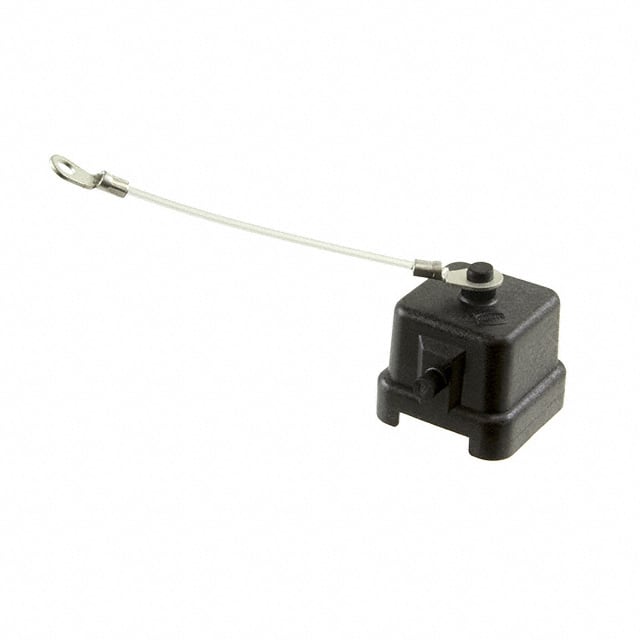
The HAN 3A THERMOPL. COVER, BLACK, from HARTING (SKU: 09200035450), belongs to the category of industrial connector housings and hoods, specifically the accessory side of the Han® 3A series. This component is not an active electronic element; rather, it serves as a protective and mechanical interface for rectangular connectors used in control cabinets, automation equipment, and machinery. Its role is to enclose the insert (where contacts and wiring reside), provide strain relief for cables, and ensure a sealed, secure connection against dust, moisture, and vibration. In a broader system, this cover is the final layer that guarantees the electrical integrity of the signal or power transmission by maintaining the ingress protection (IP) rating and mechanical stability of the entire connector assembly.
When selecting a cover like this, several key parameters must be evaluated. First and foremost is material and flammability rating – the thermoplastic used here is typically polyamide, offering high dielectric strength and a UL94 V-0 rating, which is critical for industrial safety. Next, consider the protection class (IP rating); the Han 3A cover, when mated with a corresponding housing, typically achieves IP65 or IP67, meaning it is dust-tight and protected against water jets or temporary immersion. Also important are temperature range (usually -40°C to +100°C for thermoplastics) and mechanical dimensions – the cover must match the specific size of the Han 3A insert (e.g., 3A, 4A, 6A) and the cable entry diameter. Finally, check the locking mechanism – this cover uses a simple snap or screw lock, which affects ease of assembly and vibration resistance in the field.
Compared to alternatives, this HARTING cover sits at a premium tier. The primary alternative is a metal cover (e.g., die-cast aluminum or zinc), which offers superior mechanical strength and EMI shielding but is significantly heavier, more expensive, and prone to corrosion in harsh chemical environments. Another alternative is a lower-cost generic thermoplastic cover from third-party manufacturers. In terms of performance, the HARTING original provides a guaranteed fit with Han 3A inserts, consistent sealing (thanks to a precision-molded gasket groove), and long-term UV and chemical resistance that generic parts often lack. Cost-wise, the HARTING cover is roughly 20-40% more expensive than a generic equivalent, but the price difference is justified by reliability and reduced downtime – a failed generic cover can lead to connector damage and production stoppages. Availability is generally good for HARTING’s standard SKUs, but in times of global supply chain volatility, generic parts may have shorter lead times due to local stock. However, for critical applications, the risk of a non-certified cover failing an IP test or not fitting precisely outweighs the initial savings.
Industry trends are actively shaping this component category. The push toward miniaturization and higher data rates in industrial IoT is driving demand for smaller, lighter covers that still maintain IP ratings – hence the popularity of thermoplastics over metal. Another trend is the shift to halogen-free and recyclable materials, as European regulations like REACH and RoHS tighten. HARTING has been proactive in this area, offering covers that are fully recyclable and free of halogens, which is a strong selling point for OEMs exporting to environmentally regulated markets. Additionally, the rise of modular connector systems (like Han-Modular) is leading to more complex housing designs, but the Han 3A series remains a workhorse for simple power and signal applications, ensuring a stable, long-term demand for this cover. Finally, the trend toward predictive maintenance is increasing the need for covers that allow for easy inspection – some new designs include transparent windows, though the black version here offers better UV protection and obscures dust accumulation.
You should choose this specific HARTING cover over alternatives when your application demands certified compliance and manufacturer warranty. If you are building equipment for a sector like food processing, medical devices, or railway signaling, where third-party certifications (e.g., UL, CSA, or VDE) are mandatory, then using original HARTING components is non-negotiable. Also, choose this cover when you require interchangeability with a vast installed base – Han 3A connectors are ubiquitous in European machinery, so replacing a cover with a genuine HARTING part ensures compatibility with existing inserts and hoods. Finally, select this cover if your assembly process involves automated or high-frequency crimping, because the tight tolerances of the original part prevent jams and misalignments in production lines. For low-volume, non-critical prototyping, a generic cover may suffice, but for serial production and field service, the HARTING original is the safer engineering choice.
From a procurement perspective, several factors must be considered. Lead times for this SKU are typically 4-6 weeks for large volume orders, but distributor stock (as from a B2B electronics distributor) can offer 1-2 week delivery for smaller quantities. The lifecycle status is stable – HARTING has no announced end-of-life for the Han 3A series, as it is a core product line with decades of legacy support. However, second-source options are available from brands like Weidmüller, Phoenix Contact, and Harting-compatible manufacturers (e.g., Souriau), but caution is advised – the locking mechanism and gasket profiles may differ slightly, so you must test for mechanical compatibility. For critical applications, it is recommended to dual-source with a qualified alternative but to validate the seal and fit per your specific cable jacket thickness. Also, note that this cover is sold without the gasket or screws in some SKUs – check the datasheet to see if you need to order those as separate line items, which can affect total procurement cost. Finally, because the cover is a passive component, it has a long shelf life, allowing you to buy in bulk without obsolescence risk, but be mindful of color variation between batches – black is standard, but slight texture changes can occur, which may be unacceptable for aesthetically sensitive consumer-facing equipment.