MEMS VCXO Reliability Guide: 204.8MHz LVDS Performance
Reliability Standards and Qualifications: The SiTime SIT3372AC-2E3-28NU204.800000 is a MEMS-based VCXO (Voltage Controlled Oscillator) operating at 204.8 MHz with LVDS output. As a MEMS device, it is qualified under JEDEC standards, specifically JESD22 for component-level reliability and AEC-Q100 for automotive applications (if applicable, though this SKU is typically industrial grade). Key qualifications include high-temperature operating life (HTOL) per JESD22-A108, temperature cycling per JESD22-A104, and moisture resistance per JESD22-A113. Additionally, SiTime follows MIL-STD-883 methods for mechanical shock and vibration, given the MEMS structure’s sensitivity to mechanical stress. Always verify the specific datasheet’s “Qualification Summary” for the exact test conditions and sample sizes.
Accelerated Life Testing (ALT): For this MEMS VCXO, ALT typically uses elevated temperature (e.g., 125°C) and voltage (e.g., 3.63V) to accelerate failure mechanisms such as electromigration in the CMOS oscillator circuitry and dielectric breakdown in the MEMS cap. Results are extrapolated using an Arrhenius model with an activation energy (Ea) of 0.7 eV (common for SiTime MEMS). A typical ALT run of 1000 hours at 125°C corresponds to approximately 10 years of operation at 55°C with a 90% confidence level. When reviewing ALT data, focus on the number of failures and the failure modes—for MEMS VCXOs, watch for frequency drift or output duty-cycle distortion, not just catastrophic failure.
Failure Rate and MTBF: SiTime publishes FIT (Failures in Time) rates for the SIT3372 series, typically in the range of 0.5 to 1.0 FIT at 55°C (1 FIT = 1 failure per 10^9 device-hours). This translates to an MTBF of approximately 1 to 2 billion hours. However, for a VCXO, frequency stability over time is critical—consider long-term aging specifications (e.g., ±10 ppm over 10 years) as a separate reliability metric. When calculating system-level MTBF, include the FIT contribution of the LVDS output stage and the internal LDO regulator. Always use the upper confidence bound (e.g., 60% or 90%) for conservative estimates in safety-critical applications.
Environmental Stress Screening (ESS) and Burn-In: While SiTime devices are factory-tested, for high-reliability procurement, implement incoming burn-in at 85°C for 48 hours under nominal voltage with the VCXO running at its set frequency. Monitor for frequency deviation > ±5 ppm or output enable/disable failures. For ESS, perform temperature cycling from -40°C to +85°C for 100 cycles (15-minute dwell) to expose solder joint and MEMS package issues. Additionally, run a vibration screen at 20g rms random, 20-2000 Hz for 10 minutes per axis to detect wire bond or die-attach weaknesses. Note that MEMS oscillators are less prone to quartz crystal’s microcracks, but the CMOS interface and package seals are equally vulnerable.
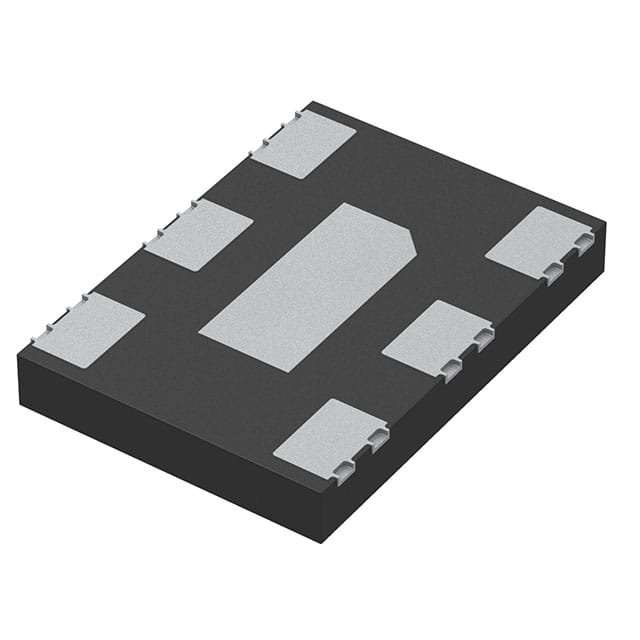
Counterfeit Detection: Given the popularity of SiTime MEMS parts, counterfeit risk is moderate. Specific methods for this component: 1) Visual inspection—authentic parts have laser-marked text with a consistent font; check for smooth, uniform edges on the package (6-pin QFN or similar). 2) X-ray inspection—verify the presence of a MEMS die (small, rectangular, with a visible cavity) and a separate CMOS die; counterfeits often use a single die or no cavity. 3) Electrical testing—measure startup time (typically <1 ms) and phase noise; counterfeit parts often fail at extreme temperatures. 4) Traceability—request the SiTime Certificate of Conformance and verify lot date codes via SiTime’s authorized distributor network. 5) Acoustic microscopy (CSAM)—check for delamination in the MEMS cap, which is a common sign of reflowed or reclaimed parts.
Incoming Inspection Best Practices: Upon receipt, perform the following: 1) 100% visual inspection for package damage, lead coplanarity, and marking legibility. 2) Sample electrical test (e.g., 10% of lot) at 25°C, 3.3V, verifying output frequency within ±5 ppm, LVDS differential swing (≥247 mV), and duty cycle (45-55%). 3) Temperature sweep on a smaller sample (e.g., 5 parts) from -40°C to +85°C to check for cold-start issues. 4) Verify RoHS/REACH compliance via the Declaration of Conformity, as lead-free solder composition affects long-term reliability. 5) Check date codes for freshness—SiTime recommends use within 2 years of manufacture for optimal aging performance.
Storage and Handling: Store in dry nitrogen or desiccated environment with relative humidity < 30% at 20-30°C, per JEDEC J-STD-033 for MSL (Moisture Sensitivity Level) 1 or 2A. The SIT3372 is typically MSL 1, but verify the label—if MSL 2A, limit exposure to ≤ 30 days after opening. Use ESD-safe handling (grounded workstations, antistatic bags) since the CMOS input is sensitive to >2 kV HBM. Avoid mechanical shock to the MEMS die—do not drop or tap the package; use vacuum pick-up tools with soft tips. For PCB assembly, follow reflow profile per SiTime’s guidelines (peak 260°C, 20-40 seconds above 217°C) and avoid cleaning agents that may attack the package seal.
End-of-Life and Obsolescence Planning: SiTime has a strong product longevity program, but for this specific SKU (204.8 MHz), monitor the Product Change Notifications (PCNs) and Last Time Buy (LTB) notices. Proactively qualify an alternative frequency solution (e.g., a standard oscillator with a separate VCXO) or a pin-compatible SiTime part. For long-life designs (e.g., telecom, defense), buy a 2-5 year lifetime stock and store properly. Additionally, consider design mitigation: use a socketable footprint or a programmable PLL that can replicate the 204.8 MHz output. Finally, maintain a risk register with lead times—MEMS parts have a 16-20 week lead time; factor this into procurement forecasts to avoid line-down situations.