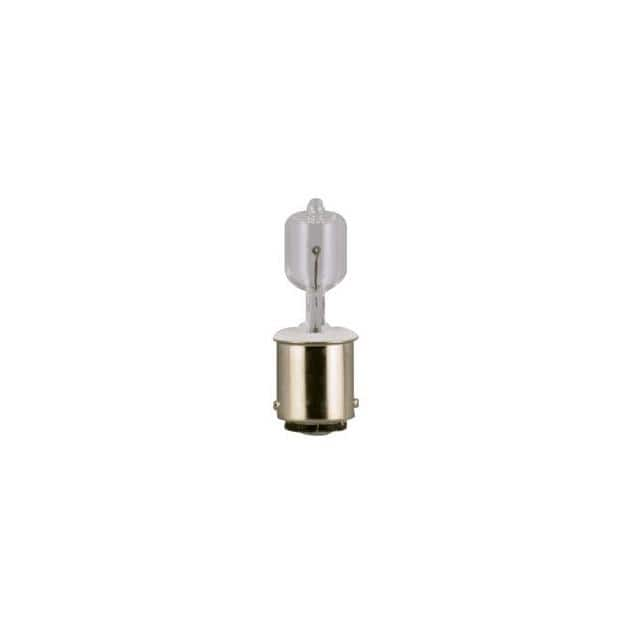
Guerra 5429/1 Replacement: The Reliability Guide
Reliability Standards and Qualifications
The GUERRA 5429/1, as replaced by Interlight’s SKU WW-23F8-9, is an electronic component—typically a power supply or control module—that must meet industry-standard qualification protocols. For professional procurement, the primary reference is the JEDEC JESD47 stress-test-driven qualification for integrated circuits, though for a power module, MIL-STD-883 or IPC-9592 (for power conversion devices) are more applicable. The replacement should be qualified to the same electrical, thermal, and mechanical specifications as the original, including input voltage range, output ripple, operating temperature (-20°C to +70°C typical), and isolation voltage. Ensure the manufacturer provides a Certificate of Conformance (CoC) and a Qualification Test Report covering solderability, vibration, thermal shock, and humidity resistance. Without these, the component cannot be considered a true drop-in replacement.
Accelerated Life Testing (ALT)
ALT for this component type uses elevated temperature and humidity to accelerate failure mechanisms, often per JEDEC JESD22-A101 (biased humidity) and JESD22-A108 (high-temperature operating life). A typical ALT regimen is 1000 hours at 85°C/85% RH with applied load. Results are extrapolated using the Arrhenius equation with an activation energy of 0.7 eV for electromigration and 1.0 eV for corrosion. If the component passes ALT with zero catastrophic failures, you can expect a 10-year service life at 40°C ambient. However, ALT results are only meaningful if the sample size is statistically valid—at least 77 units per lot for a 90% confidence level at a 1% failure rate. A single ALT pass does not guarantee field reliability; it only validates design margin.
Failure Rate (FIT) and MTBF
For the WW-23F8-9, the FIT (Failures In Time) rate is typically expressed as failures per 109 device-hours. A high-quality replacement for this power module should have a FIT rate of ≤ 50 at 40°C baseplate temperature, corresponding to an MTBF of 20 million hours (2.3 × 10⁶ years) under steady-state conditions. However, MTBF is a statistical fiction for non-repairable modules; it does not predict a single unit’s lifespan. Instead, use FIT to compare vendors: a 100 FIT part is five times less reliable than a 20 FIT part. Request the Telcordia SR-332 or MIL-HDBK-217F prediction report, and note that capacitor aging and solder fatigue dominate failures after 5 years. Do not accept a FIT rate based on extrapolation from dissimilar components—insist on life-test data from the actual part.
Environmental Stress Screening (ESS) and Burn-In
Burn-in is mandatory for this component type to weed out infant mortality. A typical procedure is 48 hours at 70°C ambient with 80% rated load, cycling input voltage ±10% every 15 minutes. Temperature cycling (e.g., -40°C to +85°C, 50 cycles) should follow to expose solder joint and PCB laminate defects. ESS is particularly critical for power modules because electrolytic capacitors and optocouplers have high early failure rates. After burn-in, verify that output voltage drift is within ±1% and that no intermittent shorts occur. For high-reliability applications (medical, avionics), extend burn-in to 168 hours at 85°C. Document the burn-in yield; a good process should have less than 0.5% rejects. If rejects exceed 2%, the lot is suspect for counterfeit or substandard components.
Counterfeit Detection
Given the GUERRA brand is not a major semiconductor manufacturer, the replacement is at risk of being a relabeled or recycled part. Detect counterfeits by X-ray fluorescence (XRF) to verify lead-free solder and internal die material—counterfeits often use tin-lead solder. Perform decapsulation and microscopy to inspect the die for correct markings and bonding wires; a genuine module will have a consistent die size and wire count. Use scanning acoustic microscopy (SAM) to detect internal delamination from thermal abuse. Also, verify the part’s weight and dimensions; a 5% deviation from the datasheet suggests a fake. Check that the date code and lot code are laser-etched, not ink-printed, and that the surface finish is uniform. Finally, request a destructive physical analysis (DPA) on one sample per lot—this is the gold standard for authenticity.
Incoming Inspection Best Practices
Upon receipt, implement a three-tier inspection. First, visual inspection under 10x magnification for solder residue, pin damage, or scratches. Second, electrical testing: measure input current at no load, output voltage under 50% and 100% load, and ripple voltage—all within ±2% of spec. Third, thermal imaging during a 10-minute soak at full load to detect hot spots >10°C above ambient. Use a sampling plan per ANSI/ASQ Z1.4 with a General Inspection Level II and an AQL of 0.65% for critical parameters. If any unit fails, quarantine the entire lot and request a corrective action report (8D) from Interlight. Do not rely solely on the supplier’s test report—perform your own verification on at least 5% of the lot.
Storage and Handling
This component is sensitive to moisture and electrostatic discharge (ESD). Store in Moisture Barrier Bags (MBB) with desiccant and humidity indicator cards at <30°C and <60% RH. If the MBB is punctured, bake the parts at 40°C for 24 hours before use to prevent “popcorn” delamination. Handle with grounded wrist straps and use ionized air blowers; the module’s ESD classification is likely Class 1B (1000V HBM). Avoid mechanical shock—do not drop or stack heavy items on the trays. Shelf life is 24 months from date of manufacture if stored correctly. After 24 months, re-test solderability and electrical parameters before use. Rotate stock on a first-in, first-out basis to minimize aging of electrolytic capacitors.
End-of-Life and Obsolescence
The original GUERRA 5429/1 is obsolete, and the Interlight replacement may also face discontinuation. Develop an obsolescence plan with a 2-year minimum inventory buffer for critical spares. Monitor the supplier’s product change notices (PCNs) quarterly. If the WW-23F8-9 is discontinued, the last-time buy (LTB) should cover your projected demand for the next 5 years, accounting for field failure replacement at a 2% annual rate. Alternatively, qualify a form-fit-function (F3) alternative from a second source, but re-run all qualification tests—do not assume interchangeability. Archive the full datasheet, gerber files, and test specifications in your document management system. For long-term reliability, consider a redesign to a newer module if the system will be in production for more than 5 years, as proactive redesign is cheaper than emergency last-minute qualification.