QFN-14 vs DIP-18 Adapter: IPC0005 Comparison Guide
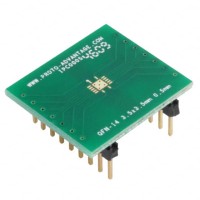
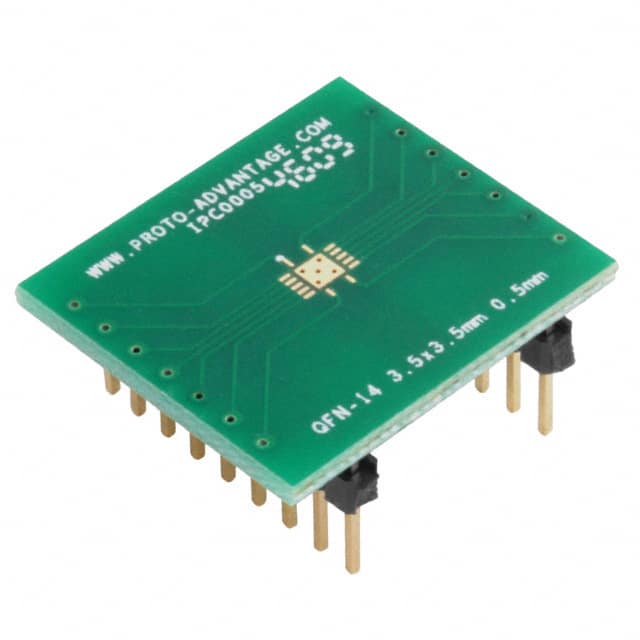
The QFN-14 to DIP-18 SMT Adapter, manufactured by Chip Quik Inc. (SKU: IPC0005), belongs to the category of prototyping and development accessories, specifically within the subcategory of surface-mount to through-hole adapter boards. Its role in electronic systems is critical yet unglamorous: it bridges the physical and electrical gap between a modern, compact QFN (Quad Flat No-lead) integrated circuit and a traditional, breadboard-friendly DIP (Dual Inline Package) footprint. This adapter enables engineers, hobbyists, and R&D labs to evaluate, debug, or repurpose a QFN-14 chip without designing a custom PCB or investing in expensive rework equipment. In essence, it converts a fine-pitch, leadless package into a robust, hand-solderable, 0.1-inch pitch interface that can be plugged into standard prototyping boards, sockets, or wire-wrap connections.
When selecting this type of adapter, several key parameters matter. The first is pin pitch and footprint compatibility—the adapter must precisely match the QFN-14’s 0.5mm pad spacing and the DIP-18’s 2.54mm (0.1-inch) row spacing. A mismatch here renders the adapter useless. Second, thermal and mechanical robustness is vital: the adapter’s PCB material (typically FR-4 or polyimide) must withstand repeated soldering and reflow temperatures without warping. Third, pad finish—immersion gold, HASL, or ENIG—affects solderability and long-term reliability, especially for repeated rework. Fourth, trace routing and parasitic capacitance matter for high-frequency signals; a poorly designed adapter can introduce unwanted inductance or crosstalk. Finally, board thickness (usually 1.6mm) must match standard breadboard or socket dimensions for secure insertion. The Chip Quik IPC0005 excels in these areas, featuring a clear silkscreen, plated through-holes, and a high-temperature FR-4 substrate.
Compared to alternatives, this adapter’s performance is defined by its simplicity and cost-effectiveness. The primary alternative is using a custom breakout board, which requires CAD design, fabrication, and assembly—costing significantly more in both money and time for a single prototype. Another alternative is using a QFN-to-QFN socket, which allows chip swapping but is expensive (often over $50) and may require specialized pressure contacts. In contrast, the Chip Quik adapter costs a few dollars and offers a permanent, solder-based connection that is more reliable than a socket for vibration-prone environments. Performance-wise, the adapter adds a small amount of trace length (typically under 10mm), which is negligible for most low-speed digital and analog signals but could be a concern for RF or high-speed logic above 50MHz. In terms of availability, Chip Quik is a well-established brand, and the IPC0005 is widely stocked by major distributors like Digi-Key, Mouser, and Newark, with typical lead times of 1-2 days for in-stock items. Alternatives from brands like SchmartBoard or Adafruit exist, but they often have less consistent quality or fewer pin-count options.
Industry trends are significantly affecting this component category. The miniaturization of ICs—with QFN, BGA, and other leadless packages becoming standard—has driven a parallel demand for adapters that allow legacy through-hole prototyping methods to interface with modern chips. Additionally, the rise of open-source hardware and rapid prototyping has increased the need for low-cost, off-the-shelf conversion tools. Another trend is the shift toward lead-free soldering; Chip Quik’s adapters are compatible with both leaded and lead-free solder, but the industry’s RoHS compliance has pushed adapter manufacturers to use high-temperature laminates that survive multiple reflow cycles. Furthermore, the growth of IoT and wearable devices, which often use QFN packages for their small size, has sustained demand for these adapters in evaluation and testing phases. Finally, the trend toward modular design—where engineers prototype on breadboards before committing to a PCB—keeps this adapter category relevant despite the rise of simulation tools.
You should choose the Chip Quik IPC0005 specifically when you need a reliable, repeatable, and solderable interface for a QFN-14 device in a prototyping or low-volume production setting. It is ideal when you have a chip that is only available in QFN-14 but your existing test jig, breadboard, or through-hole socket infrastructure requires DIP-18 spacing. It is also the right choice when you need to solder multiple times—for example, when swapping out different firmware versions or testing multiple samples—because the adapter’s through-hole pins are robust enough for repeated insertion. If your application involves high-frequency signals (above 100MHz), you might consider a more specialized adapter with controlled impedance, but for typical microcontroller, sensor, or analog interface tasks, this adapter is sufficient. It is also preferable when you want to avoid the cost and delay of a custom PCB for a one-off or prototype run.
From a procurement perspective, the Chip Quik IPC0005 offers several advantages. Lead times are minimal—as a standard catalog item, it is almost always in stock at major distributors, with same-day shipping options. Its lifecycle status is active and stable, with no signs of obsolescence given the sustained demand for QFN adapters. However, it is worth noting that Chip Quik is the primary source, and second-source options are limited—while generic QFN-to-DIP adapters exist from other vendors, they may not match the exact footprint or via layout, so design-in teams should verify compatibility if they wish to dual-source. For volume buyers, purchasing in reels or trays is not applicable (these are sold individually or in small packs), but bulk discounts are available from distributors. One procurement consideration is counterfeit risk—always buy from authorized distributors to ensure genuine Chip Quik quality, as cheap clones may use inferior FR-4 or incorrect pad plating. Finally, if you are designing a product that will move to high-volume production, this adapter is not meant for final assembly; it is purely a development tool, so plan to transition to a custom PCB after validation.