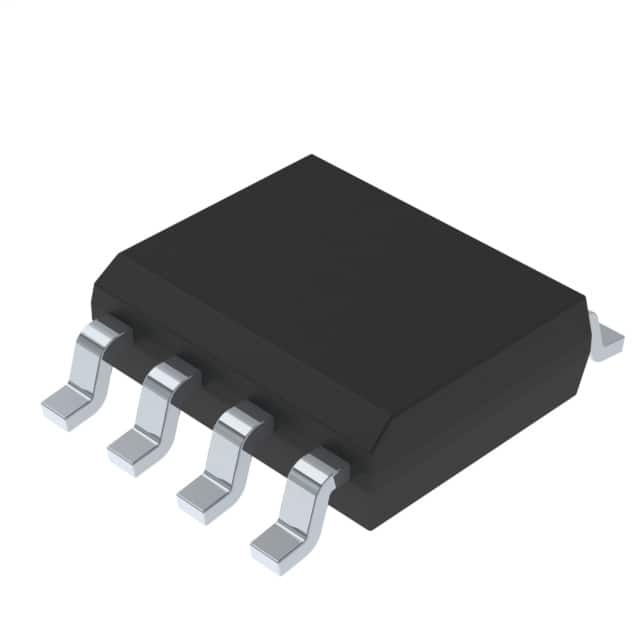
Maximizing System Reliability with the TS834-5IDT Supervisor IC
The unassuming 8-pin SOIC supervisor IC, exemplified by the STMicroelectronics TS834-5IDT, is a silent guardian of modern electronics. While it lacks the glamour of a flagship microprocessor or a high-bandwidth transceiver, this component performs a mission-critical function: ensuring that microcontrollers and digital logic operate only within safe voltage thresholds. As we analyze the current landscape for this specific SKU, we uncover a microcosm of broader industry trends—from the relentless push for functional safety to the tightening grip of supply chain regionalization.
The Technology: Precision in a Tiny Package
The TS834-5IDT is a voltage detector with an open-drain output, specifically designed for reset generation in microprocessor systems. Its core function is to monitor a 5V supply rail and assert a reset signal when the voltage drops below a precise threshold, holding the processor in a known state until power is stable. Recent innovations in this space, while incremental, are significant. We are seeing a shift toward higher accuracy (sub-1% threshold tolerance) and lower quiescent current, which is critical for battery-powered IoT edge nodes. STMicroelectronics has also been integrating manual reset inputs and watchdog timers into the same package, reducing board space and BOM count. For the TS834 specifically, its fixed-sense architecture and robust hysteresis provide glitch immunity, a key differentiator in noisy industrial environments where power supply transients are common.
Market Trends and Demand Drivers
The demand for supervisor ICs is intrinsically linked to the health of the broader semiconductor market, but several secular tailwinds are creating outsized growth. The first is the automotive electrification and ADAS revolution. Every ECU, sensor fusion module, and battery management system requires multiple voltage supervisors to guarantee that safety-critical functions never execute on unstable power. The second driver is the proliferation of industrial automation and Industry 4.0, where programmable logic controllers (PLCs) and robotic servos demand high-reliability reset management. Finally, the build-out of 5G infrastructure and data centers is fueling demand for high-end servers and networking gear, where a single point of failure is unacceptable, thus requiring redundant supervision across multiple voltage domains (core, I/O, and memory).
Supply Chain Dynamics: Navigating Shortages and Shifting Sourcing
The current procurement landscape for the TS834-5IDT and similar 8-SOIC supervisors is characterized by a "new normal" of equilibrium after the post-pandemic shortages. Lead times have normalized to the 8-12 week range for standard volume, down from the 40+ week peaks of 2022. However, we are seeing a strategic shift in how these parts are sourced. Distributors are now the primary buffer for spot market demand, as OEMs reduce direct factory commitments to avoid inventory write-downs. Pricing has stabilized, but we anticipate a moderate 3-5% annual price increase driven by rising wafer costs and the transition to 300mm fabs for analog processes. Procurement teams must be wary of "gray market" parts with date codes older than 18 months; the open-drain output stage in older batches may not meet the stringent leakage specifications required by newer, high-impedance MCU designs.
Emerging Applications: Beyond the Traditional Microcontroller
The most exciting growth vector for this component category is in energy harvesting and ultra-low-power systems. In these applications, the power rail is often a fluctuating capacitor charge or a small solar cell. The TS834-5IDT’s ability to provide a clean, delayed reset signal as the harvested energy accumulates enables microcontrollers to boot only when sufficient energy is available, preventing "brown-out" loops. Another emerging use is in smart grid and EV charging infrastructure, where multiple supervisors are used to monitor isolation barriers and high-voltage side logic. The key here is the component’s ability to operate reliably across a wide temperature range (-40°C to +125°C), a spec that is non-negotiable for outdoor charging piles.
Technology Roadmap: What’s Next?
The roadmap for supervisor ICs is moving toward programmable voltage thresholds and time delays, allowing a single SKU to serve multiple platforms. We also expect to see greater integration of diagnostic functions, such as the ability to read back the reset cause (e.g., VDD dropout vs. external reset pin) via a digital interface like I2C or SPI. This aligns with the automotive ISO 26262 standard, which demands "safe state" verification and fault reporting. For the TS834-5IDT, its longevity is assured by its standard pinout and function, but we anticipate ST will release a pin-compatible upgrade with lower VDD operating limits (down to 0.8V) to support future 1.0V core logic.
Regulatory Impact: Compliance as a Driver
The regulatory environment is a double-edged sword. On one hand, RoHS and REACH compliance is now a baseline requirement, eliminating any sourcing from non-certified suppliers. On the other hand, the automotive qualification (AEC-Q100) is becoming a de facto requirement even for industrial applications, as OEMs seek to unify their component lists. This is a strategic advantage for STMicroelectronics, which manufactures the TS834-5IDT in facilities that are fully certified for Zero Defect automotive production. Procurement teams should verify that their distributor provides full chain-of-custody documentation, including the REACH declaration for SVHC substances, to avoid non-compliance penalties in EU markets.
Strategic Recommendations for Procurement
First, dual-source your supply chain, but ensure the alternate part is a true functional equivalent with matching threshold accuracy, not just a compatible pinout. Second, leverage long-term agreements (LTAs) with distributors that have deep STMicroelectronics allocation, as this SKU is often used in high-mix, low-volume designs where allocation can be squeezed by large automotive orders. Third, maintain a safety stock of 4-6 weeks of demand for this part, as the 8-SOIC package is shared with many other analog functions, making its production line susceptible to capacity shifts. Finally, engage your distributor’s engineering team to review your reset timing requirements; in many cases, a supervisor with a slightly different delay time can be sourced from stock, avoiding a 12-week lead time premium.
In conclusion, the TS834-5IDT is not a commodity; it is a reliability keystone. By understanding its technology, the macro trends, and the supply chain nuances, procurement professionals can turn this tiny part into a strategic advantage for their organization’s resilience.