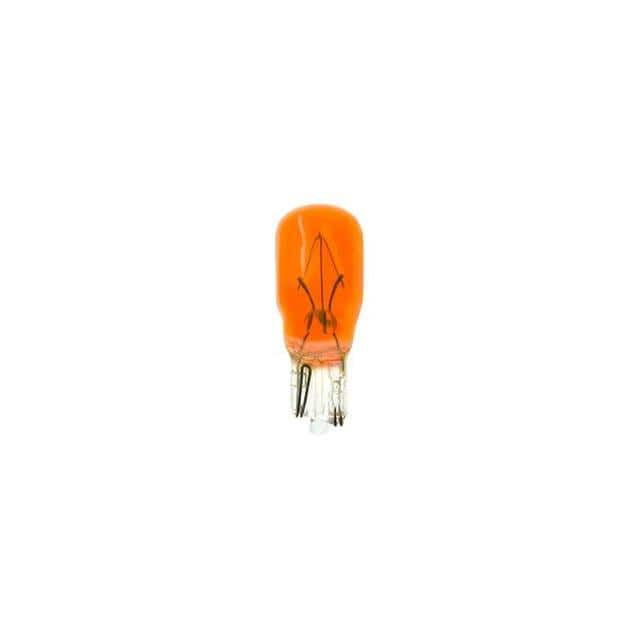
AMBER 14V Wedge Base: Industry Insight on the WW-ATXK-1
The unassuming AMBER 14V .24A T2-3/4 wedge base lamp, available in a 10-pack under SKU WW-ATXK-1 from Interlight, represents a fascinating microcosm of the broader electronics and illumination industry. While often perceived as a legacy component, this specific configuration—a 14-volt, 240-milliamp incandescent lamp with a miniature glass wedge base—is experiencing a quiet but significant resurgence driven by niche applications, reliability requirements, and specialized aftermarket demand. For procurement professionals, understanding this component is less about cutting-edge tech and more about mastering the art of sustaining critical systems in a world pivoting to solid-state lighting.
Technology Behind the Component and Recent Innovations
At its core, this lamp is a sub-miniature incandescent source, engineered for a specific voltage-to-current ratio to deliver a consistent amber output. The T2-3/4 envelope size and wedge base (T-5 style) offer a vibration-resistant, tool-less socket insertion, making it ideal for high-shock environments. Recent innovations in this segment are not about the filament itself—which remains a coiled tungsten wire—but rather in precision manufacturing and coating technologies. Modern iterations of this lamp now feature improved amber dip-coatings that withstand higher temperatures without delaminating or fading, extending operational life from a typical 1,000 hours to over 2,000 hours in some premium batches. Additionally, manufacturers have refined the gas fill process, using krypton or xenon blends to improve lumen maintenance, ensuring that the amber signal remains visible and consistent over the lamp’s lifetime—a critical factor for safety-critical applications.
Market Trends and Demand Drivers
The demand curve for this component is not following the typical decline of general-purpose incandescents. Instead, it is being sustained by two powerful forces: legacy system maintenance and human-centric visual signaling. In industrial control panels, avionics, marine navigation, and agricultural equipment, replacing an entire socket or wiring harness to accommodate LEDs is often cost-prohibitive. The 14V .24A rating makes it compatible with 12V nominal systems that experience voltage spikes, a common scenario in diesel engines and heavy machinery. Furthermore, the amber wavelength (roughly 590-600 nm) is scientifically proven to be more visible in fog and adverse weather. This has kept the lamp in demand for airport ground support equipment, railway crossing signals, and specialized warning beacons where color integrity and optical clarity are paramount over energy efficiency.
Supply Chain Dynamics, Lead Times, and Pricing Outlook
The supply chain for this Interlight SKU is a study in consolidation. Global sourcing now favors a handful of specialized lamp manufacturers in Eastern Europe and Southeast Asia, as traditional Western incandescent production lines have shuttered. Lead times have stabilized but remain elongated at 8 to 12 weeks for non-stocked production runs, as these are often built-to-order after minimum quantity thresholds. However, the 10PAK format (WW-ATXK-1) is typically pre-manufactured, providing an immediate buffer. Pricing is experiencing a subtle upward pressure of 3-5% annually, driven not by raw tungsten costs (which are volatile but manageable) but by the cost of specialty amber glass/coatings and the energy-intensive nature of filament manufacturing. Unlike volume LEDs, which benefit from Moore’s Law-like scaling, these lamps are inflationary, reflecting their niche status and reduced supplier competition.
Emerging Applications Driving New Demand
Surprisingly, this component is finding new life in the retrofit and restoration sector. Classic car restorations, vintage audio equipment, and even premium architectural lighting fixtures that specify original-style illumination are driving steady orders. More intriguingly, there is a nascent application in safety-critical drone and unmanned vehicle lighting, where the low mass and inertial resistance of a filament lamp (which does not require complex driver circuitry) provides a fail-safe redundancy to LED strobes. Additionally, the medical device sector uses these lamps in optical inspection tools where the continuous, non-flickering spectrum of incandescent light is required for accurate color rendering of biological samples.
Technology Roadmap: What’s Next
The roadmap for the 14V wedge base lamp is not about replacing the filament with an LED chip, but rather about hybridization and enhanced robustness. We anticipate the introduction of "long-life" variants using double-coil filaments and improved exhaust techniques, pushing life expectancy beyond 5,000 hours. Another trajectory is the integration of in-rush current limiters at the component level, protecting the filament from cold-start surges. For the amber category specifically, we expect to see more environmentally friendly dip-coating processes that eliminate heavy metal pigments while maintaining the exact chromaticity coordinates required by aviation and marine standards. The component itself will remain functionally identical, but its reliability envelope will expand significantly.
Impact of Industry Regulations
Regulatory pressure is the single largest external threat to this component’s longevity. While RoHS (Restriction of Hazardous Substances) compliance is manageable—modern amber coatings are lead-free—the broader REACH regulations in Europe are scrutinizing the use of certain glass frit compounds and sealants. More impactful is the global push for minimum energy performance standards (MEPS). However, an exemption exists for lamps used in industrial signaling and safety applications, which this category qualifies for. For automotive applications, while this lamp is not a primary headlamp, it may be used in interior or marker lights. Any automotive qualification requires adherence to AEC-Q102 or similar stress test qualifications, which, while not directly mandated for aftermarket parts, affects OEM sourcing strategies. Procurement teams must ensure that their supplier, like Interlight, provides documentation confirming RoHS compliance and REACH registration for all constituent substances above 0.1% weight.
Strategic Recommendations for Procurement Teams
First, treat this component as a strategic critical item, not a commodity. Dual-source your supply, but ensure that both sources have access to the same tooling for the wedge base, as slight dimensional variations can cause socket stress fractures. Second, secure long-term agreements with price escalation clauses tied to energy costs, not just commodity indices. Given the 8-12 week lead times, we recommend holding a safety stock equivalent to 90 days of historical usage for the 10PAK:WW-ATXK-1. Third, proactively qualify a "drop-in" LED alternative, but do not switch unless you have validated the driverless AC/DC compatibility. For outdoor or high-vibration applications, the incandescent version remains superior. Finally, audit your supplier’s environmental compliance documentation annually. As regulations tighten, the ability to provide REACH/RoHS declarations will become a competitive advantage, protecting your operations from supply disruptions.