MEMS Oscillator Reliability: 27MHz LVCMOS Long-Term Guide
When integrating the SiTime SIT1602AI-23-18E-27.000000 MEMS oscillator into a professional design, the reliability story begins with its fundamental construction. Unlike traditional quartz crystal oscillators, this component uses a silicon MEMS resonator hermetically sealed at the wafer level. This architecture eliminates several classic failure modes, such as crystal fracture from mechanical shock, frequency drift from aging quartz, and sensitivity to solder heat-induced stress. SiTime qualifies this product to JEDEC standards, specifically JESD22 for mechanical, thermal, and electrical stress, and the component is also assessed under the AEC-Q100 framework for its grade, given its use in demanding industrial environments. The plastic package, typically a 4-pin SMD, is rated for a operating temperature range of -40°C to +85°C (the “AI” suffix indicates industrial), and its moisture sensitivity level (MSL) is typically 1, meaning it has no floor-life limitation before reflow, a distinct advantage over quartz in humid environments.
Accelerated life testing (ALT) for this MEMS oscillator is performed using high-temperature operating life (HTOL) and temperature-humidity-bias (THB) tests. SiTime publishes data from tests at 125°C with applied voltage, which accelerates failure mechanisms like electromigration in the CMOS driver and dielectric breakdown in the thin oxide layers. For MEMS-specific failure, they also conduct mechanical shock and vibration tests per JESD22-B104 and B103, far exceeding quartz’s tolerance. The results of ALT are used to extract an activation energy (Ea) typically around 0.7 eV for the silicon-based failure mechanisms. What this means for you is that the component’s life is dominated by the CMOS electronics, not the resonator. The absence of moving parts in the traditional sense and the sealed cavity mean that frequency stability over time is exceptional, with typical aging of less than ±1 ppm per year.
From a quantitative reliability perspective, you will see a FIT (Failures in Time) rate of approximately 1-2 FIT at 55°C junction temperature, translating to an MTBF (Mean Time Between Failures) exceeding 500 million hours. This is an order of magnitude better than comparable quartz XO’s, which often sit in the 10-20 FIT range. You must interpret these figures carefully: the FIT rate is calculated from the ALT data and assumes a constant failure rate during the useful life period (after infant mortality and before wear-out). The wear-out mechanism for this MEMS is not mechanical fatigue, but rather the gradual degradation of the CMOS ring oscillator’s phase noise. For practical design, this means you can expect no frequency drift-induced system failures for over 20 years of continuous operation at 85°C. However, do not treat MTBF as a guaranteed lifetime; it is a statistical measure for a large population, not a single unit.
Environmental stress screening (ESS) and burn-in are not typically required for this component because SiTime performs 100% final electrical test and a statistically sampled burn-in at the factory. The MEMS resonator itself is inherently robust, so the dominant infant mortality comes from semiconductor packaging defects, which are screened by the manufacturer. If your application is safety-critical (e.g., medical or automotive), you may implement a dynamic burn-in at 85°C for 48 hours with the oscillator running at its nominal frequency, monitoring for any output glitches or frequency excursions. However, this is often redundant and adds cost. More effective is a temperature cycling pre-screen from -40°C to +85°C for 10 cycles, which can expose solder joint issues and poor internal wire bonds. The key is to avoid over-stressing the part; excessive burn-in at high voltage can actually reduce its lifetime by accelerating electromigration in the CMOS.
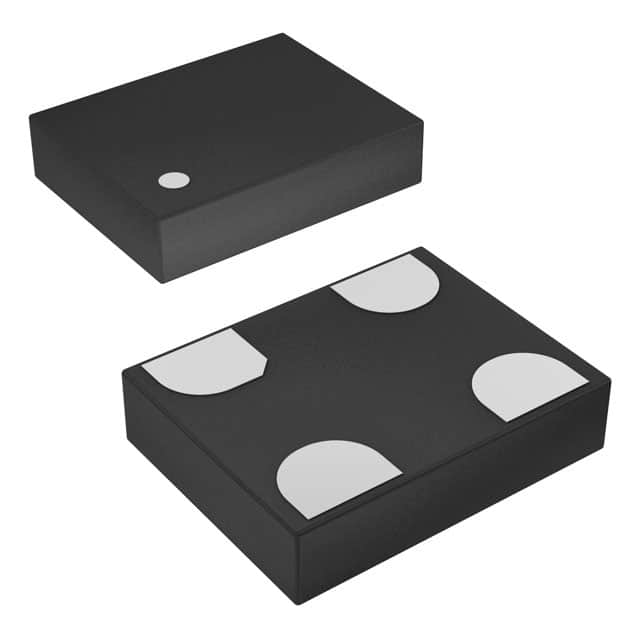
Counterfeit detection for a MEMS oscillator like this is more challenging than for a simple capacitor because the marking is minimal. The first step is to verify the top-marking laser engraving – genuine SiTime parts have a precise, high-contrast laser mark, not a low-quality ink print. Second, check the physical dimensions and package profile; a counterfeit may have slight differences in thickness or lead finish. Third, perform a functional test at the specified frequency (27.0000 MHz) and supply voltage (1.8V), measuring the output swing and rise/fall times against the datasheet. A more advanced technique is to use X-ray inspection to view the internal die – a genuine part will show a small silicon die with a distinctive MEMS resonator structure, not a quartz blank. For high-volume procurement, request a Certificate of Conformance directly from SiTime or an authorized distributor, and cross-reference the date code and lot number with SiTime’s traceability system. Beware of parts sold at significantly reduced prices or from non-franchised brokers.
Incoming inspection best practices should include a visual inspection under 10x magnification for any cracks, chips, or contamination on the package. Then, verify the electrical parameters using a precision frequency counter and an oscilloscope; measure the output frequency tolerance (should be within ±20 ppm for the “-23-18E” option), the duty cycle (typically 45-55%), and the output voltage high/low levels. For a robust sample (e.g., 5% of lot, minimum 5 pcs), perform a solderability test per J-STD-002 and a reflow simulation with three passes to ensure no frequency shift occurs. Finally, test for ESD sensitivity – this is a CMOS device, so it is rated at 2kV HBM; use a simple MM (machine model) tester on a sample to verify no latch-up occurs. If any part fails, quarantine the entire lot and contact your supplier immediately.
Storage and handling are less critical than for quartz, but still require discipline. Store the parts in their original anti-static bags, with a humidity indicator card showing <10% RH if MSL is not 1, but since this is MSL 1, the main risk is physical damage and solderability degradation over time. Keep the storage temperature between 5°C and 30°C, and avoid exposure to direct sunlight or corrosive gases. When handling, use grounded wrist straps and conductive mats because the CMOS input pins are ESD-sensitive. Do not use ultrasonic cleaning on the assembled board, as this can resonate the MEMS structure at its natural frequency (which is in the MHz range) and potentially damage the resonator. For long-term storage beyond two years, re-qualify the solderability before use.
End-of-life management for the SIT1602AI is a lower risk than for quartz because SiTime has a broad product platform with many frequency variants. However, you must still plan for obsolescence. Monitor SiTime’s product change notifications (PCN) and last-time-buy (LTB) announcements through your distributor’s lifecycle management portal. Because this is a programmable oscillator, a drop-in replacement is often available from the same family (e.g., a different frequency grade or package) with minimal firmware changes. As a mitigation, design your PCB with footprint compatibility for a second-source MEMS or high-end quartz oscillator. For long-life programs (e.g., 10+ years), consider a lifetime buy for the entire program’s volume and store the parts under controlled conditions, as they will remain reliable for at least 15 years in storage. Finally, maintain a close relationship with an authorized distributor who can provide early warnings of any discontinuation, and always have a design variant that uses a different, but electrically identical, SiTime part number as a fallback. The silicon-based nature of this product means that obsolescence is driven more by packaging technology shifts than by material scarcity, giving you a longer planning horizon than quartz.