DCM3623 Review: Why This Converter Redefines Power Density
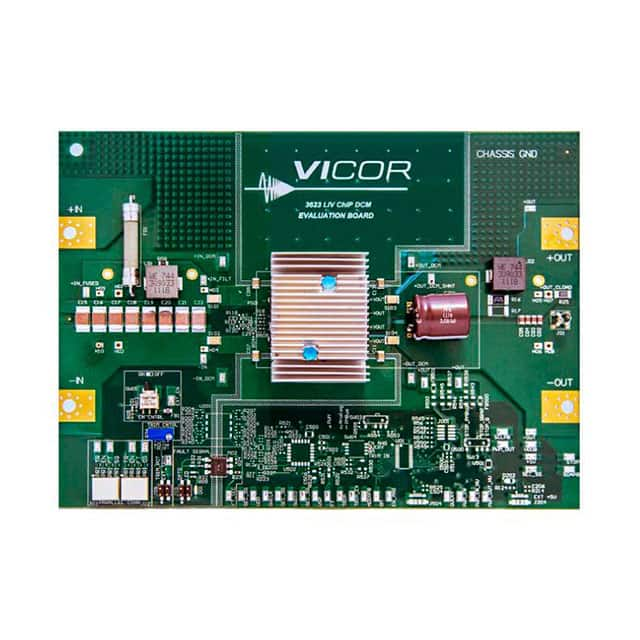
The evaluation of the Vicor DCM3623T50T31A6M00, alongside its production counterpart SKU DCM3623E50T31A6M00, offers a compelling lens through which to view the current state of high-density, isolated DC-DC conversion. This component, part of Vicor’s DCM (DC-DC Converter Module) family, is not merely a power supply; it is a testament to how far the industry has pushed the boundaries of power density, efficiency, and thermal management. The technology leverages a proprietary zero-voltage-switching (ZVS) topology and a high-frequency sine amplitude converter architecture, enabling the delivery of up to 300W from a ChiP (Converter housed in Package) format that is barely larger than a postage stamp. This allows designers to move beyond traditional bulky brick converters, placing power directly at the point-of-load (POL) without sacrificing isolation or regulation. Recent innovations in this space are focused on improving the thermal interface, with the DCM3623 series featuring an integrated heatsink option, and on enhancing the efficiency curve to exceed 93% across a wide input range (typically 36-75V), a critical factor for reducing system cooling requirements and improving overall energy utilization.
The market demand for such high-performance converters is being driven by several secular trends. The most significant is the relentless push for higher compute density in data centers, particularly for AI and machine learning accelerators that demand current-hungry ASICs and GPUs. These processors require tight-voltage, high-current rails, and the DCM3623’s ability to step down a nominal 48V bus with high efficiency and low noise makes it a critical enabler of next-generation power architectures. Beyond the data center, the electrification of transportation—spanning electric vehicles (EVs), hybrid electric aircraft, and heavy-duty trucks—is creating a surge in demand for robust, automotive-grade isolated converters. The DCM3623’s wide input range and inherent isolation make it suitable for auxiliary power supplies in battery management systems, traction inverters, and on-board chargers. Additionally, the industrial sector’s move toward more autonomous, sensor-laden robotics and factory automation is increasing the need for compact, reliable power supplies that can operate in harsh electrical environments, further solidifying the demand for this component category.
From a supply chain perspective, the dynamics for high-density DC-DC converters like the DCM3623 have been notably volatile. While the acute shortages of the 2021-2022 period have eased, lead times for advanced power modules remain elevated compared to pre-pandemic levels, typically ranging from 20 to 30 weeks for standard configurations and extending further for custom variants. Global sourcing remains concentrated, with Vicor’s manufacturing primarily based in the USA and the Philippines, which presents both a risk mitigation factor (diversification away from China) and a potential bottleneck given the high demand. Pricing for such specialized components has seen a modest upward trend of 3-5% annually, driven by rising raw material costs—particularly for copper, silicon, and advanced magnetic materials—as well as the increasing complexity of the packaging and testing processes required to guarantee reliability. Procurement teams should anticipate that this pricing pressure will persist, as the intense R&D investment required to maintain performance leadership must be recovered. Strategic buyers are advised to secure long-term agreements (LTAs) with flexible quantity bands to lock in current pricing and guarantee allocation, especially as we approach the next cyclical upswing in the semiconductor market.
Emerging applications are pushing the DCM3623 category into new territories, most notably in the realm of high-voltage battery systems for EVs (800V architectures). While the DCM3623 itself is rated for 48V input, its roadmap—as evidenced by Vicor’s broader portfolio—directly addresses the need to efficiently convert from 800V down to 12V or 48V intermediate buses. This is creating a corollary demand for evaluation platforms like the DCM3623T50T31A6M00 as design engineers use them to prototype and validate the control loops and thermal designs that will later be scaled to higher-voltage versions. Another emerging driver is the rise of energy storage systems (ESS) for grid stability, where isolated converters are required for battery management and auxiliary power, demanding high reliability over a 20+ year lifespan. Furthermore, we are seeing adoption in medical imaging and surgical robotics, where the low leakage current and high isolation ratings of these modules are essential for patient safety, often exceeding standard industrial requirements.
Looking at the technology roadmap, the next generation of this component category will likely focus on further vertical integration and the move to higher switching frequencies (into the megahertz range) using gallium nitride (GaN) transistors. This will enable even smaller magnetic components and higher power densities. We can anticipate modules that integrate more functions—such as digital communication via PMBus for telemetry and control—directly onto the module, reducing the external component count and simplifying system design. Another significant trend is the development of “field-replaceable” and modular architectures that allow for easy scaling of power in server racks. However, this roadmap is subject to regulatory pressures. While the DCM3623 series is already RoHS compliant, the industry is watching the evolution of the RoHS directive and its potential to tighten restrictions on substances like phthalates and flame retardants. The EU’s REACH regulation continues to expand its list of Substances of Very High Concern (SVHC), which could impact the materials used in potting compounds and PWB substrates. For automotive and aerospace applications, compliance with AEC-Q100 (for integrated circuits) and AEC-Q200 (for passive components) is becoming a de facto requirement, and Vicor’s ability to qualify its modules to these standards will be a key differentiator. Military and avionics customers are also driving adherence to MIL-STD-883, which adds significant testing and documentation overhead but commands premium pricing.
For procurement teams, the strategic recommendation is clear: treat the DCM3623E50T31A6M00 not as a commodity but as a strategic technology asset. First, engage early with the design engineering team to validate your specific thermal and electrical requirements using the evaluation module (DCM3623T50T31A6M00). Second, do not rely solely on a single source; while Vicor is the primary manufacturer, understand that there are limited second-source options, so building a close relationship with an authorized distributor that carries inventory of both the eval board and production units is critical. Third, forecast demand conservatively but secure capacity aggressively. Given the 20-30 week lead times, a lack of buffer inventory for a critical server or EV program can halt an entire assembly line. Fourth, have a contingency plan for the 48V input architecture; as the industry shifts, ensure your chosen module has a clear upgrade path to higher voltage and digital control. Finally, actively review the regulatory compliance status (RoHS, REACH) of your entire power train annually, as last-minute changes due to a new SVHC listing can force a costly requalification. By treating this evaluation kit as a starting point for a long-term, collaborative supply relationship, you can mitigate risk and ensure your products remain at the leading edge of power density and efficiency.