Unlocking Precision: MEMS VCXO Trends in Modern Electronics
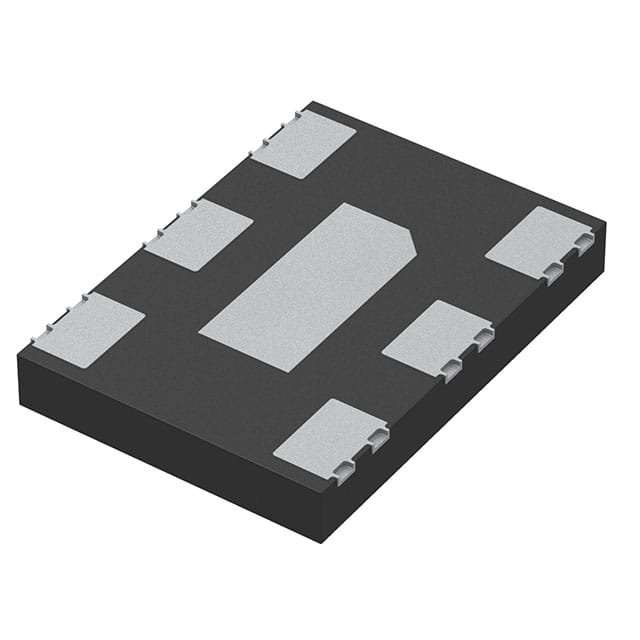
The spotlight often falls on application processors and high-bandwidth memory, but the humble clock source is the silent conductor of the digital orchestra. In high-reliability systems, the oscillator is not a commodity; it is a critical performance differentiator. A prime example of this evolution is the SiTime SIT3372AI-1E3-33NG148.425750, a MEMS-based VCXO (Voltage-Controlled Crystal Oscillator) delivering a precise 148.42575 MHz output. This specific frequency is not arbitrary—it is a cornerstone for high-definition video and broadcast synchronization. Analyzing this component offers a lens into the broader strategic shifts affecting procurement, design, and supply chain resilience.
The Technology Behind the Precision
Traditional quartz VCXOs have served admirably for decades, but they face physical limitations in size, shock resistance, and aging. SiTime has disrupted this space by replacing the quartz crystal with a silicon MEMS (Micro-Electro-Mechanical Systems) resonator. The SIT3372 series leverages a dual-mode resonator architecture that enables exceptional stability—often sub-0.1 ppb/°C—while maintaining low phase noise critical for jitter-sensitive applications like 12G-SDI video links. Recent innovations focus on temperature compensation and vibration immunity. Unlike quartz, which can exhibit microphonics (frequency shifts due to mechanical vibration), MEMS resonators are inherently more rigid and can be hermetically sealed at the wafer level. This makes the SIT3372AI-1E3-33NG148.425750 exceptionally robust for aerospace, defense, and industrial environments where shock and vibration are constant threats. Furthermore, the integration of analog and digital circuitry on the same die allows for finer voltage-to-frequency gain linearity, reducing the pull-range error that plagues traditional analog VCXOs.
Market Trends and Demand Drivers
The demand for the 148.42575 MHz frequency is tightly correlated with the professional A/V and broadcast industry’s transition to higher frame rates and resolutions, specifically 4K and 8K formats. The SMPTE ST 2082 standard for 12G-SDI requires pixel clock frequencies that fall in this exact range. However, the broader MEMS oscillator market is also being fueled by the automotive sector, where radar, LiDAR, and high-speed in-vehicle networks (Automotive Ethernet) demand ultra-reliable timing. Another major driver is the proliferation of 5G mmWave infrastructure, where VCXOs are essential for synchronizing base stations and compensating for drift. The shift from a "one-size-fits-all" commodity clock to application-specific frequency parts is a defining trend, allowing distributors to offer higher value by stocking precision variants like this SiTime part.
Supply Chain Dynamics and Pricing Outlook
The global supply chain for MEMS oscillators is structurally different from that of quartz. Quartz sourcing is fragmented, with Japanese and Chinese suppliers dominating raw crystal blanks. MEMS, conversely, relies on high-volume standard CMOS fabs—primarily located in Taiwan and the U.S. This shift provides a significant advantage: lead times are dramatically shorter. While quartz VCXOs can see lead times stretch to 16-20 weeks due to crystal blank shortages, the SIT3372 series typically sees lead times of 6-8 weeks for standard configurations. Pricing has also stabilized. Quartz prices are volatile due to raw material scarcity, whereas MEMS pricing benefits from Moore’s Law scaling and wafer-level economies of scale. We project a slight downward pricing trend of 2-3% annually for this segment, driven by increased fab utilization and competitive pressure from other MEMS players. Procurement teams should note that SiTime’s capacity is not tied to discrete crystal suppliers, reducing the risk of force majeure events related to mining or crystal growing.
Emerging Applications Driving New Demand
Beyond broadcast, we see a surge in demand from the medical imaging sector, specifically for high-resolution ultrasound and optical coherence tomography (OCT) systems that require precise timing for signal processing. Additionally, the rise of ruggedized edge-AI servers deployed in harsh environments (e.g., oil rigs, mining vehicles) is pushing designers toward MEMS parts due to their superior MTBF (Mean Time Between Failures). The SIT3372’s ability to operate across a wide temperature range (-40°C to +85°C) with low jitter makes it ideal for these unclassified environments. Another nascent application is in electrified aviation (eVTOLs), where every gram matters; the MEMS package is significantly lighter and smaller than equivalent quartz modules, freeing up board space for redundant power systems.
Technology Roadmap: What’s Next
The roadmap for MEMS VCXOs is pointed toward integrated power management and programmability. We anticipate future generations will incorporate on-chip LDOs (Low-Dropout Regulators) to improve PSRR (Power Supply Rejection Ratio), eliminating the need for external filtering capacitors. Another frontier is the move toward "FemtoClock" level phase noise, targeting below -160 dBc/Hz at 10kHz offset, which would allow MEMS to penetrate the most demanding radar and defense applications currently monopolized by OCXOs (Oven-Controlled Crystal Oscillators). Furthermore, SiTime is developing post-package programmability, where a single SKU can be configured via one-time-programmable memory to output any frequency between 1 MHz and 1 GHz. This will radically reduce inventory complexity for distributors, allowing a single stock-keeping unit to serve multiple customer designs.
Regulatory and Compliance Impact
Compliance is a critical value-add for this component. The SIT3372AI-1E3-33NG148.425750 is fully RoHS compliant and meets REACH standards, which is non-negotiable for EU exports. However, the more strategic differentiator is the AEC-Q100 qualification for automotive use. While this specific SKU is not explicitly auto-grade, the underlying MEMS platform carries robust qualifications for thermal cycling and humidity resistance. Procurement must verify that the specific grade (e.g., -1E3 suffix indicating extended temperature) meets the end-market’s requirements. Unlike some quartz suppliers that have faced issues with conflict minerals (specifically tin and tantalum), MEMS oscillators use standard silicon and gold, simplifying due-diligence reporting under Section 1502 of the Dodd-Frank Act.
Strategic Recommendations for Procurement Teams
First, do not treat this as a drop-in quartz replacement without verifying the control voltage slope and pull-in range. The SiTime part has a specific absolute pull range (APR) that must be matched to the PLL’s loop filter. Second, leverage the shorter lead times to adopt a "JIT-Plus" strategy, holding only 2-3 weeks of safety stock rather than the 10-12 weeks typical for quartz. Third, negotiate annual pricing agreements based on volume, as MEMS vendors are eager to lock in design wins against incumbent quartz suppliers. Finally, qualify a second source (such as a generic CMOS oscillator with external PLL) for low-risk designs, but maintain the SiTime part as the sole-source for high-reliability, frequency-critical paths. By aligning your sourcing strategy with the semiconductor-like nature of MEMS, you can achieve lower total cost of ownership and higher supply chain agility.