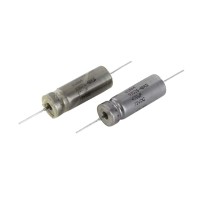
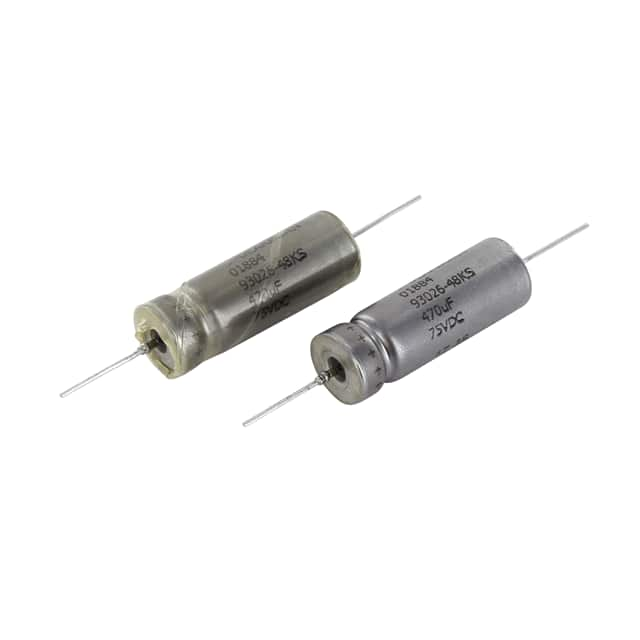
CAP TANT 10UF 10% 125V AXIAL (93026-53KS): Comparison Guide
When specifying a CAP TANT 10UF 10% 125V AXIAL (Brand: EXXELIA, SKU: 93026-53KS), buyers are dealing with a tantalum electrolytic capacitor in a hermetically sealed axial package. This is not a commodity-grade part. It belongs to the high-reliability segment of the tantalum capacitor category, often used in aerospace, defense, medical, and industrial systems where failure is not an option. The component's role is straightforward: store and release energy, filter noise, smooth voltage rails, and provide local decoupling. But the axial, hermetic construction and 125V rating place it in a different tier than the surface-mount tantalum chips most engineers encounter daily.
Key parameters for this type of component go well beyond capacitance and tolerance. The 10 µF capacitance with 10% tolerance sets the nominal value, but the 125V DC working voltage is the headline. Tantalum capacitors are voltage-sensitive; derating is mandatory. A 125V part is typically operated at no more than 50-60% of rated voltage in high-reliability designs, meaning the effective working voltage is closer to 60-75V. Buyers must also examine equivalent series resistance (ESR), leakage current, and dissipation factor. For axial hermetic tantalums, ESR is generally higher than modern polymer or ceramic alternatives, but leakage is low and stable. Operating temperature range matters too; these parts often carry -55°C to +125°C ratings, with voltage derating above 85°C. Finally, the axial through-hole form factor affects board layout, soldering, and vibration resistance—critical in avionics and military hardware.
Compared to alternatives, the EXXELIA 93026-53KS occupies a specific niche. Standard surface-mount tantalum chips offer lower ESR, smaller size, and much lower cost, but they are not hermetic and cannot match the 125V rating in a single package. Aluminum electrolytics can reach higher voltages and capacitance at lower cost, but they are larger, have shorter lifetimes, and suffer from electrolyte dry-out. Multilayer ceramic capacitors (MLCCs) provide excellent ESR and no polarity concerns, but 10 µF at 125V in a ceramic is physically large, prone to piezoelectric cracking, and offers no inherent wear-out mechanism—which sounds good until you need the self-healing and stability of tantalum. In terms of cost, the EXXELIA part is expensive: expect several dollars to tens of dollars per unit depending on quantity and screening level, versus pennies for a commercial SMD tantalum. Availability is limited; these are not stocked in deep reels at every distributor. Performance-wise, the trade-off is clear: you pay for hermetic sealing, high voltage, and established reliability.
Industry trends are reshaping this category. The push toward higher-density power electronics favors ceramic and polymer capacitors, which are shrinking in size and improving in voltage rating. Tantalum ore supply remains politically sensitive, and major manufacturers have consolidated. At the same time, defense and space programs are extending lifetimes and demanding counterfeit avoidance, which favors authorized distributors and traceable parts like the EXXELIA axial series. There is also a slow shift toward hermetic ceramic and solid tantalum alternatives for new designs, but legacy platforms still require axial tantalums for form-fit-function replacement. Obsolescence is a real concern: many axial tantalum lines are being discontinued as manufacturers focus on SMD. Buyers should monitor PCN (Product Change Notification) and EOL (End of Life) notices closely.
Choose this specific component when you need a hermetic, high-voltage tantalum capacitor in an axial package for a rugged or high-reliability application. Examples include power supply filtering in downhole oil tools, implantable medical devices, satellite power buses, and missile guidance systems. It is also the right choice when a legacy design cannot be re-laid-out for SMD and you need a drop-in replacement with the same axial footprint and 125V rating. Do not choose it for cost-sensitive consumer electronics, high-frequency switching regulators where low ESR is paramount, or any design where board space is at a premium. If your application operates below 50V and does not require hermetic sealing, a commercial SMD tantalum or polymer capacitor will save money and space.
Procurement considerations for the EXXELIA 93026-53KS require planning. Lead times can stretch from 12 to 26 weeks or more, especially for non-stocked values or screened versions. Lifecycle status is active for now, but axial tantalums are a declining product family; confirm with the manufacturer or franchised distributor that no EOL is pending. Second-source options are limited. AVX, KEMET, and Vishay offer similar hermetic axial tantalums, but they are not drop-in replacements without verifying capacitance tolerance, voltage rating, ESR, and case size. Cross-referencing by SKU alone is dangerous. Always request a datasheet comparison and, for high-reliability programs, consider a source control drawing (SCD) or qualified parts list (QPL) approach. Buy from authorized distribution only; the counterfeit risk for high-voltage tantalums is significant. Finally, factor in minimum order quantities and shelf life—hermetic tantalums store well, but solderability and lead finish can degrade over years.