6V 20W Base with Collar WW-29VS-8: Ultimate Reliability Guide
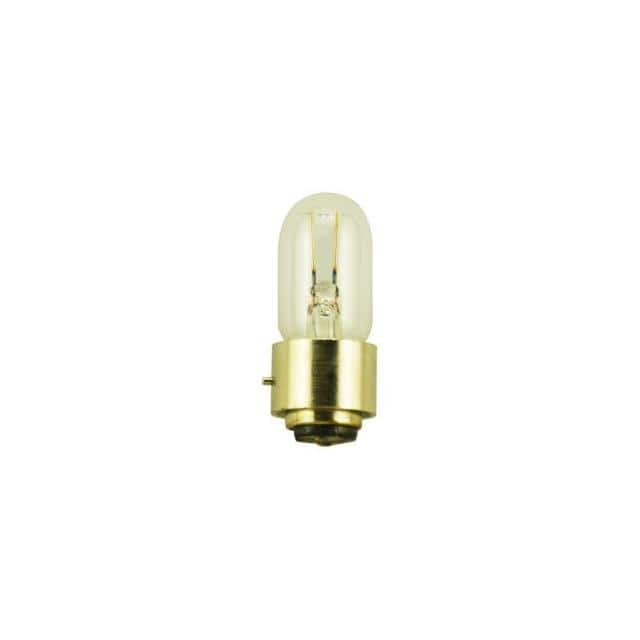
The Interlight WW-29VS-8 is a 6-volt, 20-watt lamp with a base and collar configuration, typically used in specialty or legacy equipment where mechanical retention and precise optical alignment matter. Because this is a low-volume, application-specific component, reliability engineering must account for both the lamp’s inherent wear-out mechanisms and the supply-chain risks of a niche part. The following guide outlines qualification, testing, and lifecycle practices for professional procurement.
Reliability standards and qualifications. For a 6V 20W incandescent or halogen lamp, relevant standards include IEC 60068 for environmental testing, MIL-STD-202 for electronic component mechanical and environmental stress, and MIL-PRF-19500-style screening logic adapted to electro-mechanical devices. Where the parent assembly is aerospace or defense, the lamp may need to meet derating and traceability requirements per AS6171 for counterfeit avoidance and AS5553 for counterfeit electronic parts. Interlight does not typically publish full qualification dossiers, so buyers should require a Certificate of Conformance, lot traceability, and evidence of incoming optical and electrical characterization. For medical or industrial equipment, ISO 13485 or IATF 16949 supply-chain expectations may flow down.
Accelerated life testing and interpretation. Accelerated life testing for this lamp should focus on voltage overstress and thermal cycling. A common approach is to run samples at 110%, 120%, and 130% of rated voltage (6.6V, 7.2V, 7.8V) and record time-to-failure, defined as a 20% drop in initial luminous output or open filament. Because incandescent life follows an inverse power law, roughly proportional to V^-13 for tungsten filaments, small voltage increases dramatically shorten life. Results must be used to estimate field life at 6.0V, not taken as absolute. Thermal cycling between -40°C and +85°C, 100 cycles, verifies the base and collar do not crack, loosen, or lose contact. Any accelerated test that shows catastrophic filament sag or collar detachment indicates a design or process weakness, not merely normal wear-out.
Failure rate and MTBF considerations. MTBF is a poor metric for a wear-out-dominated lamp; FIT rates should be reported as a function of operating hours and voltage. For a 20W lamp, typical end-of-life is 1,000 to 4,000 hours depending on filament construction and voltage regulation. If a supplier claims a FIT rate, demand the test conditions, sample size, and confidence level. A practical calculation uses the exponential assumption only for random failures such as base cracking or seal leaks; filament evaporation is not random. For procurement, specify a B10 life (time at which 10% of lamps fail) rather than a single MTBF. A reasonable incoming specification might be B10 ≥ 1,500 hours at 6.0V, verified by a 30-piece sample.
Environmental stress screening and burn-in. ESS for this component should include a 100% burn-in at rated voltage for 1 to 2 hours, followed by a 10-minute cool-down and re-measurement of current and light output. Thermal shock from 0°C to +60°C, 5 cycles, helps reveal weak glass-to-metal seals. Vibration per MIL-STD-202 Method 204, 10-55 Hz, 1.5g, 2 hours per axis, verifies the collar and base retention. Screening is not a substitute for design margin, but it removes infant mortality. For high-reliability applications, add a 24-hour burn-in at 6.3V with periodic interruption to detect intermittent contacts.
Counterfeit detection for this component type. Counterfeit 6V 20W lamps often appear as re-labeled lower-wattage or lower-voltage parts. Inspect the base and collar for tooling marks, plating thickness, and dimensional consistency. Verify filament shape and color temperature under a controlled 6.0V supply; a counterfeit may draw 2.8A instead of the expected 3.33A. Use X-ray fluorescence to check glass and metal composition. Compare lot date codes and packaging fonts against known Interlight samples. AS6171 test methods A and B apply: visual inspection plus electrical parameter verification. Randomly sample from each incoming lot and retain reference samples.
Incoming inspection best practices. Perform AQL sampling per ANSI/ASQ Z1.4, typically Level II, 0.65% AQL for critical characteristics. Measure cold resistance, operating current at 6.00V ±0.05V, and light output within ±10% of nominal. Check base diameter and collar height with go/no-go gauges. Inspect for glass cracks, filament misalignment, and solder voids. Reject lots with more than 2% early failures during a 1-hour burn-in. Document all results and require corrective action from the supplier for any nonconformance.
Storage and handling. Store in original packaging in a cool, dry environment at 5°C to 30°C and below 60% RH. Avoid exposure to sulfur compounds, which attack base plating. Handle with clean gloves; skin oils on quartz or hard glass can cause devitrification and premature failure. Do not exceed 100g shock during handling. Shelf life is typically 5 years, but re-test a sample after 3 years for current draw and visual defects.
End-of-life and obsolescence planning. Because the WW-29VS-8 is a niche part, monitor Interlight’s lifecycle status and distributor stock. Qualify a second source or an LED retrofit only after verifying optical, thermal, and mechanical equivalence. Maintain a last-time-buy reserve of 10% to 20% of annual usage. For long-life programs, store spares under nitrogen in sealed bags. Plan a redesign if the lamp is discontinued; do not assume drop-in LED replacements match the collar retention or beam pattern. Document all qualification data for future obsolescence reviews.