4-Position Panel Mount Connector Trends: Industry Insight on 1445421-1
In the sprawling ecosystem of electronic interconnect solutions, the humble rectangular connector housing often plays a critical role that belies its modest appearance. The TE Connectivity AMP Connectors part 1445421-1, a 4-position panel-mount receptacle housing, exemplifies how a seemingly simple component can be a linchpin in applications ranging from industrial automation to medical devices. This article examines the technology, market forces, and strategic considerations surrounding this specific component and the broader category it represents.
Technology and Recent Innovations
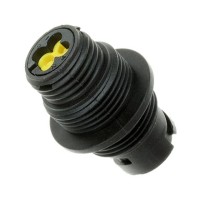
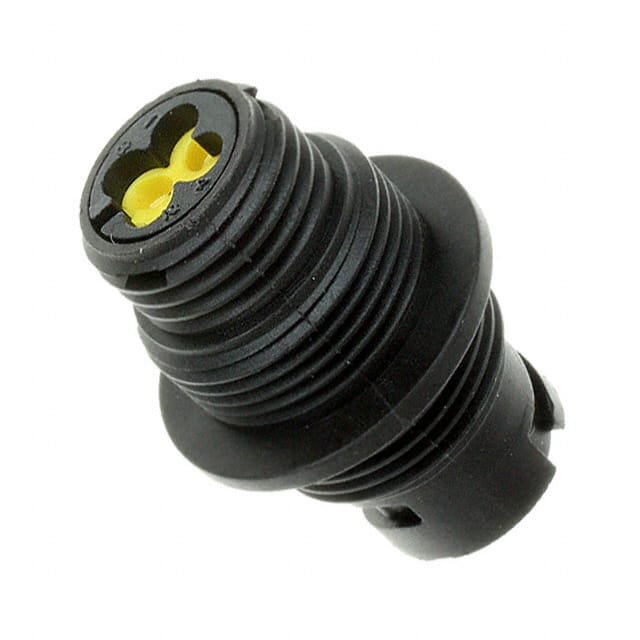
At its core, the 1445421-1 is a wire-to-board or wire-to-panel connector housing designed for secure, reliable electrical connections. It features a 4-position configuration with a male pin housing, panel-mount capability, and is part of TE's AMP connector system. Recent innovations in this space focus on enhancing durability, reducing mating forces, and improving high-speed data transmission capabilities. TE has been advancing its connector designs with features like integrated locking mechanisms to prevent accidental disconnection in high-vibration environments, and polarization keys to ensure correct orientation during assembly, reducing errors on the production line. Material science also plays a role; newer housings often use high-temperature thermoplastics that withstand reflow soldering processes and offer better flame retardancy, meeting UL94 V-0 standards.
Market Trends and Demand Drivers
The demand for 4-position panel-mount connector housings is closely tied to the proliferation of sensors, actuators, and control modules in industrial and automotive applications. The Industrial Internet of Things (IIoT) is a significant driver, as factories upgrade legacy machinery with smart sensors that require robust, compact interconnects. In the automotive sector, the shift toward electric vehicles (EVs) and advanced driver-assistance systems (ADAS) is creating new demand for reliable, miniaturized connectors. While 4-position connectors are often considered commodity items, the need for high-reliability versions that can withstand temperature extremes, moisture, and vibration is growing. The market is also seeing a trend toward pre-assembled cable harnesses with these connectors, as OEMs look to simplify assembly and reduce total cost of ownership.
Supply Chain Dynamics
Global sourcing for TE Connectivity components like the 1445421-1 involves a complex network of manufacturing sites, primarily in Asia, Europe, and North America. Lead times for this part can fluctuate based on raw material availability (especially engineering thermoplastics and metal contacts) and logistical constraints. Over the past two years, the industry has experienced lead time volatility, with standard parts sometimes extending from 8 weeks to over 20 weeks during peak disruptions. Pricing outlook is influenced by copper and resin costs, with TE typically implementing annual price adjustments. However, the distributor channel often holds inventory, providing a buffer. Procurement teams should monitor TE's product change notifications (PCNs) and consider qualifying alternative sources or equivalent parts from other manufacturers to mitigate risk.
Emerging Applications
Beyond traditional industrial controls, new applications are emerging. In renewable energy, solar panel tracking systems and wind turbine sensors use these connectors for reliable signal transmission in harsh outdoor environments. Medical devices, such as portable diagnostic equipment and patient monitoring systems, require connectors that can withstand repeated sterilization cycles, driving demand for specialized versions. The robotics and drone sectors are also adopting compact 4-position connectors for battery management and sensor payloads, where weight and reliability are paramount. Additionally, the smart home market uses these connectors in HVAC controls and security systems, though often in lower-cost variants.
Technology Roadmap
Looking ahead, the connector housing category is evolving toward higher density, higher frequency, and hybrid designs that combine power and signal in one housing. TE and other manufacturers are investing in overmolded and sealed versions to meet IP67/IP68 ratings without secondary sealing processes. The roadmap also includes connectors with integrated diagnostics, such as temperature or current sensing, to support predictive maintenance. For the 1445421-1 specifically, expect incremental improvements in materials and locking mechanisms, but the fundamental design is mature. The next disruptive step may be wireless connectors for short-range applications, though wired solutions will remain dominant for power and high-reliability data.
Industry Regulations
Compliance with RoHS and REACH is non-negotiable for components sold into Europe. TE Connectivity ensures its parts meet these directives, but procurement teams must verify that distributors provide current compliance documentation. For automotive applications, the AEC-Q200 qualification (for passive components) or USCAR standards may apply, although this specific part may not be automotive-grade. In medical and aerospace, additional qualifications like ISO 13485 or AS9100 may be required. The industry is also seeing increased scrutiny on PFAS (per- and polyfluoroalkyl substances), which could impact connector coatings and lubricants in the future.
Strategic Recommendations for Procurement Teams
Given the market dynamics, procurement teams should adopt a multi-pronged strategy. First, maintain dual sourcing where possible, identifying equivalent parts from Molex, JST, or Amphenol to avoid single-source dependency. Second, leverage distributor inventory for short-term needs but negotiate long-term agreements with TE for price stability. Third, monitor regulatory changes and request compliance certificates proactively. Fourth, engage with design engineers early to standardize on connector families that offer a range of positions, reducing the number of unique SKUs. Finally, consider consignment inventory or VMI (vendor-managed inventory) programs for high-volume usage to smooth supply fluctuations. By treating even commodity connectors as strategic items, organizations can avoid costly line-down situations and ensure product reliability.