24-Pin 2.54mm Header Reliability Guide: 6-146256-2 Best Practices
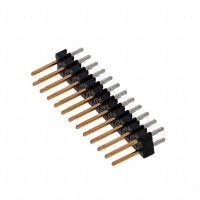
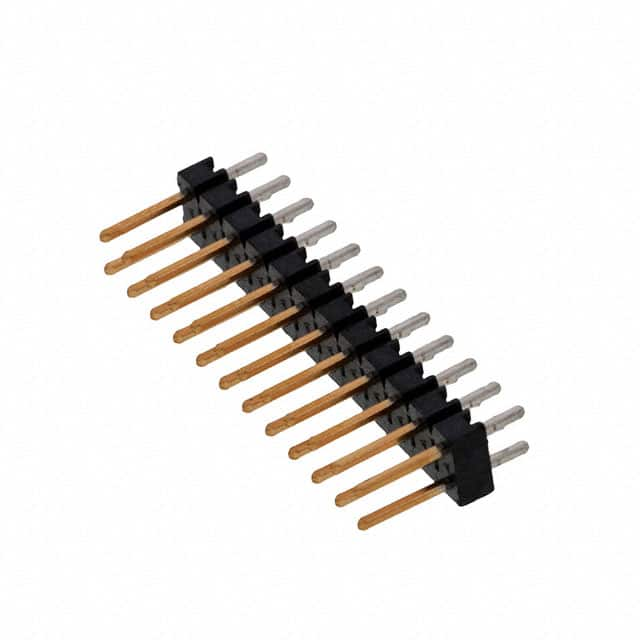
The TE Connectivity AMP Connectors 6-146256-2 is a vertical 24-position header with 2.54mm pitch, part of the AMPMODU series. This component is widely used in board-to-board and wire-to-board interconnects in industrial, instrumentation, and telecom equipment. Because it is a passive electromechanical interface, its reliability is governed less by semiconductor physics and more by contact metallurgy, housing material stability, and mechanical endurance. Understanding the applicable standards and test regimes is essential for procurement and quality assurance teams.
Reliability standards and qualifications. Headers in this class are typically qualified to EIA-364 (Electrical Connector/Socket Test Procedures) and IEC 60512 (Connectors for Electronic Equipment). TE's AMPMODU products are generally rated to UL 94V-0 flammability and carry UL and CSA recognition. For industrial and automotive-adjacent applications, AEC-Q200 may be referenced, though this part is not formally automotive-qualified. The operating temperature range is typically -55°C to +105°C, and the contacts are selectively plated—often tin over nickel or gold over nickel—which directly affects corrosion resistance and mating cycle life. Qualification data packages should include contact resistance, insulation resistance, dielectric withstanding voltage, and vibration/shock results per EIA-364-28 and EIA-364-27.
Accelerated life testing. For this header, accelerated tests focus on thermal cycling, mixed flowing gas (MFG), and mechanical durability. Thermal cycling between -55°C and +105°C stresses the solder joints and the retention force of contacts in the housing. MFG testing (e.g., EIA-364-65) simulates corrosive industrial atmospheres and is critical for tin-plated contacts, which are prone to fretting corrosion. Mechanical durability tests cycle mating and unmating to the rated number of cycles—often 50 to 200 for this class—and measure contact resistance before and after. Results should be interpreted as indicators of field life only when the acceleration factor is justified; a 500-hour MFG test does not linearly map to years of service without a validated model.
Failure rate calculations and MTBF. FIT rates for passive connectors are typically derived from Telcordia SR-332 or MIL-HDBK-217F, though both are conservative for modern connectors. A realistic FIT rate for a 2.54mm header in a benign environment is on the order of 0.1 to 1 FIT per contact, dominated by wear-out and corrosion rather than random failure. MTBF for the assembly is often dominated by the connector when mated pairs are involved. Procurement teams should request TE's reliability data or use supplier-published FIT rates rather than applying generic models, because plating thickness and housing material significantly alter outcomes.
Environmental stress screening and burn-in. Burn-in is generally not applied to passive headers because there is no infant mortality mechanism analogous to semiconductors. Instead, ESS for connectors consists of thermal shock, vibration, and humidity soak to precipitate latent defects from plating or molding. For high-reliability procurement, a screening lot may undergo 10 thermal cycles and a 48-hour humidity test at 85°C/85% RH. Any increase in contact resistance beyond 10 milliohms or visible corrosion is grounds for rejection.
Counterfeit detection. Counterfeit headers are common because of low unit cost and high volume. Detection methods include dimensional verification of pitch (2.54mm ±0.1mm), contact thickness, and housing material (UL94V-0 marking and resin type). X-ray fluorescence (XRF) can verify plating composition—tin vs. gold and nickel underplate. Visual inspection should check for mold flash, inconsistent color, and missing manufacturer logos. TE applies date codes and lot markings; these should be cross-checked against the authorized distributor's traceability records. Purchasing from franchise distributors is the single most effective counterfeit mitigation.
Incoming inspection best practices. AQL sampling per ANSI/ASQ Z1.4, typically level II, is appropriate. Key checks include contact resistance (≤20 milliohms), insulation resistance (≥1000 megohms), dielectric withstanding voltage (500 VAC), and dimensional conformance to the TE drawing. Solderability testing per J-STD-002 is recommended for through-hole parts, especially after long storage. Retain samples for traceability and periodic re-verification.
Storage and handling. Store in original packaging in a controlled environment: 5°C to 30°C, below 60% RH, away from corrosive gases. Solderability degrades after 12 months for tin-plated contacts; gold-plated parts are more stable but still subject to contamination. Use ESD-safe handling even though the part is passive, because adjacent components may be sensitive. Avoid touching contact surfaces; use clean gloves.
End-of-life and obsolescence. The 6-146256-2 is a mature part; TE may issue PCN or EOL notices. Monitor PCNs through authorized distributors and maintain a last-time-buy strategy if the part is critical. Qualify a drop-in alternative early—check pitch, plating, and housing material equivalence. Avoid brokers for last-time-buy; counterfeit risk rises sharply after EOL. Document all deviations and maintain a lifecycle plan that includes redesign if the part becomes unavailable.