Pressure Independent Control Valves: VRN2DNPX9202 Industry Insight
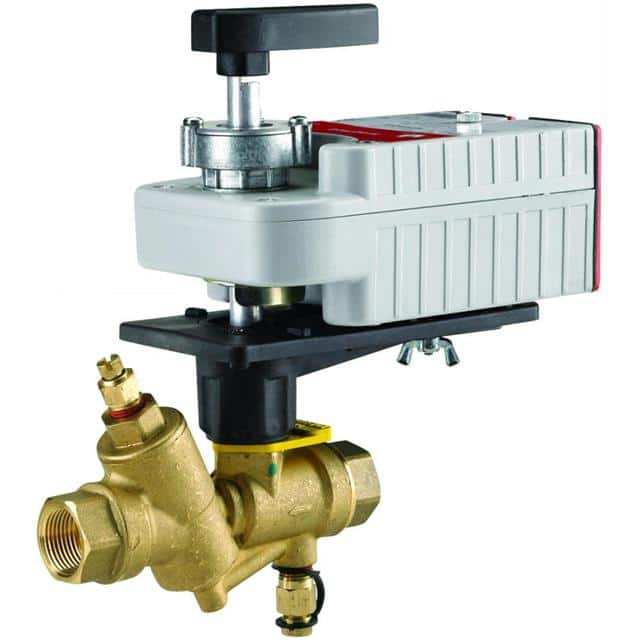
The Honeywell VRN2DNPX9202 pressure independent control valve (PICV) represents a critical component in modern hydronic HVAC systems, embodying the convergence of precision fluid control and digital building management. Unlike traditional two-way control valves that are susceptible to pressure fluctuations in the distribution network, PICVs integrate a dynamic pressure regulator with a control valve, ensuring that the flow rate remains constant regardless of upstream pressure variations. This mechanical intelligence delivers precise temperature control, reduces energy consumption from over-pumping, and enhances occupant comfort. The VRN2DNPX9202 specifically is engineered for tight shut-off and high-resolution authority, making it a preferred choice for variable flow systems in commercial buildings.
Recent innovations in this component category center on enhanced materials and digital integration. Honeywell has refined the valve body geometry to reduce cavitation and noise, a common failure point in high-pressure differential applications. Newer elastomer and polymer seats are being formulated to withstand higher temperatures and more aggressive water chemistries, including those with glycol additives for freeze protection. The most significant innovation, however, is the embedding of differential pressure sensors and flow feedback directly into the valve assembly, enabling real-time verification of performance. This data feeds into building automation systems (BAS) for predictive maintenance and continuous commissioning, moving the PICV from a passive mechanical device to an active node in the Internet of Things (IoT) ecosystem for smart buildings.
Market demand for PICVs like the VRN2DNPX9202 is being driven by three primary forces: energy efficiency mandates, labor shortages, and the retrofitting wave in aging commercial real estate. Global building codes, such as ASHRAE 90.1 and the EU Energy Performance of Buildings Directive, increasingly require hydraulic balancing and variable flow control to minimize pump energy. PICVs eliminate the need for manual balancing valves and their associated labor, which is critical as skilled HVAC technicians remain in short supply. Additionally, the post-pandemic focus on indoor air quality and thermal comfort has accelerated upgrades to variable air volume (VAV) and fan coil unit systems, both of which rely heavily on PICVs for stable operation. The segment is projected to grow at a compound annual growth rate (CAGR) of 5-7% through 2030, with higher growth in North America and Europe due to stringent efficiency standards.
Supply chain dynamics for the VRN2DNPX9202 and similar PICVs are shaped by a mix of global sourcing and regional specialization. Honeywell manufactures many of its valve bodies and components in facilities across Europe, North America, and Asia, but raw materials such as brass, stainless steel, and specialized polymers are subject to commodity price volatility and geopolitical trade tensions. Lead times, which spiked to 20-30 weeks during the semiconductor shortage and logistics disruptions of 2021-2022, have largely normalized to 8-12 weeks for standard configurations. However, custom trim or factory-assembled valve packages with actuators can still see 14-16 weeks. Pricing outlook is moderately inflationary, with annual increases of 3-5% expected due to higher energy costs for European foundries and the rising cost of electronic components for smart valves. Distributors should anticipate occasional allocation for high-demand SKUs and consider strategic inventory buffers.
Emerging applications are expanding the addressable market for PICVs beyond traditional commercial offices. Data centers are a major new demand driver, as their cooling systems require extremely stable flow to prevent hot spots and optimize chiller efficiency. Similarly, healthcare facilities and laboratories demand precise temperature and humidity control, making PICVs indispensable. Another emerging area is district energy systems, where large-scale hydronic networks benefit from the pressure independence to balance loads across multiple buildings. Finally, the electrification of heating—via heat pumps and thermal storage—creates new challenges for flow control because these systems operate at lower differential pressures and variable temperatures. PICVs with wider flow ranges and lower actuation torque are being developed to serve this transition.
The technology roadmap for PICVs is focused on four pillars: connectivity, miniaturization, materials science, and self-powered operation. Future Honeywell models will likely feature integrated wireless communication (e.g., Bluetooth, Zigbee, or Thread) for commissioning and diagnostics without wired connections. Miniaturization will allow PICVs to be embedded in compact fan coil units and radiant panels, opening up residential and light commercial markets. Materials science will introduce ceramic and composite valve internals for longer life and compatibility with low-GWP refrigerants and additives. Self-powered operation, using energy harvesting from flow or thermal gradients, could eliminate external power for the actuator, simplifying installation. Ultimately, the PICV may evolve into a "smart flow node" that not only controls flow but also monitors water quality, detects leaks, and reports energy usage—all within a single device.
Industry regulations have a profound impact on the design, sourcing, and disposal of PICVs. RoHS and REACH directives restrict hazardous substances such as lead, cadmium, and certain phthalates in electronics and brass alloys. Honeywell must ensure that the VRN2DNPX9202 and its variants comply with these rules, which can influence material selection and supplier qualification. For automotive qualifications—though this specific SKU is not automotive—the principles of IATF 16949 and PPAP are increasingly being applied to HVAC components for critical environments like data centers, demanding traceability and reliability data. Additionally, regional regulations on energy efficiency (e.g., Ecodesign in the EU) and building codes (e.g., California Title 24) directly mandate the use of pressure independent control, creating a regulatory tailwind for the segment.
For procurement teams, strategic recommendations center on risk mitigation and total cost of ownership. First, dual-source critical PICV SKUs from Honeywell and a qualified alternative to avoid single-supplier disruptions, but validate that alternatives meet the same pressure-independent performance and regulatory certifications. Second, negotiate long-term agreements with price caps and lead-time guarantees, leveraging volume across multiple projects. Third, invest in buffer stock of high-velocity SKUs like the VRN2DNPX9202, especially before peak construction seasons. Fourth, work with engineering to standardize on a limited number of valve sizes and flow ranges to reduce complexity and inventory carrying costs. Finally, demand digital documentation and compliance certificates (RoHS, REACH, Declarations of Conformity) upfront from the distributor to avoid project delays. By treating PICVs as strategic assets rather than commodity items, procurement can secure supply, control costs, and support the building performance goals of their organization.