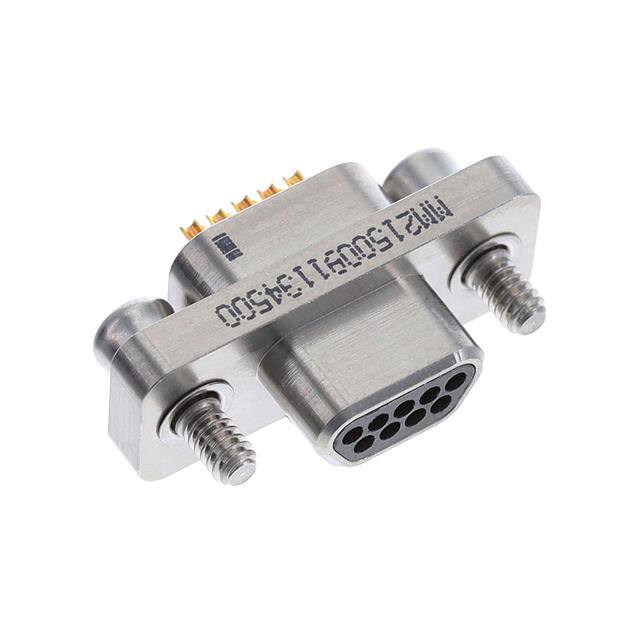
D-SUB Plug .050" 2-Row 9-Position Comparison Guide: MM-215-009-113-4500
When engineers and buyers talk about rugged, high-density interconnect solutions, the AirBorn MM-215-009-113-4500 sits at a very specific intersection of form factor, performance, and legacy compatibility. This part is a D-SUB style plug connector with a .050 inch contact pitch, a two-row arrangement, and nine positions. It belongs to the broader category of microminiature D-subminiature connectors, often called Micro-D or .050-inch D-SUBs, which are distinct from the larger .109-inch pitch MIL-DTL-24308 D-SUBs that many designers first associate with the D-SUB name. In electronic systems, this component serves as a board-to-cable or cable-to-cable interface where signal integrity, mechanical retention, and environmental sealing are more critical than raw pin count. You will find it in avionics, defense electronics, medical imaging, and industrial automation, where a nine-position plug can carry power, ground, and a handful of low-speed or moderate-speed differential signals across a short, rugged harness.
The parameters that matter most when selecting this type of connector begin with pitch and contact count. A .050 inch pitch allows a much smaller footprint than traditional D-SUBs, which is essential when board real estate is tight or when the harness must pass through a bulkhead with limited clearance. The two-row, nine-position layout gives you a compact rectangular interface that still offers keying and scoop-proof mating. Contact termination style is another critical variable: this AirBorn part is typically supplied with crimp-style or solder-cup contacts, and the choice affects assembly cost, repairability, and whether you need a separate insertion tool. Material and plating matter for corrosion resistance and mating cycles; beryllium copper contacts with gold plating over nickel are common in this class. Mating force, polarization, and mounting hardware determine whether the connector will survive vibration and accidental disconnection. Finally, operating temperature range and dielectric withstanding voltage separate industrial-grade parts from mil-spec equivalents.
Compared to alternatives, the AirBorn MM-215-009-113-4500 occupies a premium tier. A standard .100 inch pitch rectangular connector or a card-edge solution will cost significantly less and be available from dozens of sources, but it will not match the signal density, ruggedness, or blind-mate capability of a .050 inch D-SUB. Compared to other Micro-D brands such as Glenair, ITT Cannon, or TE Connectivity, AirBorn is known for high-reliability performance and custom configurations, often at a higher unit price and with longer lead times. In terms of availability, this specific SKU is not a catalog staple at broadline distributors; it is more likely to be stocked by specialized interconnect distributors or available factory-direct. That limited distribution channel is a trade-off for the performance and traceability that aerospace and defense programs require.
Industry trends affecting this component category are pulling in two directions. On one hand, miniaturization and higher-speed serial interfaces are pushing designers toward smaller, higher-density connectors such as micro-coaxial or high-speed board-to-board systems. On the other hand, legacy platform sustainment in defense and aerospace keeps demand steady for proven .050 inch D-SUBs because re-qualifying a new connector in an existing airframe or ground vehicle is expensive and slow. Another trend is the consolidation of connector manufacturers, which can reduce second-source options and increase reliance on a single supplier’s lifecycle commitments. Finally, counterfeit prevention and traceability requirements are making buyers more willing to pay a premium for authorized-channel parts like this AirBorn SKU, even when lower-cost gray-market equivalents appear online.
You should choose this specific AirBorn component when your design demands a nine-position, two-row, .050 inch pitch interface that must survive shock, vibration, and repeated mating cycles in a mission-critical system. It is the right choice when you need a plug with a proven AirBorn contact system, when your program already uses AirBorn Micro-D receptacles, or when a customer or contract specifies AirBorn as the approved source. It is also appropriate when you need a small quantity of a non-standard configuration and are willing to accept a longer lead time in exchange for factory support and documentation. You should avoid this part if your application is cost-sensitive, if you can tolerate a larger .100 inch pitch connector, or if you need same-day availability from a broadline distributor.
From a procurement standpoint, expect lead times measured in weeks rather than days for this SKU, especially if it is not in stock at a franchised distributor. Check the lifecycle status directly with AirBorn or an authorized distributor; many Micro-D parts remain active for decades, but obsolescence notices can appear with little warning. Second-source options are limited because the .050 inch D-SUB footprint and mating interface are not fully standardized across brands, so a drop-in replacement may not exist. If second-sourcing is mandatory, you may need to redesign the mating half or qualify a different connector family entirely. Always buy through authorized channels to avoid counterfeit or out-of-spec parts, and ask for a Certificate of Conformance and traceability data. For long programs, consider a last-time buy or bonded inventory agreement to protect against allocation or discontinuation.