DD51 Mechanical Position Indicator Reliability Guide: CE.85003 Best Practices
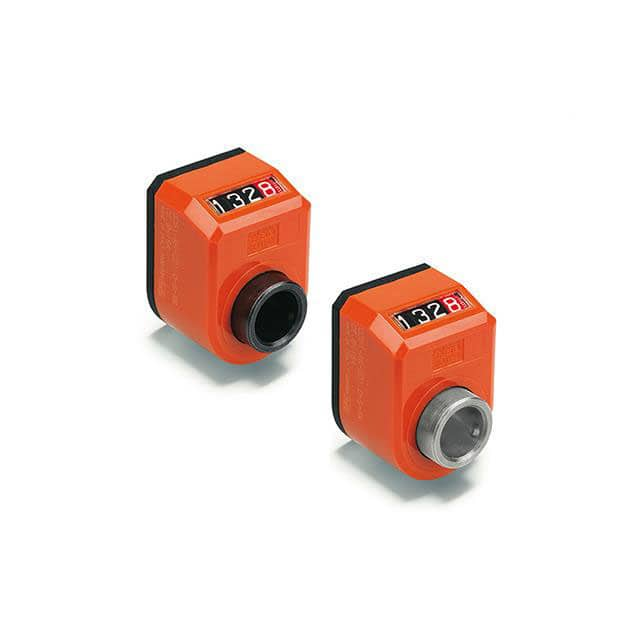
The DD51 Mechanical Position Indicator (Elesa USA Corporation, SKU: CE.85003) is a passive, mechanical accessory used to display the angular or linear position of machine elements such as handwheels, spindles, and lead screws. Because it contains no active electronics, its reliability profile differs fundamentally from semiconductor components, yet it remains subject to rigorous quality expectations in professional procurement. This guide outlines the key reliability and quality assurance considerations for specifying, receiving, and maintaining this component.
Reliability standards and qualifications. Mechanical position indicators are typically qualified against general mechanical and environmental standards rather than semiconductor-specific ones. Relevant references include ISO 9001 for the manufacturer's quality management system, DIN EN ISO 4628 for coating degradation assessment, and IEC 60068-2 series for environmental testing such as vibration, shock, and dry heat. For the DD51, the housing material, window clarity, and internal gear or counter mechanism determine service life. Procurement should request the manufacturer's declaration of conformity, material certificates for the housing and window, and evidence of RoHS compliance. Where the indicator is used in food or pharmaceutical machinery, FDA-compliant or EU 10/2011 material statements may also be required.
Accelerated life testing and interpretation. Because the DD51 is a low-cost mechanical item, full accelerated life testing is rarely performed by the end user. However, the manufacturer may conduct cycle testing of the counter mechanism and abrasion testing of the viewing window. Typical accelerated tests include temperature cycling from -20°C to +80°C, salt spray per ISO 9227 for corrosion resistance, and mechanical endurance of 10,000 to 100,000 rotation cycles. Results should be interpreted as degradation indicators, not absolute lifetime predictions. A passing salt spray result of 96 hours, for example, suggests suitability for indoor industrial environments but not for washdown or marine exposure without additional protection.
Failure rate calculations and MTBF. FIT rates and MTBF are not typically published for passive mechanical indicators because failure is dominated by wear-out mechanisms rather than random electronic failures. The exponential distribution assumption underlying MTBF does not apply well to a component whose failure mode is gradual wear, corrosion, or window clouding. Instead, reliability should be expressed as B10 life (the number of cycles at which 10% of units fail) or as a wear-out curve from endurance testing. For procurement, the practical metric is the manufacturer's rated cycle life and the expected service interval for the specific application. If an MTBF value is quoted, treat it as a rough comparative figure only.
Environmental stress screening and burn-in. Burn-in is generally unnecessary for mechanical indicators because there is no infant mortality mechanism comparable to semiconductor defects. However, environmental stress screening may be applied to high-reliability or safety-related installations. A practical ESS protocol for the DD51 includes a thermal shock cycle (e.g., -20°C to +70°C, 5 cycles), a vibration sweep per IEC 60068-2-6, and a functional rotation test to verify counter reset and zero return. Units that fail to reset cleanly or show window cracking should be rejected. For standard industrial use, incoming functional checks are sufficient and more cost-effective than full ESS.
Counterfeit detection. Counterfeit mechanical indicators are less common than counterfeit electronics but do exist, particularly for branded European components. Detection methods specific to this component type include: verifying the laser-etched or molded brand marking on the housing; checking the font and spacing of the digit wheels against known genuine samples; confirming the SKU CE.85003 on the packaging label and comparing to Elesa's official catalog; inspecting the window material for correct clarity and UV resistance; and measuring critical dimensions such as the mounting hole pattern and shaft bore. Counterfeits often use inferior plastics that yellow or crack prematurely. Purchase only through authorized distributors and request traceability to the manufacturer's production lot.
Incoming inspection best practices. A documented incoming inspection for the DD51 should include: visual examination for cracks, discoloration, and mold flash; dimensional verification of mounting holes and shaft fit; functional test of the counter mechanism through at least 100 rotations to check for skipping or binding; zero-reset verification; and window clarity check under normal lighting. Sampling should follow ISO 2859-1 at an AQL appropriate to the application, typically 1.0 for major defects and 2.5 for minor defects. Record lot numbers and retain samples for traceability.
Storage and handling. Store the DD51 in its original packaging in a clean, dry environment between 10°C and 30°C with relative humidity below 60%. Avoid direct sunlight, which can degrade the window and plastic housing. Keep away from solvents, oils, and abrasive dust. Handle by the housing only; do not apply force to the digit wheels or shaft. Use ESD-safe practices only if the indicator is integrated with an electronic encoder, which the base DD51 is not. Shelf life for the mechanical indicator is effectively indefinite if stored properly, but adhesive labels and packaging may degrade after 24 months.
End-of-life and obsolescence. Mechanical indicators are rarely subject to sudden obsolescence, but Elesa may revise materials, colors, or mounting dimensions without notice. Monitor product change notifications and maintain a last-time buy strategy for critical spares. Because the DD51 is a low-cost item, stocking a 12- to 24-month buffer is practical. For long-life equipment, qualify a second-source equivalent or design a replacement bracket that accepts a similar indicator. Document the form, fit, and function parameters so that any future substitution can be validated quickly.