LTC2632 12-Bit DAC: Industry Insight on TSOT23-8 Precision
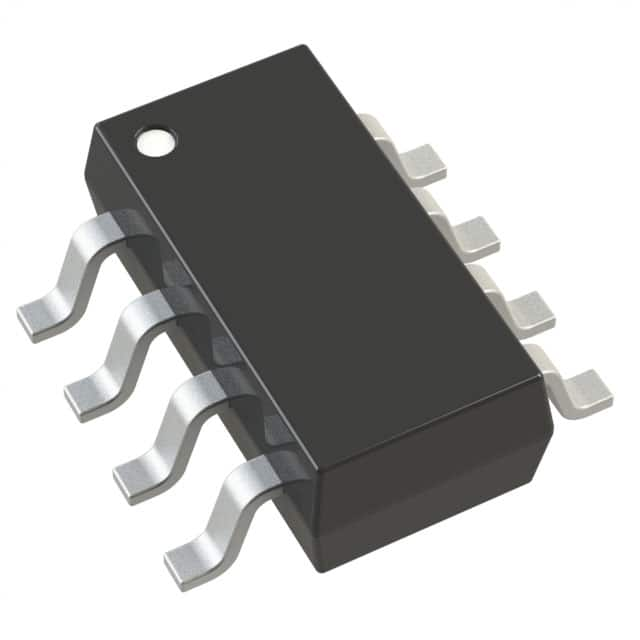
In the precision analog signal chain, the 12-bit voltage-output DAC remains a workhorse for calibration, control, and setpoint generation. The Analog Devices LTC2632ACTS8-HI12#TRMPBF is a compact, high-accuracy example: a dual 12-bit DAC with an internal reference, I2C interface, and a 2.5V full-scale output range, packaged in a TSOT23-8. Its architecture combines an internal bandgap reference with a rail-to-rail output amplifier, delivering ±1 LSB INL and ±10 LSB DNL over temperature. Recent innovations in this class focus on reducing glitch energy, improving power-on reset to zero-scale or mid-scale, and integrating reference and output buffers to shrink board space. The LTC2632 family also offers pin-selectable output ranges and power-down modes, which are now table stakes for portable instrumentation and battery-powered control loops.
Market demand for 12-bit voltage-output DACs is being reshaped by three forces. First, the industrial automation cycle continues to drive replacement of older 8-bit and 10-bit converters with 12-bit devices as control loops demand finer resolution for valve positioning, laser bias, and motor current trimming. Second, the medical device segment—particularly portable ultrasound, patient monitors, and infusion pumps—requires low noise and low power in small packages, where TSOT23-8 and similar micro-footprints are essential. Third, automotive electrification and ADAS sensor fusion are pulling 12-bit DACs into battery management calibration, lidar bias control, and camera module autofocus. While 16-bit and 18-bit converters capture the highest-performance niches, 12-bit voltage-output DACs remain the volume leader in the $1–$3 price band, with demand growing at a steady 5–7% CAGR across industrial and medical segments.
Supply chain dynamics for this specific SKU reflect broader analog foundry constraints. Analog Devices manufactures the LTC2632 family on proprietary bipolar-CMOS-DMOS processes, primarily at internal fabs in the United States and Ireland, with back-end assembly and test in Malaysia and the Philippines. Lead times, which spiked to 52+ weeks during the 2021–2022 allocation crisis, have normalized to 12–16 weeks for most distributors, though high-reliability and automotive-qualified variants can still stretch to 20 weeks. Pricing has stabilized after two years of double-digit increases; current street prices for the LTC2632ACTS8-HI12#TRMPBF hover between $2.80 and $3.40 in 1,000-piece quantities, with modest erosion expected as second-source alternatives from Texas Instruments (DAC8571, DAC7678) and Microchip (MCP47FEB) gain traction. However, the Analog Devices brand premium persists in safety-critical designs where long-term availability and documented reliability data outweigh a 15–20% cost delta.
Emerging applications are expanding the addressable market beyond traditional control loops. In optical networking, 12-bit voltage-output DACs are used for bias control of tunable lasers and Mach-Zehnder modulators in 400G/800G coherent modules. In test and measurement, they provide programmable reference levels for ATE pin electronics and source-measure units. The edge AI and robotics boom is another driver: humanoid and collaborative robots require dozens of precision DAC channels for joint torque calibration, gripper force control, and thermal management. Additionally, smart grid equipment—digital protective relays and power quality monitors—uses 12-bit DACs for self-test and calibration signal generation. Each of these applications values the LTC2632’s internal reference and small footprint, reducing component count and simplifying PCB layout.
The technology roadmap for 12-bit voltage-output DACs points toward higher integration and smarter interfaces. Analog Devices and competitors are developing devices with on-chip EEPROM for factory calibration, I3C and SPI interfaces for faster configuration, and integrated current-sense feedback for closed-loop control. There is also a push toward functionally safe variants with diagnostic registers and CRC-protected communication, targeting ISO 26262 ASIL-B and IEC 61508 SIL-2 systems. In the longer term, expect 12-bit DACs to absorb more digital logic—such as sequencers and waveform generators—enabling autonomous operation without host intervention. The TSOT23-8 package itself may give way to wafer-level chip-scale packages (WLCSP) for space-constrained wearables, though the 8-pin form factor will remain popular for its solderability and thermal performance.
Industry regulations are a growing factor in component selection. The LTC2632ACTS8-HI12#TRMPBF is RoHS-compliant and REACH SVHC-free, with a moisture sensitivity level (MSL) of 1, simplifying storage and reflow. For automotive applications, the base part is not AEC-Q100 qualified; designers must select the LTC2632H or similar automotive-grade derivatives, which carry a price premium and longer lead times. The European Union’s upcoming Cyber Resilience Act and similar regulations may eventually require documentation of firmware and interface security for programmable DACs, though current devices remain unaffected. Procurement teams should also monitor China’s RoHS 2.0 and conflict minerals reporting, as Analog Devices publishes full material declarations for this SKU.
For procurement teams, the strategic play is clear: secure dual sourcing without compromising accuracy. Qualify a pin-compatible or functionally equivalent alternative from TI or Microchip for non-critical channels, but reserve the LTC2632 for designs where internal reference drift and INL directly affect system performance. Negotiate 12-month blanket orders with quarterly releases to lock in pricing and buffer against fab allocation swings. Monitor Analog Devices’ product change notices (PCNs) for die revisions or assembly site shifts, which can affect lead times. Finally, track design registrations: if your engineering team is designing the LTC2632 into a new platform, engage the distributor’s FAE early to secure samples and ensure long-term supply. In a market where 12-bit DACs are increasingly commoditized, the LTC2632’s brand, precision, and package advantage justify a premium—but only when the application truly needs it.