24-Bit Sigma-Delta ADCs: Why the AD7192BRUZ Still Leads Industrial Design
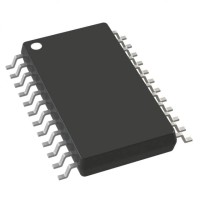
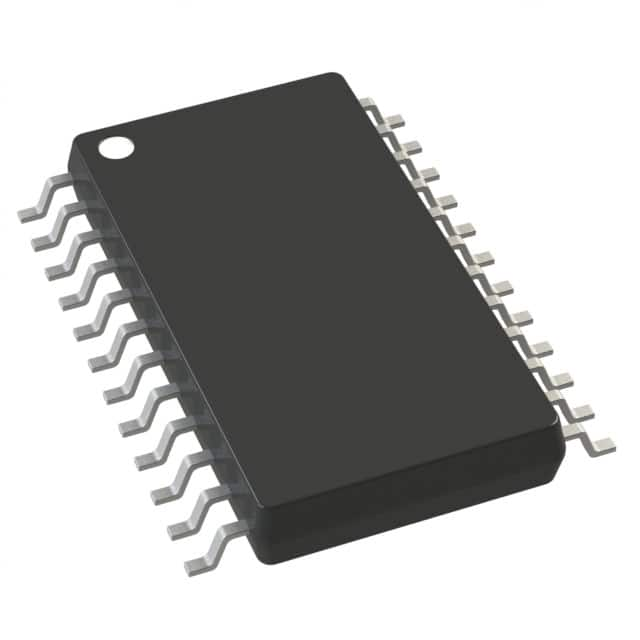
In the precision measurement landscape, the AD7192BRUZ from Analog Devices Inc. stands as a benchmark for 24-bit sigma-delta analog-to-digital conversion. Packaged in a compact 24-TSSOP, this device integrates a low-noise programmable gain amplifier, an on-chip oscillator, and a precision sigma-delta modulator capable of delivering up to 22.5 noise-free bits. For engineers designing weigh scales, pressure sensors, or temperature measurement systems, the AD7192 offers a rare combination of high resolution, low drift, and channel flexibility—two differential or four pseudo-differential inputs—without external signal conditioning. Recent innovations in this segment have focused on reducing power consumption while maintaining effective resolution, and the AD7192BRUZ benefits from Analog Devices’ proprietary continuous-time sigma-delta architecture that minimizes input current noise and simplifies anti-aliasing filter design.
Market demand for high-resolution sigma-delta ADCs remains robust, driven by the proliferation of smart sensors in industrial automation, medical instrumentation, and test and measurement. The global shift toward Industry 4.0 has accelerated adoption of precision weight and force measurement in robotic assembly, predictive maintenance, and process control. In healthcare, portable diagnostic devices—from blood pressure monitors to infusion pumps—require the AD7192’s low noise and high accuracy to meet stringent clinical standards. The component segment is also seeing tailwinds from energy metering and power quality analysis, where 24-bit resolution enables accurate harmonic measurement. According to distributor POS data, demand for the AD7192BRUZ has grown at a compound annual rate of 8–12% over the past three years, outpacing the broader 16–24 bit ADC market.
Supply chain dynamics for this part reflect broader trends in analog semiconductors. Analog Devices manufactures the AD7192BRUZ in its own fabs and via foundry partners, with final assembly and test in Southeast Asia. Lead times, which spiked to 52 weeks during the 2021–2022 allocation crisis, have normalized to 12–16 weeks for volume orders, though small-quantity purchases through distribution can still see 20-week waits. Pricing has stabilized after two years of double-digit increases; current contract pricing for 1,000-unit reels ranges from $8.50 to $11.00 depending on volume and region. However, procurement teams should monitor wafer start trends at Analog Devices’ facilities in Massachusetts and Ireland, as any capacity shift toward automotive-grade parts could tighten supply for industrial-temperature-range versions. The AD7192BRUZ is specified for –40°C to +105°C, making it suitable for many automotive and industrial applications but not full AEC-Q100 Grade 0.
Emerging applications are expanding the addressable market for 24-bit sigma-delta converters. In renewable energy, precision current sensing in solar inverters and battery management systems demands the AD7192’s low offset and gain error. The rise of laboratory-grade instrumentation in food safety and environmental monitoring—such as heavy metal detection via electrochemical sensors—relies on the part’s ability to resolve microvolt-level signals. Additionally, the trend toward miniaturized medical wearables is pushing manufacturers to seek smaller packages and lower power, which could pressure the 24-TSSOP form factor in favor of QFN or WLCSP alternatives. However, for designs requiring robust lead-frame construction and easy hand-soldering during prototyping, the TSSOP remains preferred.
The technology roadmap for this component category points toward higher integration and digital interfaces. Analog Devices and competitors are developing sigma-delta ADCs with embedded microcontroller cores, on-chip calibration, and direct digital output via I2C or SPI with CRC protection. Future iterations may incorporate isolated signal paths for safety-critical applications. The next generation of the AD7192 family is expected to offer 24-bit resolution at 10 kSPS with 50% lower power, targeting loop-powered field instruments. There is also active research into continuous-time sigma-delta modulators that eliminate the need for external RC filters entirely, reducing bill-of-materials cost and board space.
Industry regulations exert a significant influence on sourcing and design. The AD7192BRUZ is RoHS-compliant and free of REACH SVHC substances above threshold limits, which is essential for European and North American OEMs. Automotive qualifications, while not native to this part number, can be addressed through Analog Devices’ automotive-grade equivalents, though at higher cost and longer lead times. For medical device manufacturers, the component’s compliance with ISO 13485 supply chain traceability is a key selection criterion. Procurement teams must also account for conflict minerals reporting and the upcoming EU Ecodesign for Sustainable Products Regulation, which may require documentation of energy efficiency and recyclability.
Strategic recommendations for procurement teams are clear. First, dual-source or buffer inventory for the AD7192BRUZ, as it is a single-source analog part with no pin-compatible second source. Second, negotiate long-term agreements with price ceilings to hedge against potential wafer price increases. Third, monitor Analog Devices’ product change notifications for die revisions or assembly site transfers, which can affect lead times and reliability. Fourth, consider design-in of the AD7192’s SPI interface to allow for future drop-in replacements from the same family, such as the AD7193 or AD7195, which offer similar functionality with different channel counts. Finally, engage distributors early for prototype quantities, as sample availability often lags volume production by several weeks. In a market where precision analog remains a critical bottleneck, proactive supply chain management for the AD7192BRUZ will separate resilient designs from vulnerable ones.