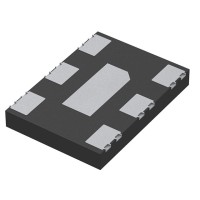
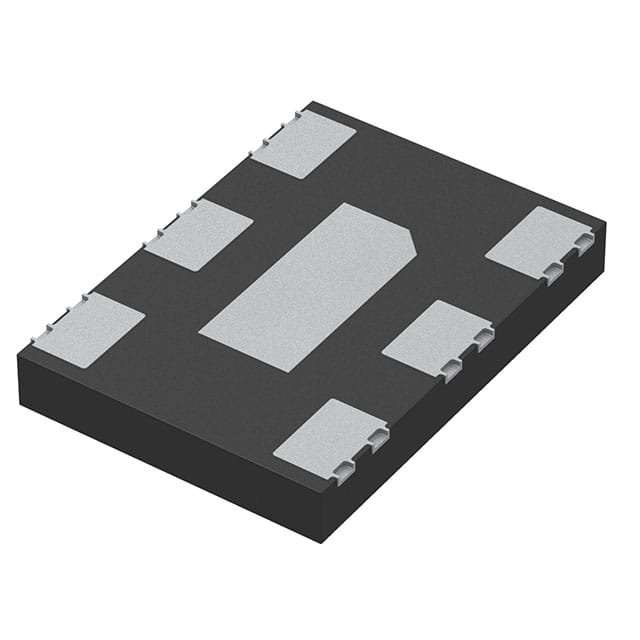
MEMS VCXO 216MHz: Why Industry Is Shifting to LVDS Timing
The component market has witnessed a quiet but profound shift over the past decade: the displacement of quartz-based oscillators by silicon MEMS timing devices. At the center of this transformation sits a part like the SiTime SIT3372AI-2E3-28NG216.000000 — a 216.0000 MHz LVDS VCXO built on MEMS technology. For procurement teams and design engineers alike, understanding this component means understanding where the timing market is heading.
Traditional VCXOs rely on quartz crystals, which are mechanically resonant structures susceptible to shock, vibration, and aging. SiTime's approach replaces the quartz resonator with a silicon MEMS resonator fabricated in a standard semiconductor process. The SIT3372 family combines this MEMS resonator with a programmable analog phase-locked loop, delivering LVDS output at 216 MHz with ±25 ppm stability and a wide pull range. The "AI" suffix indicates automotive-grade qualification, while the "2E3" package code denotes a 7.0 x 5.0 mm footprint. What makes this architecture compelling is not just ruggedness: MEMS oscillators can be programmed at the factory or in the field to any frequency within a band, dramatically reducing lead times and inventory SKU counts compared to quartz, where each frequency requires a unique crystal blank.
Recent innovations in this segment focus on three fronts. First, phase jitter reduction — SiTime's newer generations achieve sub-100 fs RMS jitter, making MEMS VCXOs viable for 100G/400G optical modules and high-speed SerDes reference clocks. Second, integrated frequency margining via I2C, allowing system designers to pull the output frequency digitally without analog control voltage. Third, extended temperature range operation up to 125°C, a critical enabler for automotive and industrial applications where quartz drifts unacceptably.
Market demand for high-frequency VCXOs like the 216 MHz LVDS part is being driven by several converging trends. Data center interconnect upgrades to 400G and 800G require low-jitter reference clocks for PAM4 SerDes. 5G radio units need VCXOs for local oscillator chains and synchronization. Automotive ADAS and LiDAR systems demand timing devices that survive under-hood vibration and thermal cycling. According to industry estimates, the MEMS timing market is growing at a compound annual rate exceeding 15%, significantly outpacing the overall timing device market. The VCXO subsegment, while smaller in volume than simple XOs, carries higher average selling prices and stickier design wins, making it strategically important for suppliers.
Supply chain dynamics for this component reflect broader semiconductor trends. SiTime fabricates its MEMS resonators at TSMC and assembles finished oscillators at OSAT partners in Taiwan and Southeast Asia. The 2021–2023 period exposed vulnerability: lead times for quartz VCXOs stretched beyond 52 weeks, while MEMS alternatives remained closer to 16–20 weeks due to their semiconductor-style manufacturing. Current lead times for the SIT3372 series have normalized to 8–12 weeks for standard configurations, though custom frequencies or automotive-qualified lots can extend to 16 weeks. Pricing has softened modestly from pandemic peaks; expect single-unit pricing in the $8–12 range for the 216 MHz LVDS variant in moderate volumes, with annual price erosion of 3–5% as MEMS capacity expands. However, automotive-grade parts command a 20–30% premium due to qualification and traceability requirements.
Emerging applications are expanding the addressable market for high-frequency MEMS VCXOs. Co-packaged optics in AI data centers require tightly synchronized clocks across multiple channels. Automotive Ethernet and zone architectures need ruggedized timing. Industrial robotics and machine vision systems use VCXOs for camera synchronization and deterministic networking. Even satellite constellations are adopting MEMS timing for its radiation tolerance and low SWaP profile. Each of these applications values the same attributes: reliability, programmability, and low jitter.
The technology roadmap points toward further integration. SiTime and competitors are developing multi-output clock generators that replace several discrete oscillators with a single MEMS-based chip, reducing board space and BOM cost. We also expect higher output frequencies — 300 MHz and beyond — to support next-generation SerDes. On the manufacturing side, 300mm wafer capacity for MEMS resonators will lower unit costs and shorten lead times. Finally, digital control interfaces will become standard, enabling real-time frequency tuning without external DACs.
Regulatory factors are increasingly influential. RoHS and REACH compliance is table stakes; SiTime parts are fully compliant, but procurement teams should verify material declarations for any second-source alternatives. The more significant regulatory driver is AEC-Q100 qualification. The "AI" grade in this SKU means it meets automotive temperature and reliability standards, opening doors to design wins that non-qualified parts cannot access. For industrial customers, UL and IEC safety certifications matter less for oscillators but may appear in end-product requirements. Buyers should also monitor conflict minerals reporting and China RoHS for Asia-bound production.
For procurement teams, several strategic recommendations emerge. First, qualify MEMS VCXOs as second sources to quartz incumbents — the supply chain resilience benefit alone justifies the engineering effort. Second, standardize on programmable frequencies where possible to reduce SKU proliferation and improve negotiating leverage. Third, engage suppliers early on automotive-grade parts, as qualification cycles are long and allocation can tighten. Fourth, monitor wafer fab capacity announcements from SiTime and TSMC as leading indicators of lead time and pricing. Finally, build buffer inventory for 216 MHz and similar high-speed parts used in long-lifecycle programs, as demand from AI infrastructure could create spot shortages. The MEMS VCXO is no longer a niche alternative — it is becoming the default choice for demanding timing applications.