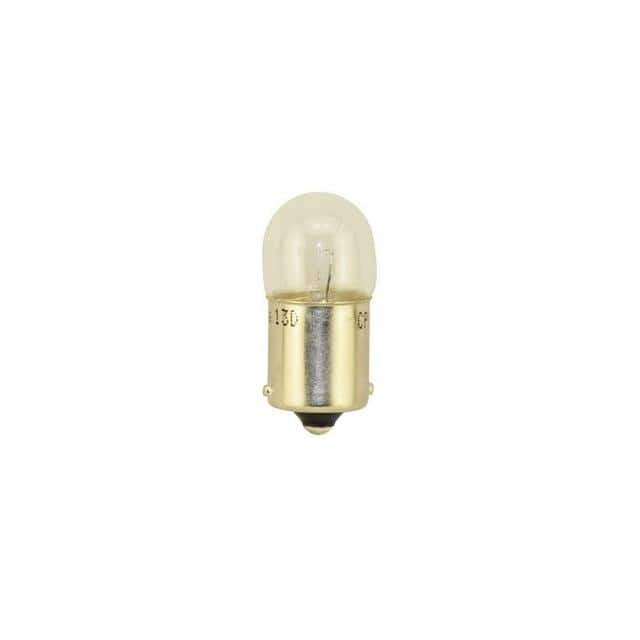
6V 10W BA15S (WW-4JFJ-6): Industry Insight on Legacy Lighting Components
The Interlight WW-4JFJ-6 is a 6-volt, 10-watt incandescent lamp built on the BA15S bayonet base—a form factor that has survived more than a century of lighting evolution because it solves a specific set of problems exceptionally well. In an industry obsessed with LEDs, it is tempting to dismiss this class of component as legacy. That would be a mistake. For procurement teams, understanding where the 6V 10W BA15S still wins, and where it is being displaced, is essential to managing both cost and risk.
The technology itself is mature: a tungsten filament in a gas-filled glass envelope, delivering roughly 150–200 lumens at a color temperature near 2700K. Recent innovations in this segment are incremental but meaningful. Manufacturers have refined filament geometry and gas mixtures to extend rated life, improved base crimping for vibration resistance, and tightened voltage tolerance so lamps perform predictably in systems where supply voltage sags. Some producers now offer halogen-charged variants that raise efficacy and lifespan without changing the footprint or electrical interface—an important detail for OEMs that cannot re-engineer a socket.
Market trends in this segment are counterintuitive. Global incandescent lamp demand is declining overall, but the 6V BA15S niche is holding steadier than the broader category. The reason is application lock-in: this lamp is embedded in equipment with long service lives—industrial control panels, older medical and dental instruments, marine and emergency lighting, vintage and specialty vehicles, and signage. In these systems, the lamp is a consumable within a platform that may run for 20 years. OEMs are reluctant to redesign a board or housing to accommodate an LED module when the incandescent replacement costs a fraction of the engineering change. Demand is therefore driven less by new construction and more by maintenance, repair, and operations spending, which is notably recession-resistant.
Supply chain dynamics deserve close attention. Production of small incandescent lamps has concentrated in a handful of facilities in Asia, with Chinese and Taiwanese manufacturers dominating volume and a smaller number of European and North American producers serving premium and defense-adjacent markets. Lead times have improved from the severe disruptions of 2021–2022, but they remain volatile for low-volume SKUs like this one. Because distributors often stock these parts in modest quantities, a single factory changeover or raw material shortage can create months of scarcity. Pricing outlook is mildly inflationary: tungsten and specialty glass costs fluctuate, energy-intensive manufacturing faces rising power costs in key producing regions, and shrinking production scale reduces economies of scale. Expect low single-digit annual price increases rather than declines, with sharper spikes possible during supply interruptions.
Emerging applications are quietly adding demand. The growth of niche electric vehicles—golf carts, utility task vehicles, and vintage EV restorations—has created a new aftermarket for 6V bayonet lamps. Similarly, the restoration economy for classic motorcycles and military vehicles relies on exact-form-factor replacements. In industrial settings, the push toward predictive maintenance is generating demand for identical replacement parts that keep legacy machines running while modernization budgets are deferred. Each of these channels is small, but together they stabilize the segment.
The technology roadmap for this category is not about radical reinvention; it is about coexistence. The most likely trajectory is a long, slow transition in which incandescent BA15S lamps are progressively replaced by drop-in LED equivalents that mimic the bayonet base, voltage range, and thermal profile. LED retrofits already exist for 6V systems, but they face real constraints: driver circuitry must tolerate the wide voltage swings of legacy supplies, and color and dimming behavior must match expectations in instruments and indicators. As LED retrofit quality improves and prices fall, the incandescent share will erode—but not disappear. Regulatory pressure will accelerate this in some regions and lag in others.
Regulations cut both ways. RoHS and REACH have largely been absorbed by the industry; modern incandescent lamps comply, though the exemption landscape for certain materials requires ongoing vigilance. Automotive qualifications are more consequential. Lamps used in vehicles must meet vibration, temperature cycling, and sometimes E-mark standards, which limits the supplier pool and raises switching costs. For non-automotive industrial use, the regulatory burden is lighter, which keeps the market accessible but also fragmented and prone to quality variance across suppliers. Buyers should verify compliance documentation rather than assume it.
For procurement teams, several strategic recommendations follow. First, treat this component as a critical spare, not a commodity. Qualify at least two suppliers and maintain safety stock sized to your equipment downtime cost, not to carrying-cost minimization. Second, lock in annual pricing agreements where possible, given the upward bias in costs. Third, monitor the LED retrofit market as a medium-term substitution option, but validate electrical compatibility before committing to a redesign. Fourth, audit supplier compliance documentation for RoHS, REACH, and any applicable automotive standards, because enforcement is tightening. Finally, track end-of-life notices from OEMs and lamp manufacturers; in a consolidating category, discontinuation risk is a bigger threat than price.