8" Oval Side Cutters Compared: 32636 vs Top Rivals Guide
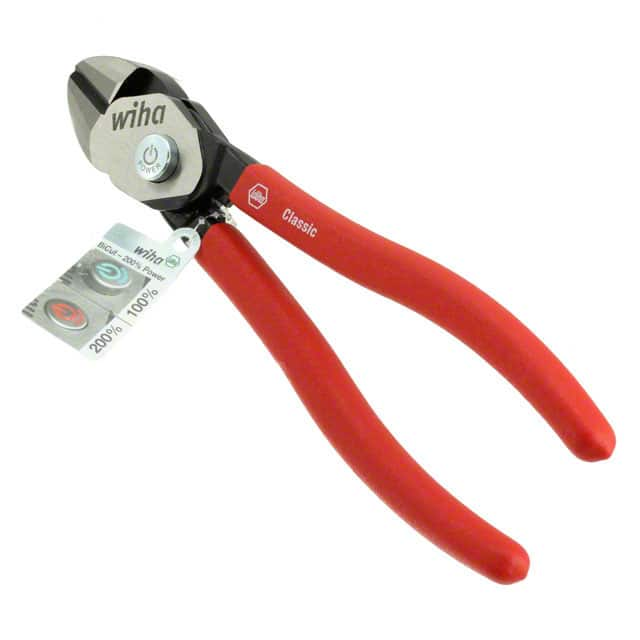
When procurement teams think about the components that keep an electronics assembly line running, they usually picture semiconductors, connectors, and passive parts. Yet one of the most frequently replaced items on any bench or production floor is the humble hand tool, and among those, the CUTTER SIDE OVAL 8" from Wiha, SKU 32636, occupies a category all its own. This is a precision side-cutting pliers, sometimes called a diagonal cutter or flush cutter, designed to shear copper wire, component leads, and small cable ties cleanly without crushing or deforming the conductor. In electronic systems, its role is not electrical but mechanical: it is the tool that prepares and trims the physical interconnects that carry signals and power. A clean cut preserves strand integrity, prevents fraying that can short against adjacent pins, and reduces rework during harness assembly, PCB depanelization, and field service.
Choosing a cutter of this class means weighing several parameters that directly affect both the quality of the work and the total cost of ownership. The first is blade geometry. An oval or semi-flush head, like the one on the Wiha 32636, is forged so the cutting edges meet at a slight angle, which lets the jaws reach into tight spaces while still delivering a shearing action rather than a pinch. That matters because a pinching cutter cold-works the copper, leaving a burr that can puncture insulation or create a high-resistance joint. Second is material and hardness. Wiha uses a chrome-vanadium-molybdenum tool steel that is induction-hardened to roughly 64 HRC at the cutting edge while the body remains tough enough to absorb shock. Third is ergonomics and leverage: an 8-inch overall length gives enough mechanical advantage for repeated cuts of 12 to 14 AWG wire without hand fatigue, and the return spring and opening limiter reduce wrist strain during long production runs. Finally, consider ESD safety. Many electronics buyers assume all pliers are safe near static-sensitive assemblies, but only those with dissipative handles, typically in the 10^6 to 10^9 ohm range, qualify. The Wiha 32636 is available with such grips, which is a decisive specification for anyone working on boards containing MOSFETs or unprotected CMOS.
Compared with alternatives, the Wiha 32636 sits in the professional tier. Cheaper import cutters, often priced at a third of the Wiha, use lower-carbon steel and softer heat treatment. They may cut acceptably for a few hundred cycles, but the edges roll over, the joint develops play, and the user compensates by squeezing harder, which accelerates fatigue and produces ragged cuts. Premium Japanese brands such as Engineer or Fujiya offer comparable hardness and sometimes thinner profiles for ultra-fine work, but their distribution in North America is thinner and lead times can stretch. Mid-tier options from Klein Tools or Knipex are widely stocked and cost 15 to 30 percent less than the Wiha 32636, yet they typically target electrical trades rather than electronics, so their cutting angles are optimized for larger conductors and their handles are less often ESD-rated. In terms of availability, Wiha maintains a broad distributor network, and the 32636 is a catalog staple rather than a special order, which keeps street prices stable and predictable.
Several industry trends are reshaping this category. The ongoing miniaturization of electronics means more assemblies use fine-pitch connectors and 30 AWG or smaller wire, pushing demand toward flush cutters with narrower heads and sharper edge angles. At the same time, the growth of electric vehicles and energy storage has increased the volume of larger-gauge harness work, so a single 8-inch oval cutter like the 32636 must straddle both worlds. Buyers are also paying more attention to ergonomic and repetitive-strain standards, since hand-tool injuries are a recognized cost in high-mix production. Finally, supply-chain diversification has led many distributors to qualify a second tool brand alongside their primary, not because the primary is unreliable but because a single port strike or steel shortage can idle a line just as surely as a missing IC.
You should choose the Wiha 32636 specifically when your application demands a clean, repeatable shear cut on copper or soft wire up to about 12 AWG, when ESD-safe handling is required, and when operator comfort over hundreds of cycles per shift is a real concern. It is also the right call when you want a single part number that can serve both a rework bench and a light production cell, reducing SKU sprawl. Choose an alternative instead if you routinely cut hardened steel, piano wire, or large cable, where a heavier-duty cutter or a ratcheting model is safer. If your only need is occasional hobbyist trimming, a lower-cost tool will do, but for a distributor’s B2B customers, the Wiha is the one that survives the audit trail.
From a procurement standpoint, the Wiha 32636 is an active, non-obsolescent product with a normal lead time of one to three weeks from authorized distributors, though spot shortages can occur around trade-show seasons or when raw steel prices spike. Because it is a hand tool rather than a silicon device, lifecycle risk is low, but you should still confirm that your supplier is an authorized Wiha distributor to avoid counterfeit cutters with inferior heat treatment. For second-sourcing, qualify one mid-tier alternative such as a Knipex or Klein oval cutter with similar jaw length and ESD grips, and keep a small buffer stock on the shelf. That combination of a proven primary tool and a validated backup keeps your assembly and repair operations moving without tying up capital in overstock.