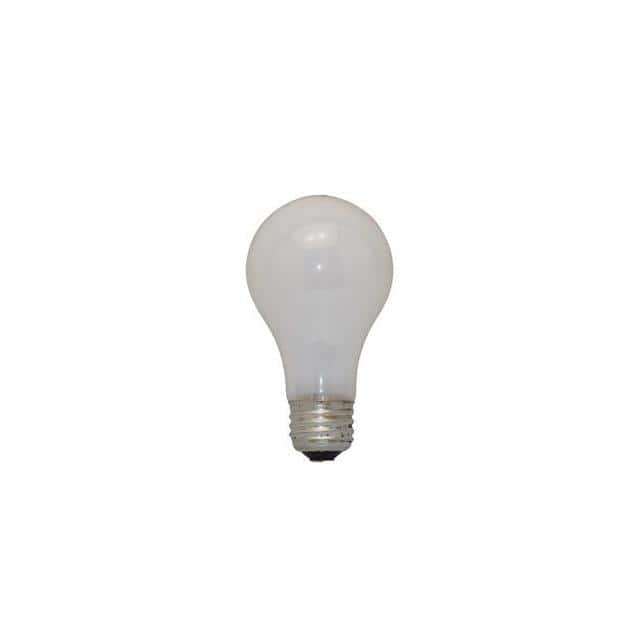
120/130V Rough Service Bulb Industry Insight: WW-7245-0 Explained
The 120/130V rough service medium-base incandescent bulb, represented by SKUs such as Interlight's 2PAK:WW-7245-0, occupies a peculiar position in the modern electronics landscape. It is simultaneously a legacy component and a niche critical part, one that refuses to disappear despite decades of solid-state lighting disruption. For procurement teams and distributors, understanding why this bulb still matters — and where its demand is heading — is essential for managing a category that defies simple obsolescence narratives.
Technology and recent innovations
Rough service bulbs are engineered with reinforced filament supports, typically five or more, compared to the two or three found in standard incandescent lamps. This construction resists vibration and mechanical shock, extending service life in demanding environments. The 120/130V rating indicates compatibility with North American mains voltage with headroom for transient overvoltage. Recent innovations in this category are incremental rather than transformative: improved filament alloys (often tungsten-halogen hybrids), ceramic or high-temperature polymer bases, and enhanced gas fills that reduce filament evaporation. Some manufacturers now apply ruggedized coatings that contain glass fragments if the envelope breaks, a feature increasingly valued in food processing and industrial settings. Interlight's positioning of this SKU as a two-pack reflects the practical reality that buyers in this segment purchase in small quantities for maintenance, not production-scale volumes.
Market trends and demand drivers
The global incandescent bulb market continues its long decline, but the rough service subsegment is contracting more slowly than general-purpose incandescents. Demand is driven by three factors: installed base inertia (equipment designed around incandescent form factors and heat characteristics), regulatory carve-outs (rough service lamps have received exemptions or extended timelines under various efficiency rules), and application-specific requirements where LED replacements underperform. The U.S. Department of Energy's 2022 general service lamp rule explicitly exempted rough service and vibration service lamps, a decision that preserved a meaningful addressable market. Demand is geographically concentrated in North America, with secondary pockets in Latin America and the Middle East where 120V systems or dual-voltage equipment are common.
Supply chain dynamics
Sourcing for this component is increasingly concentrated among a handful of manufacturers in China, with smaller production in Mexico and Eastern Europe. Lead times have stabilized after pandemic-era disruptions, typically running four to eight weeks for container volumes and two to four weeks for domestic distributor stock. Pricing has risen modestly, driven by raw material costs (tungsten, glass, brass bases) and compliance overhead rather than demand growth. The small-order nature of rough service purchases means distributors like Interlight absorb significant handling costs, which explains the two-pack format and the premium pricing relative to commodity bulbs. Expect continued price firmness as manufacturers consolidate production runs and minimum order quantities rise.
Emerging applications
While traditional applications — garage door openers, ceiling fans, appliance lamps, and industrial machinery — remain the core, new demand is emerging from unexpected quarters. Vertical farming operations use rough service bulbs as supplemental heat and light sources in germination and seedling stages where full-spectrum LEDs are unnecessary. Vintage and restoration markets, including classic car and motorcycle enthusiasts, seek 120/130V rough service bulbs for authenticity and vibration resistance. Theatrical and stage lighting retains some incandescent demand for dimming smoothness and color temperature consistency that LEDs still struggle to replicate at low cost. Additionally, some HVAC and pump equipment manufacturers specify rough service bulbs as indicator or heating elements, creating OEM demand that is sticky and specification-driven.
Technology roadmap
The roadmap for this category is less about radical innovation and more about managed decline with targeted enhancements. Expect continued improvements in filament life (targeting 2,000–3,000 hours versus the traditional 1,000), higher-temperature base materials, and better shock resistance. Halogen-infused rough service bulbs may gain share as they offer higher efficacy within the incandescent family. The real long-term threat is LED ruggedized replacements, which are improving rapidly in vibration resistance and dimmer compatibility. However, for applications where heat generation is functional rather than incidental, incandescent rough service bulbs have no direct substitute. The category will likely persist as a specialty item for at least another decade, with production migrating to lower-volume, higher-margin specialty manufacturers.
Regulatory impact
RoHS and REACH compliance is largely a non-issue for this component, as incandescent bulbs contain no restricted substances beyond trace lead in some solder formulations, which is exempt for certain applications. Automotive qualifications are more relevant: rough service bulbs used in automotive or transportation equipment may need to meet SAE or FMVSS standards, and procurement teams should verify whether their specific SKU carries such certifications. The larger regulatory risk is energy efficiency legislation. While rough service lamps currently enjoy exemptions, future rulemakings could narrow those carve-outs. Procurement teams should monitor DOE and EU regulatory calendars and maintain contingency sourcing for compliant alternatives.
Strategic recommendations for procurement teams
First, treat this as a strategic niche rather than a commodity. Establish relationships with two or three qualified suppliers and maintain safety stock of four to six weeks given the small-order economics. Second, validate the exemption status of your specific applications under current energy regulations and document that justification. Third, qualify an LED alternative for non-critical applications to reduce exposure if regulations tighten or supply tightens. Fourth, consolidate SKUs where possible to improve purchasing leverage; the 120/130V rough service medium-base format is common enough to standardize across multiple equipment types. Finally, monitor the aftermarket — as OEMs discontinue incandescent fixtures, the distributor channel becomes the primary supply route, and availability may become episodic. Interlight's two-pack SKU is a practical example of how distributors are adapting to this reality by serving maintenance buyers directly.