PD-1670 Cable Loom: Industry Insight into Electronic Component Supply
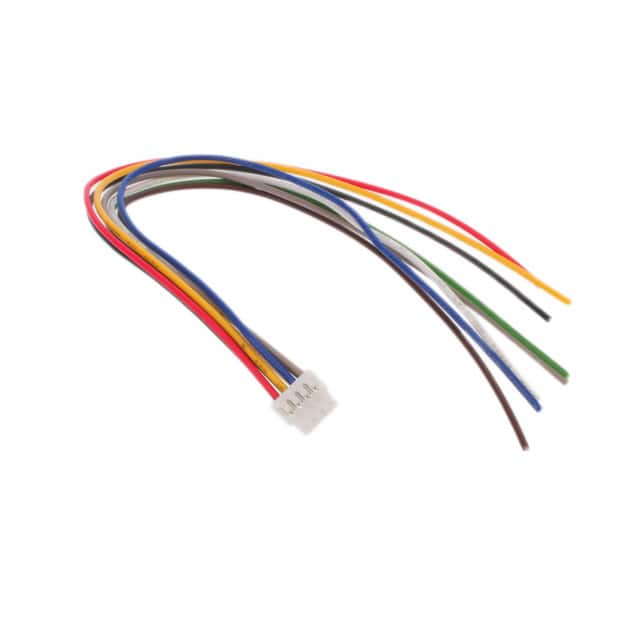
In the precision motion control ecosystem, the cable loom for the Trinamic PD-1670 stepper motor driver represents a deceptively simple component with outsized strategic importance. The PD-1670-CABLE is a wiring harness assembly designed to interface Trinamic's PD-1670 series PANdrive — a compact, integrated stepper motor with built-in driver electronics — to host controllers, power supplies, and sensor networks. While a cable loom may appear commoditized, its role as the physical and electrical bridge in mission-critical motion systems means procurement teams ignore it at their peril.
The technology underpinning the PD-1670-CABLE reflects broader innovation in interconnect design for motion control. Modern looms for PANdrive-class products increasingly incorporate shielded twisted-pair conductors to mitigate electromagnetic interference in densely packed automation environments, high-flex stranded copper for cable-chain and robotic applications, and overmolded strain relief that extends operational life in high-vibration settings. Recent innovations include the use of halogen-free thermoplastic elastomer (TPE) jacketing for improved fire safety and flexibility, and the integration of small-form-factor connectors with positive locking mechanisms to prevent disconnection under shock and vibration. Some newer designs also embed identification EEPROM or resistor-coding to allow controllers to auto-detect motor parameters — a trend that reduces commissioning errors and supports plug-and-play system architectures.
Market demand for this component segment is driven primarily by the sustained growth of industrial automation, laboratory automation, and medical device manufacturing. The global stepper motor and integrated drive market continues to expand at a mid-single-digit CAGR, with the Asia-Pacific region accounting for the largest share of unit consumption. Miniaturization trends in analytical instruments, 3D printers, and desktop CNC equipment have increased demand for compact, pre-assembled cable looms that reduce end-user integration time. Additionally, the shift toward decentralized motion architectures — where drives are placed directly on the machine rather than in a central cabinet — favors integrated motor-driver packages like the PD-1670 and, by extension, their associated cable looms. Demand is also increasingly tied to retrofit and aftermarket activity, as existing installed bases of Trinamic-based systems require replacement looms as part of preventive maintenance programs.
Supply chain dynamics for the PD-1670-CABLE reflect the broader interconnect industry's post-pandemic recalibration. Sourcing is concentrated among a relatively small number of contract manufacturers and specialized harness assemblers, many of which are located in Taiwan, mainland China, and Southeast Asia. Lead times, which stretched beyond 20 weeks during the 2021–2022 component shortage, have largely normalized to 6–10 weeks for standard configurations, though custom lengths or connector variants can still extend to 12–16 weeks. Pricing outlook is moderately inflationary: copper prices remain volatile, and the specialized connectors used in PANdrive looms carry premium pricing due to limited second-source availability. Buyers should expect annual price increases in the low-to-mid single digits, with steeper increases for low-volume, high-mix orders. Tariff exposure and freight costs add further variability, particularly for North American and European buyers sourcing from Asia.
Emerging applications are broadening the demand base for precision cable looms. Collaborative robots and mobile manipulators require lightweight, high-flex looms that can survive millions of flex cycles. Laboratory automation platforms — including liquid handlers and next-generation sequencing instruments — demand looms with low outgassing and biocompatible materials. Semiconductor front-end equipment uses PANdrive-class motors in wafer handling, where cable reliability directly impacts yield. Agricultural robotics and autonomous mobile robots (AMRs) represent a fast-growing adjacent market, albeit one that often requires IP-rated or ruggedized loom variants. Each of these applications imposes distinct electrical, mechanical, and environmental requirements, pushing loom designs toward greater specialization.
The technology roadmap for this component category points toward higher integration and intelligence. We expect to see looms with embedded temperature sensing, current monitoring, and digital communication overlays that support predictive maintenance. Single-cable solutions combining power, encoder feedback, and fieldbus communication are gaining traction, reducing connector count and simplifying machine design. Over time, wireless or contactless power and data transmission may displace some physical looms in high-wear axes, but for the foreseeable future, copper-based looms will remain the dominant interconnect for cost-sensitive, high-reliability motion applications.
Regulatory factors are increasingly influential. RoHS and REACH compliance is now table stakes, but the transition to halogen-free materials and the phase-out of certain phthalates in jacketing compounds require active supplier qualification. For automotive-adjacent applications, IATF 16949 quality systems and AEC-Q200-grade components may be required, which significantly narrows the qualified supplier pool. Medical applications bring ISO 13485 and biocompatibility considerations. Procurement teams should verify that their loom supplier maintains current declarations of conformity and can support change notification processes, since a material substitution in a cable jacket can trigger requalification in regulated end markets.
For procurement teams, the strategic recommendations are clear. First, avoid single-sourcing the PD-1670-CABLE; qualify at least one alternative harness assembler, even if the connector interface remains proprietary to Trinamic. Second, negotiate long-term agreements with indexed pricing to manage copper and freight volatility. Third, maintain a safety stock of 8–12 weeks for critical production lines, given the component's low dollar value but high downtime impact. Fourth, engage early with engineering on design-for-supply initiatives — standardizing cable lengths and connector types across platforms can reduce SKU proliferation and improve lead times. Finally, monitor Trinamic's product lifecycle communications, as PANdrive generations do transition, and plan for loom redesign or last-time-buy accordingly. In motion control, the cable is never just a cable — it is the lifeline of the machine, and it deserves commensurate strategic attention.