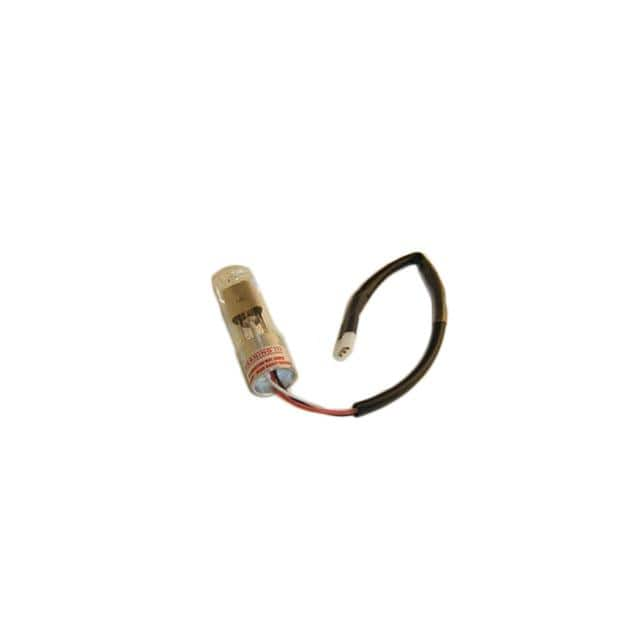
Deuterium Scientific Lamp WW-AFRE-1: Reliability Guide for Lab Pros
The Interlight WW-AFRE-1 deuterium scientific lamp is a specialized UV source used in spectrophotometers, HPLC detectors, and analytical instrumentation. Unlike general-purpose lighting, deuterium lamps operate under high internal pressure and require precise arc stability, making reliability engineering essential. This guide outlines qualification, testing, and lifecycle practices for procurement and quality teams.
Reliability standards and qualifications. Deuterium lamps are typically qualified against IEC 60068 environmental test series and MIL-STD-810 for shock and vibration, though the most relevant standard is the manufacturer's own arc stability and output decay specification. For analytical instruments, compliance with USP <857> or ISO 9001 supplier audits is common. Interlight's WW-AFRE-1 should be procured with a certificate of conformance referencing original equipment manufacturer (OEM) equivalent part numbers, as these lamps are often aftermarket replacements. Key qualification parameters include initial UV output at 254 nm, warm-up time to 90% intensity, and specified lifetime hours (often 1,000–2,000 hours).
Accelerated life testing and interpretation. ALT for deuterium lamps typically involves elevated operating temperature (e.g., 60°C vs. 25°C ambient) and increased discharge current to accelerate electrode degradation and gas depletion. Arrhenius modeling is used, with activation energy around 0.7–1.0 eV for tungsten electrode evaporation. A 500-hour test at 70°C may correlate to 2,000 hours at 25°C. Results should be interpreted as median time to 50% output drop, not catastrophic failure. If a sample shows >30% output loss at 500 accelerated hours, the lot is suspect. Do not accept ALT data without confidence intervals; small sample sizes (n=3) yield wide bounds.
Failure rate calculations and MTBF. Deuterium lamps exhibit wear-out failures, not random failures, so MTBF is misleading. Instead, use FIT rates derived from field returns: FIT = (failures × 10^9) / (hours × units). For a lamp rated 1,500 hours, a 2% failure rate at 1,000 hours gives roughly 20,000 FIT. However, because failure is time-dependent, report B10 life (time at which 10% fail) rather than MTBF. For WW-AFRE-1, demand a B10 life of at least 1,200 hours from the supplier. If the supplier only quotes MTBF, treat it as a red flag.
Environmental stress screening and burn-in. ESS for deuterium lamps includes thermal cycling (-20°C to +70°C, 10 cycles), vibration (10–500 Hz, 1.5 g), and a 24-hour burn-in at nominal current. Burn-in is critical: it stabilizes the arc and removes infant mortality. Require 100% burn-in for at least 4 hours with output recorded at 0, 1, 2, and 4 hours. Lamps that drift more than 5% during burn-in should be rejected. For high-reliability applications (e.g., clinical analyzers), extend burn-in to 48 hours and perform a second output check after 24 hours of cool-down.
Counterfeit detection. Counterfeit deuterium lamps are common due to high OEM prices. Detection methods: (1) Verify the quartz envelope for striations and bubbles—counterfeits use lower-grade quartz. (2) Check electrode geometry under magnification; genuine WW-AFRE-1 has a precisely wound tungsten coil. (3) Measure spectral output at 254 nm and 656 nm; counterfeits often show shifted peaks. (4) Inspect the base for laser-etched serial numbers and compare against Interlight's database. (5) Perform a helium leak test—genuine lamps hold <1×10^-9 atm·cc/s. Counterfeits leak or fail within 100 hours.
Incoming inspection best practices. Use AQL sampling (e.g., ISO 2859-1, level II, AQL 0.65). For each lot, test: visual (cracks, discoloration), dimensional fit (base pins, envelope length ±0.5 mm), and electrical (ignition voltage < 350 V, operating current ±5%). Perform a 1-hour operational test on at least 3 samples per lot, measuring output stability. Reject lots with >2% visual defects. Maintain traceability by recording lot code, date code, and supplier certificate. Do not rely solely on the brand name—Interlight is a distributor, not the original manufacturer.
Storage and handling. Store lamps in original packaging at 10–30°C, <60% RH, away from UV light. Do not touch the quartz envelope with bare hands; skin oils cause devitrification and premature failure. Use lint-free gloves and handle by the base. Shelf life is typically 2 years; after that, re-test ignition voltage. Never store lamps in a vertical position with the window down—internal debris can settle on the window. Avoid vibration during transport; use foam-lined containers.
End-of-life and obsolescence. Deuterium lamps have a defined wear-out; plan replacement at 80% of rated life or when output drops below 70% of initial. Monitor obsolescence by tracking OEM discontinuance notices. Interlight may discontinue WW-AFRE-1 without notice. Maintain a last-time buy (LTB) of at least 12 months of usage and qualify a second source (e.g., Heraeus, Hamamatsu, or a vetted aftermarket supplier). For critical instruments, consider retrofitting to LED-based UV sources if spectral requirements allow. Dispose of lamps as hazardous waste due to deuterium gas and heavy metals in electrodes.