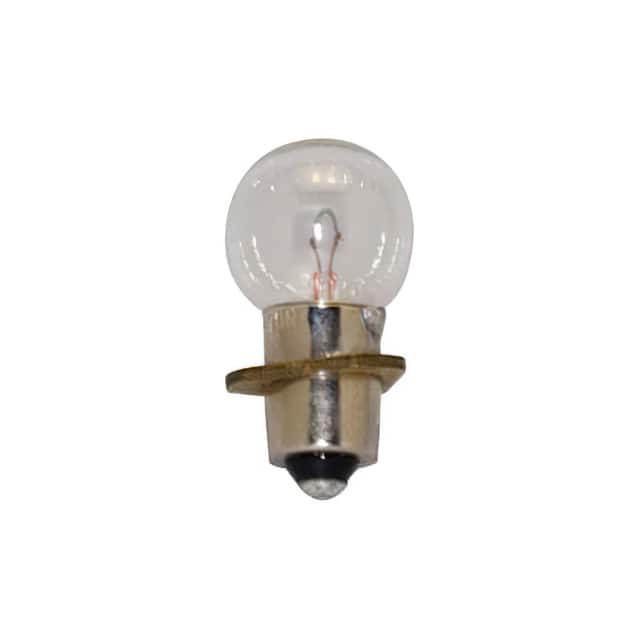
6V 5W (WW-42LW-0) Comparison Guide: Best Alternatives & Specs
The Interlight WW-42LW-0, a 6V 5W component, belongs to the category of miniature incandescent lamps and specialty lighting assemblies used in electronic and electromechanical systems. Despite the ubiquity of LEDs, these small filament lamps remain indispensable in a surprising number of applications: indicator and panel lighting in industrial control cabinets, legacy equipment where the lamp serves as a direct drop-in replacement, illumination in scientific and medical instruments, and warning or status indicators in transportation and aviation hardware. The lamp's role is straightforward but critical—it converts electrical current into visible light for signaling, status indication, or localized illumination, and in many designs it is a specified part that interfaces with a socket, holder, or optical assembly. Because these lamps are often designed into equipment with decades-long service lives, the availability of an exact replacement is a genuine engineering and procurement concern rather than a commodity afterthought.
When selecting this type of component, several parameters dominate the decision. Voltage rating is paramount: a 6V lamp must be driven at its rated voltage to achieve specified life and brightness, and operating it at even 10 percent overvoltage can cut filament life dramatically. Power and current draw (5W at 6V translates to roughly 830 mA) affect driver sizing, wiring gauge, and thermal budgets. Luminous output and filament geometry matter where the lamp must couple to a lens, light pipe, or reflector; a physically different filament can produce an unacceptable beam pattern. Base and package style—whether a wire-terminal, bi-pin, screw base, or custom assembly—determines mechanical fit and must be matched precisely. Rated life, typically expressed in hours at rated voltage, is a key reliability metric, and operating temperature range and vibration tolerance matter in industrial and mobile environments. Finally, buyers should confirm whether the part is a genuine OEM-equivalent or a cross-referenced substitute, since optical and electrical equivalence is not always guaranteed.
Compared with alternatives, the WW-42LW-0 occupies a specific niche. Against LED replacements, incandescent lamps offer simpler drive electronics (no current-limiting or polarity concerns in many cases), broad compatibility with existing AC or DC supplies, and often a closer match to the original optical design—but they lose on efficiency, life, and ruggedness. LEDs can deliver tens of thousands of hours versus the incandescent's typical hundreds to low thousands, and they consume a fraction of the power. Against neon or halogen options, the 6V incandescent is generally lower cost per unit and easier to integrate at low voltages. On cost, the Interlight part is inexpensive in absolute terms, though buyers should compare total cost of ownership: frequent replacement labor in hard-to-reach fixtures can outweigh the lamp's low unit price. On availability, incandescent specialty lamps are increasingly a declining-supply category, so stock depth and authorized distribution matter more than headline price.
Industry trends are reshaping this category in ways buyers should track. The broad shift to LED has reduced demand for incandescent lamps, causing manufacturers to consolidate product lines and discontinue lower-volume part numbers—raising obsolescence risk for legacy designs. At the same time, right-to-repair and long-lifecycle support pressures in industrial, medical, and aerospace markets sustain demand for exact replacements, and specialist distributors have stepped in to hold stock and cross-reference equivalents. RoHS and energy-efficiency regulations have largely exempted or phased out general-purpose incandescent lighting but generally still permit specialty and indicator lamps, though buyers should verify compliance status for their market. Finally, supply-chain consolidation means fewer original manufacturers, making qualified second sources and distributor inventory depth increasingly valuable.
Choose the Interlight WW-42LW-0 specifically when you need a drop-in replacement for an existing 6V 5W incandescent design, when the surrounding optics and socket were engineered around this lamp's filament and base, or when adding LED driver circuitry would be impractical or require requalification. It is also the right call for low-volume legacy equipment support, for applications where the lamp's warm color temperature and broad emission spectrum are functionally required, and where the simplicity of a resistive filament load is an advantage in diagnostics or test fixtures. If the application is new design, high-vibration, or energy-sensitive, an LED alternative should be evaluated first.
On procurement, buyers should confirm lifecycle status directly with the distributor, since specialty incandescent lines can move to last-time-buy with little notice; where possible, secure a written end-of-life notification agreement. Lead times for stocked distributor inventory are typically short, but factory-direct or non-stocked orders can stretch to weeks, so forecast replacement demand and hold safety stock for critical fixtures. Identify second-source options early—cross-referenced equivalents from other lamp makers or specialist suppliers—and validate them for voltage, current, filament position, and base fit before relying on them. Finally, document the approved substitute on the bill of materials so maintenance and purchasing teams do not improvise during an outage.