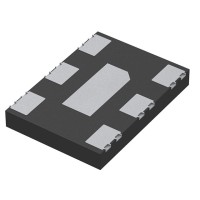
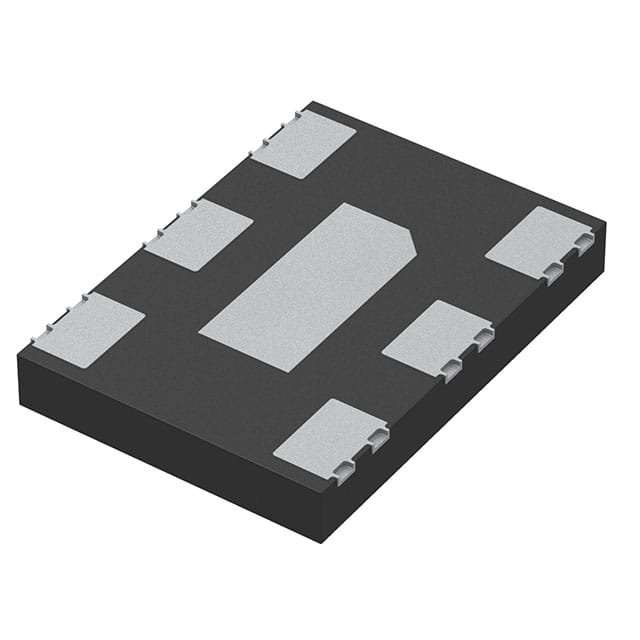
Troubleshooting the MEMS VCXO 156.2500MHz LVPECL: SIT3372AC Fixes
When a customer calls about a SIT3372AC-1E9-30NY156.250000 that "doesn't work," the first thing I ask is whether they have AC-coupled the output before measuring. LVPECL drivers are open-emitter outputs designed to drive 50-ohm loads terminated to VCC-2V; if you probe them with a standard 10x scope probe and no proper termination, you will see a distorted, low-amplitude waveform that looks like a dead part. In my experience, roughly half of "bad oscillator" reports on LVPECL VCXOs come down to termination and probing errors, not the component itself.
The typical failure modes for this device fall into a few buckets. No output at all usually traces to a missing supply, a floating OE (output enable) pin, or an incorrect VDD ramp that never crossed the power-on-reset threshold. Output present but off-frequency or drifting often points to a noisy or improperly bypassed VC (voltage control) pin — this is a VCXO, and the control voltage input is high-impedance and very sensitive to injected noise. Excessive phase jitter or spurious content typically comes from power supply noise, poor grounding, or crosstalk from nearby switching regulators. Intermittent startup is frequently a soldering or thermal issue, sometimes a marginal supply that sags during the ramp.
My step-by-step methodology is always the same. First, verify the supply voltage at the device pins, not at the regulator — measure VDD and GND right at the oscillator with a short ground lead. Confirm the ramp is monotonic and reaches the specified minimum. Second, check the OE pin state; a floating enable pin is a classic mistake. Third, terminate the output correctly — either 50 ohms to VCC-2V on each leg or a Thevenin equivalent — and measure with a proper differential probe or a 50-ohm-input scope. Fourth, verify the VC pin voltage against the expected tuning range and confirm it is clean. Only after these pass do I suspect the part.
Schematic and layout mistakes are where I see the most repeat offenders. Forgetting the AC coupling capacitors on the LVPECL outputs when the downstream receiver expects a biased differential input is common. Placing the VC pin bypass capacitor too far away, or omitting it entirely, lets noise modulate the frequency. Routing the output traces as single-ended instead of as a controlled-impedance differential pair invites reflections and jitter. On layout, cutting the ground plane under the oscillator or routing switching supply currents beneath it degrades phase noise noticeably. I also see customers place the load capacitors for the VCXO as if it were a crystal — this part has no external crystal load capacitors; adding them does nothing useful and can cause confusion during debug.
Authenticity and quality verification matters more than people expect. Buy from authorized distributors and check the laser marking, date code, and packaging against SiTime's documentation. Measure the actual output frequency and phase noise on a sample and compare to the datasheet — counterfeit or re-marked parts often fail the phase noise spec even when frequency looks correct. A quick supply current check against the datasheet typical is a good sanity test; a part drawing wildly different current is suspect.
For measurement, use a high-bandwidth differential probe or a 50-ohm terminated scope input — never a bare 10x probe on LVPECL. A phase noise analyzer or a spectrum analyzer with a low-noise source is needed to verify jitter. A good DMM with short leads checks supply and VC voltages. For frequency accuracy, a frequency counter with an ovenized reference is far better than a scope's built-in counter.
Suspect the surrounding circuit first when the failure is intermittent, when multiple boards fail identically, or when the problem appeared after a layout or BOM change. Suspect the component when a single unit fails while identical assemblies pass, or when the part fails a datasheet parameter under properly terminated test conditions. In one case, a customer's "dead" VCXO turned out to be a missing OE pull-up; in another, a noisy 3.3V rail from a nearby buck converter was injecting spurs that the customer blamed on the oscillator — adding a ferrite bead and local bypass fixed it completely. Debug the environment before condemning the part.