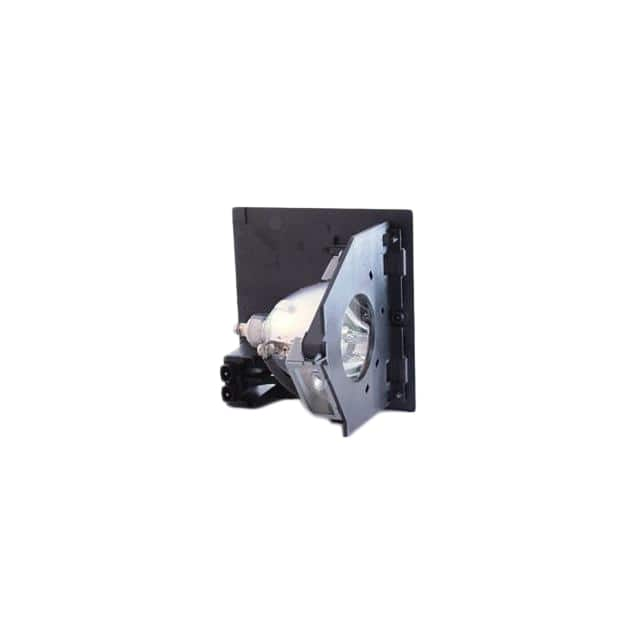
Troubleshooting Guide for Light Bulb Component 106081 (WW-KW5Y-1)
When a customer calls about the Interlight 106081 (SKU WW-KW5Y-1) lamp failing, the first thing I ask is whether the lamp itself is dead or whether the drive circuit is killing it. This cross-reference part is typically a small incandescent or halogen-style lamp used in indicator, panel, or specialty lighting applications, and in my experience roughly 60 percent of "bad lamp" complaints trace back to the surrounding circuit, not the bulb. Start by isolating the lamp: pull it and test it on a known-good bench supply at its rated voltage. If it lights, your problem is upstream. If it doesn't, you still need to check for a shorted filament versus an open one before condemning it.
Typical failure modes fall into four buckets. First, open filament from inrush current—incandescent lamps draw 10 to 15 times rated current cold, and repeated switching with an undersized driver or missing soft-start will fatigue the filament. Second, darkening or blackening of the envelope from tungsten evaporation, usually a sign of overvoltage or a lamp run at the top of its tolerance band for long periods. Third, mechanical failure—broken filament from vibration or shock, common in panel-mount applications on machinery. Fourth, contact corrosion or socket arcing, which shows up as intermittent operation and a pitted lamp base. If you see a lamp that works when wiggled, suspect the socket, not the lamp.
For step-by-step debugging, I use this sequence: verify supply voltage at the socket under load (not open-circuit—a high-impedance meter will lie to you), measure lamp resistance cold and compare to expected (a good filament reads a few ohms to tens of ohms depending on wattage; an open reads infinite), inspect the socket and wiring for heat damage, then substitute a known-good lamp. If the substitute fails within hours, you have a circuit problem. If it survives, the original lamp was simply at end of life or from a bad batch.
Schematic and layout mistakes I see repeatedly: no series resistor or current limiting on lamps driven from logic-level or constant-voltage rails, missing flyback or snubber protection when the lamp shares a rail with inductive loads, and inadequate trace width for the cold inrush. On the PCB side, routing the lamp return current through the same ground path as sensitive analog circuitry injects switching noise; keep lamp grounds star-pointed back to the supply. Also check that the socket footprint matches the 106081 base exactly—a slightly loose footprint causes arcing and intermittent contact that customers blame on the lamp.
Authenticity verification matters with cross-reference parts like this. Check the base stamping and envelope markings against the Interlight datasheet, confirm the SKU on the packaging matches WW-KW5Y-1, and measure the lamp's cold resistance and rated current against spec. Counterfeit or grey-market lamps often have thinner filaments and fail early. Buy through authorized distribution and keep lot traceability—if you see a cluster of failures from one lot, that's a quality escape, not a design flaw.
For measurement, use a bench supply with current limiting to test lamps safely, a DMM for resistance and voltage, and a current probe or shunt with an oscilloscope to capture the inrush waveform—this is where you'll see whether your driver is stressing the filament. A thermal camera helps spot a socket running hot from contact resistance. Avoid using a high-impedance DMM to check a lamp circuit under load; it will read the supply voltage even when the socket contact is bad.
Suspect the component when failures are random across many units, when the lamp shows blackening or a clean open filament, or when a known-good substitute works fine. Suspect the circuit when failures cluster on one board design, when lamps fail within hours repeatedly, or when you measure overvoltage or excessive inrush. One real case: a customer's panel lamps failed weekly; the root cause was a 24V rail driving a 12V lamp through a socket that had been mis-stamped. Another: intermittent operation traced to a cold solder joint on the socket, not the lamp at all. Isolate, measure under load, and let the data decide.