WW-ESGK-5 Electronic Fluorescent Ballast: Comparison Guide
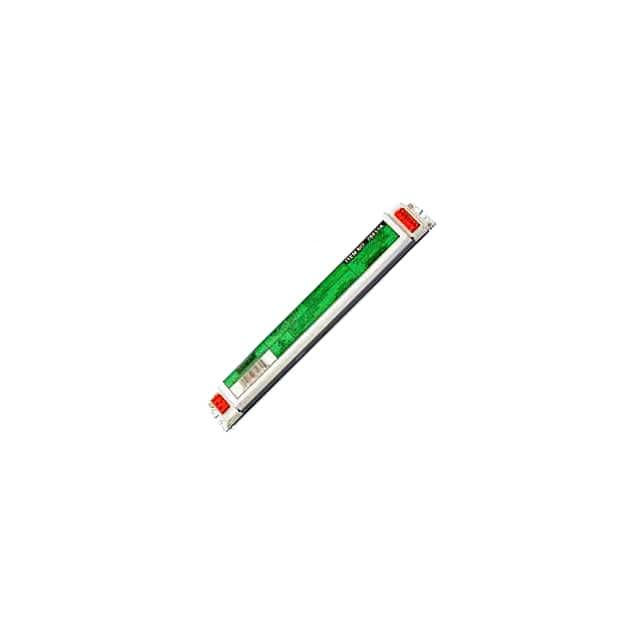
When buyers encounter an ELECTRONIC FLOURESCENT BALLAST in a bill of materials or maintenance schedule, they are looking at a power-conditioning component that sits between the AC mains and a fluorescent lamp. The ballast's job is to provide the high initial voltage needed to strike the lamp arc, then regulate current once the lamp is lit so it does not destroy itself. In the broader taxonomy of electronic components, this part belongs to the power management and lighting control family, specifically the subcategory of lamp ballasts and ignitors. Interlight's WW-ESGK-5 is a representative electronic ballast, meaning it uses high-frequency switching circuitry rather than the heavy magnetic core-and-coil designs of older generations. That distinction matters because it drives nearly every trade-off a buyer will weigh: efficiency, size, lamp compatibility, and cost.
Several parameters deserve scrutiny before committing to any ballast purchase. Lamp compatibility is the first gate—ballasts are designed for specific lamp types (T8, T12, T5), wattages, and counts, and a mismatch can cause flicker, premature lamp failure, or failure to strike at all. Input voltage range and line frequency must match the installation, particularly in facilities with marginal power quality. Ballast factor indicates how much light output the ballast drives relative to a reference ballast; values above 1.0 squeeze out more lumens at the cost of lamp life, while below 1.0 conserves energy and extends lamp life. Total harmonic distortion and power factor matter for code compliance and for installations with large numbers of fixtures on shared circuits, since poor power factor can trigger utility penalties. Finally, starting method—instant start, rapid start, or programmed start—affects both switching frequency and lamp longevity, with programmed start generally preferred where lamps cycle frequently.
Compared with magnetic ballasts, electronic units like the WW-ESGK-5 offer clear performance advantages: higher efficiency, quieter operation without the characteristic hum, no visible flicker, lighter weight, and better regulation across voltage fluctuations. Against other electronic ballasts, the comparison becomes more granular. Premium brands may offer tighter ballast factor tolerances, longer warranties, and broader lamp compatibility matrices, while economy ballasts trade some of that margin for lower unit cost. On cost, electronic ballasts have fallen substantially in price over the past decade as switching topologies have matured and manufacturing scaled, so the price premium over magnetic units is now modest and often repaid through energy savings within a year or two of typical use. Availability is generally strong for common configurations, though specific SKUs—particularly those tied to legacy lamp types—can thin out as the market consolidates around LED alternatives.
Industry trends are reshaping this category in ways buyers should factor into sourcing decisions. The most significant is the migration to LED, which has reduced demand for fluorescent ballasts across new construction and many retrofit projects. Regulatory pressure has accelerated this: efficiency standards in several regions have effectively banned many magnetic ballasts and pushed fluorescent lamps themselves toward phase-out in some markets. At the same time, a substantial installed base of fluorescent fixtures remains in service, particularly in industrial, warehouse, and older commercial buildings, sustaining demand for replacement ballasts. Supply has correspondingly consolidated among fewer manufacturers, and some product lines have entered end-of-life status. Buyers should also note the growth of programmed-start and dimmable ballasts as controls integration becomes more common, and the parallel rise of ballast-bypass LED tubes, which eliminate the ballast entirely and are increasingly the default retrofit choice.
Choosing the Interlight WW-ESGK-5 specifically makes sense when you need a direct replacement for an existing electronic ballast in a fixture you intend to keep in fluorescent service—situations where a full LED retrofit is not yet justified by budget, ceiling access constraints, or the remaining life of the fixture. It is also a reasonable pick for maintenance stocking where the installed base uses the corresponding lamp configuration and interchangeability with existing units is the priority. If your goal is maximum efficiency, dimming capability, or a long-term platform, an LED retrofit or a premium dimmable ballast may serve better. In short, choose this component for like-for-like replacement and continuity rather than for new design work.
On procurement, expect lead times to vary from stock for common configurations to several weeks for less-common voltage or lamp-count variants; confirm stocked status rather than catalog listing before committing to a production schedule. Check the lifecycle status carefully—fluorescent ballast lines are being pruned, and a part listed today may carry an end-of-life notice tomorrow, so ask for the manufacturer's product status letter where volume justifies it. Second-source options are worth developing: identify at least one alternate ballast with equivalent lamp compatibility, ballast factor, and input specifications, and validate it in a sample fixture before you need it. For maintenance buyers, keeping a modest buffer stock of the WW-ESGK-5 alongside a qualified alternate hedges against allocation and obsolescence risk, and documenting the cross-reference now saves scrambling later when a line goes dark.