Fiber Connector LC SM Pk/6 vs Alternatives: Comparison Guide
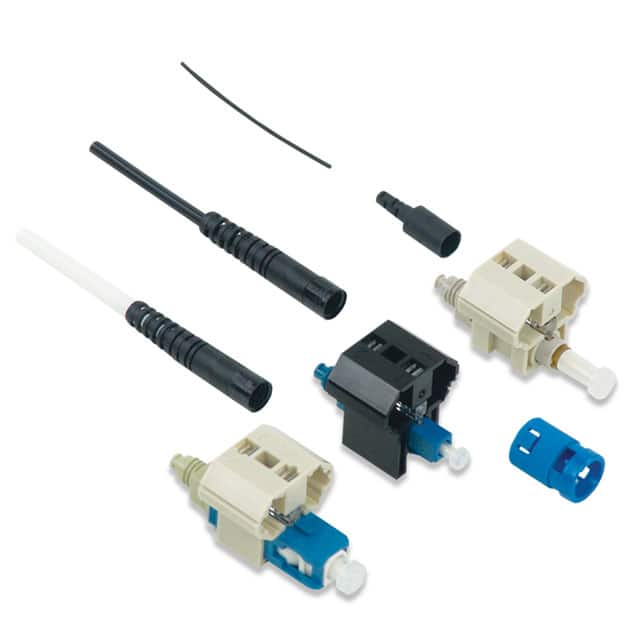
Fiber optic connectors sit at the physical layer of modern network infrastructure, and among them the LC (Lucent Connector) style has become the default choice for high-density singlemode deployments. The component in question, the AFL FAST-LC-SM-6 (SKU: AFL FAST-LC-SM-6), is a field-installable LC singlemode connector sold in packs of six. It belongs to the fiber optic interconnect category, specifically the mechanical connector subcategory used to terminate singlemode fiber so that light can be coupled between patch cords, pigtails, transceivers, and optical distribution frames. In an electronic system, this part does not process signals itself, but it governs insertion loss, return loss, and mechanical reliability at every optical interface in data centers, telecom central offices, enterprise backbones, and industrial networks. A poor connector choice degrades link budgets across the entire channel, so buyers should treat connectors as performance-critical rather than commodity items.
When selecting an LC singlemode connector, several parameters deserve close attention. Insertion loss and return loss are the headline optical specifications; singlemode LC connectors are typically graded against IEC 61753-1-1 performance classes, with premium grades holding insertion loss below 0.25 dB and return loss above 55 dB for APC or 50 dB for UPC polish. Ferrule geometry and end-face polish matter enormously because singlemode cores are around 9 microns, making misalignment or contamination far more damaging than in multimode systems. Field-installability is the defining feature here: a connector like the AFL FAST-LC-SM-6 is designed to be terminated in the field without fusion splicing, which changes the calculus around tooling, technician skill, and installation time. Buyers should also weigh operating temperature range, cable retention, mating durability, and compatibility with standard LC adapters and transceiver cages. For field-installable parts, the mechanical splice or adhesive mechanism inside the connector is a key differentiator that affects yield and long-term stability.
Compared with alternatives, the AFL FAST-LC-SM-6 occupies a pragmatic middle ground. Factory-terminated pigtails offer the best optical consistency and lowest skill requirements, but they require splice trays, fusion splicers, and longer installation windows, and they are less flexible when cable lengths are uncertain. Pre-terminated assemblies are excellent for planned builds but poor for repair and retrofit work. Epoxy-and-polish field connectors are inexpensive per unit but demand curing ovens, polishing consumables, and skilled labor. Field-installable mechanical connectors like this AFL part trade some of that cost advantage for speed and simplicity: a technician can terminate on site in minutes with a cleave-and-crimp tool, which is valuable in tight schedules and remote locations. Cost per unit is typically higher than bare epoxy connectors but lower than pre-terminated assemblies when labor and logistics are included. Availability is generally good through authorized distributors, though pack-of-six packaging means buyers planning large rollouts should calculate quantities carefully to avoid over-ordering or shortfalls.
Several industry trends are shaping this category. Hyperscale and edge data center growth continues to push fiber density upward, favoring small-form-factor LC over older SC and ST designs. Singlemode is increasingly specified even in shorter-reach campus and enterprise links because it future-proofs bandwidth upgrades, which raises demand for singlemode field terminations. At the same time, pre-terminated and MPO-based parallel optics are gaining share in new build environments, pressuring field-installable connector volumes. Supply chains remain sensitive to specialty glass ferrules and precision molded housings, and buyers have seen lead-time volatility since 2020. Environmental and labor trends also favor connectors that reduce polishing consumables and technician exposure to adhesives, which plays to the strengths of mechanical field-installable designs.
Choose this specific component when field termination speed and flexibility outweigh the marginal optical advantage of factory terminations. It is a strong fit for repair and restoration work, remote or industrial sites where shipping pre-terminated assemblies is impractical, and projects where cable runs must be measured and cut on site. It also suits organizations that want to reduce dependence on fusion splicing equipment or that lack splicing-certified technicians. If your link budget is extremely tight, your environment demands the highest grade of return loss, or your volumes are large and stable, factory pigtails or pre-terminated assemblies may be the better choice.
From a procurement standpoint, confirm current lead times with the distributor, as field-installable connector stock can fluctuate with demand spikes. Verify lifecycle status directly with AFL, since connector families are occasionally superseded by updated mechanical designs; buying against an end-of-life notice risks tooling incompatibility. Establish a second source early—comparable field-installable LC singlemode connectors from other reputable vendors can serve as qualified alternates, provided your technicians are trained on the different termination mechanism. Finally, factor in the cost of the matching installation tooling and cleave tools, and consider stocking a small buffer of packs given the six-piece packaging, so that routine maintenance is never blocked by a single-unit shortage.