18.432MHz Crystal Oscillators: Industry Trends Shaping SMD Timing
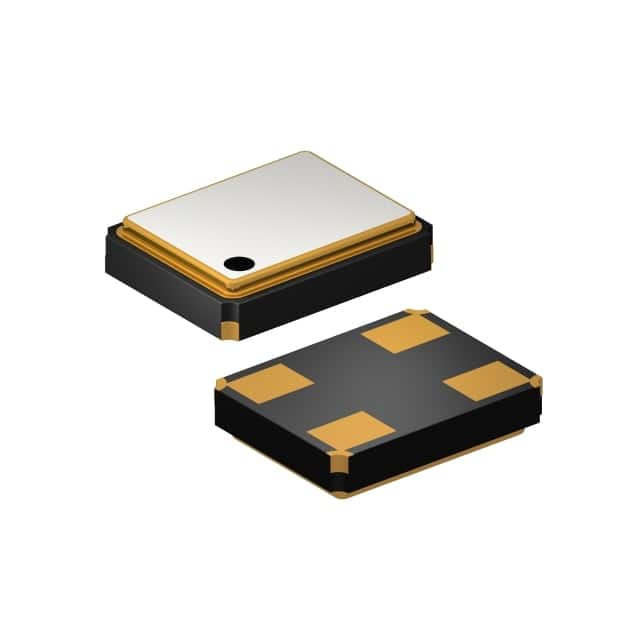
The 18.432 MHz surface-mount crystal—exemplified by Suntsu Electronics' SXT21414BA38-18.432MT in a 2.0 x 1.6 mm package with 14 pF load capacitance—sits at the quiet center of modern electronics. This frequency is not arbitrary: it is a multiple of the 2.048 Mbps and 1.544 Mbps telecom rate hierarchies, and it divides cleanly to generate standard UART baud clocks. That heritage explains its persistence, but the real story is how the part itself has evolved. Recent innovations in quartz processing—photolithographic electrode patterning, tighter angle-of-cut control, and advanced hermetic sealing at the 2016 footprint—have pushed stability into the ±10 to ±30 ppm range while shrinking packages from 3225 down to 2016 and even 1612. Suntsu's offering reflects the industry's shift toward higher-precision plating and improved aging characteristics (often under ±3 ppm/year), which matters as more designs eliminate the trim capacitors that once compensated for looser tolerances.
Demand for this segment is being reshaped by two opposing forces. On one side, the consumer and computing markets continue to consolidate around a handful of reference frequencies, and generic timing sockets are migrating to integrated MEMS oscillators or SoC-internal PLLs. On the other, the 18.432 MHz niche is proving resilient because it serves industrial, telecom, and instrumentation designs with long lifecycles where re-qualification costs outweigh component savings. Market growth in the mid-single digits annually masks a bifurcation: commodity 2016 crystals face price erosion, while tighter-tolerance, extended-temperature variants command stable or rising prices. Distributors should note that the 14 pF load capacitance specification signals a design optimized for low-power MCU oscillators—a growing application class as battery-operated industrial sensors proliferate.
Supply chain dynamics for quartz crystals have stabilized after the 2021–2022 capacity crunch, but structural risks remain. Quartz blank manufacturing is concentrated among a small number of suppliers in Japan, China, and Taiwan, and the blank—not the packaging—is the bottleneck during demand surges. Lead times for standard 2016 crystals have normalized to 8–12 weeks from major manufacturers, though smaller brands like Suntsu can often ship faster from regional stock. Pricing outlook is mildly deflationary for high-volume commodity grades (expect low single-digit annual declines) but firm for automotive-qualified and wide-temperature parts. Currency exposure and energy costs in blank fabrication are the wildcards. Procurement teams should watch for consolidation among second-tier crystal makers, which could reduce the multi-source flexibility that buyers have historically relied on.
Emerging applications are giving this frequency a second life. Industrial IoT gateways, smart metering, and building automation controllers frequently pair 18.432 MHz crystals with sub-GHz radios and low-power MCUs, because the frequency yields clean division to both RF reference and serial clocks. Medical devices—particularly portable diagnostic instruments—favor the 2016 footprint for space-constrained boards. Automotive is the standout: while 18.432 MHz is not a primary automotive clock, it appears in infotainment peripherals and body-control modules, and AEC-Q200-qualified variants are seeing steady design-in activity. Electric-vehicle charging infrastructure and energy storage systems are also generating incremental demand for robust timing components in industrial-grade packages.
The technology roadmap points in three directions. First, further miniaturization: 1612 and 1210 packages are entering volume production, though 2016 will remain the workhorse for cost-sensitive designs for several years. Second, integration: crystal-plus-oscillator modules (XO and VCXO) in the same footprint are gaining traction where designers want to offload oscillator circuitry. Third, MEMS competition: silicon MEMS resonators are improving in stability and temperature performance, but quartz still wins on phase noise and cost at these frequencies, so displacement will be gradual and concentrated in consumer segments. Expect manufacturers to invest in automated blank sorting and AI-driven test to improve yield and consistency.
Regulatory pressure is a steady undercurrent. RoHS and REACH compliance is table stakes; the more consequential development is the EU's evolving scrutiny of PFAS substances, which could affect certain sealing and plating materials in crystal packages. Automotive qualification to AEC-Q200 is increasingly demanded even in industrial contexts, and manufacturers are responding with PPAP documentation and extended reliability testing. Buyers should request material declarations proactively rather than waiting for compliance questionnaires to surface during audits.
For procurement teams, the strategic playbook is clear. Maintain dual sourcing across at least one tier-one manufacturer and an agile specialist like Suntsu to balance price and availability. Lock in annual pricing agreements for industrial and automotive grades, where erosion is minimal, while spot-buying commodity volumes opportunistically. Qualify alternates at the design stage—the 18.432 MHz/14 pF specification is widely cross-referenced, so engineering should approve second sources before shortages force the issue. Finally, monitor quartz blank capacity announcements and PFAS regulatory developments as leading indicators, and treat extended-temperature, AEC-Q200 variants as strategic inventory rather than line items to be minimized.