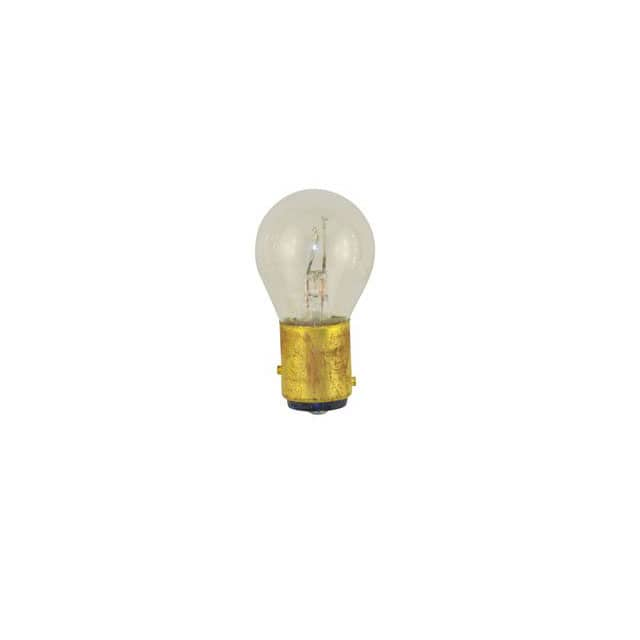
Reliability Guide for MINIATURE LAMP 2.10A/12.8V 1.85 (10PAK:WX-06K8-5)
The Interlight miniature lamp (SKU 10PAK:WX-06K8-5), rated 2.10 A at 12.8 V with a nominal 1.85 characteristic, is a filament-based incandescent source typically used for indication, panel lighting, or legacy equipment replacement. Because filament lamps degrade through evaporation, hot-shock, and mechanical vibration, reliability engineering for this part centers on controlling operating conditions, screening incoming lots, and planning for the part's inherently finite life. The following guide outlines the practices a professional procurement and quality organization should apply.
Reliability standards and qualifications. Incandescent miniature lamps are generally governed by legacy MIL and industry specifications rather than modern semiconductor standards. Relevant references include MIL-L-6363 and MIL-PRF-19500-family lamp specifications for incandescent indicator lamps, ANSI/IES lamp life and photometric measurement practices, and IEC 60068 environmental test methods for vibration, shock, and thermal cycling. Suppliers should provide evidence of design validation to these methods, plus a certificate of conformity and lot traceability. Because this is a branded replacement part rather than an OEM-qualified component, buyers should treat the manufacturer's data sheet ratings as nominal and confirm life and lumen maintenance through incoming lot sampling.
Accelerated life testing. Rated life is normally specified at rated voltage, and filament life falls steeply with overvoltage—roughly the inverse of applied voltage raised to a power between 12 and 16. Accelerated testing therefore applies controlled overvoltage (for example 110–120 percent of rating) and records time-to-failure, then extrapolates back to rated conditions using the established voltage-life exponent. Results should be interpreted as statistical distributions, not single-point values: median life, spread, and early-failure rate all matter. Any lot showing a bimodal failure distribution suggests manufacturing defects such as filament misalignment or poor sealing, and should be quarantined pending further evaluation.
Failure rates and MTBF. For a consumable filament lamp, a constant FIT rate is only meaningful within a defined operating window and burn-in period; the bathtub curve is pronounced. Reliability engineers should compute FIT from observed failures per billion device-hours at rated voltage and rated ambient, and calculate MTBF only for the steady-state portion after infant mortality has been screened out. Note that MTBF for this class of part will be orders of magnitude lower than for solid-state components, and procurement plans should treat the lamp as a scheduled-replacement item rather than a maintenance-free part.
Environmental stress screening and burn-in. A short burn-in at rated voltage—typically 30 minutes to 2 hours—effectively removes infant-mortality failures before installation. Screening may also include a brief thermal cycle between operating extremes and a low-amplitude vibration sweep per IEC 60068-2-6 to expose weak filament supports. Screening should be documented per lot, with rejects analyzed rather than simply discarded, since reject patterns are the best early indicator of supplier process drift.
Counterfeit detection. Counterfeit miniature lamps are common in the replacement market. Detection methods include verifying the Interlight brand marking, base construction, filament centering under magnification, glass envelope clarity and seal quality, and consistent current draw at rated voltage compared with a known-good reference. Packaging, label typography, and SKU formatting should be checked against the authorized distributor's records. Buy only from franchised or authorized channels, and retain lot samples for comparison against future deliveries.
Incoming inspection. Apply ANSI/ASQ Z1.4 sampling with an appropriate AQL, typically 0.65–1.0 for critical characteristics. Inspect for filament position, base solder integrity, envelope cracks, and marking legibility. Perform a 100 percent or sampled electrical check at rated voltage for current draw and light output, and record results by lot. Reject lots with visible seal defects or current deviation beyond roughly five percent of nominal.
Storage and handling. Store in original packaging in a cool, dry environment, typically 5–30 °C and below 60 percent relative humidity, away from vibration and direct sunlight. Avoid handling glass envelopes with bare fingers, which deposits oils that can cause hot-spot failure; use gloves or finger cots. Protect against mechanical shock during transport, and observe shelf-life rotation so that oldest stock is consumed first.
End-of-life and obsolescence. Because this is a legacy-technology replacement part, obsolescence risk is high. Maintain a strategic buffer stock sized to expected annual consumption plus lead-time variance, qualify an alternate source or LED retrofit where the application permits, and track supplier availability notices. Document last-time-buy decisions and retain a small reference lot for future counterfeit comparison and failure analysis.