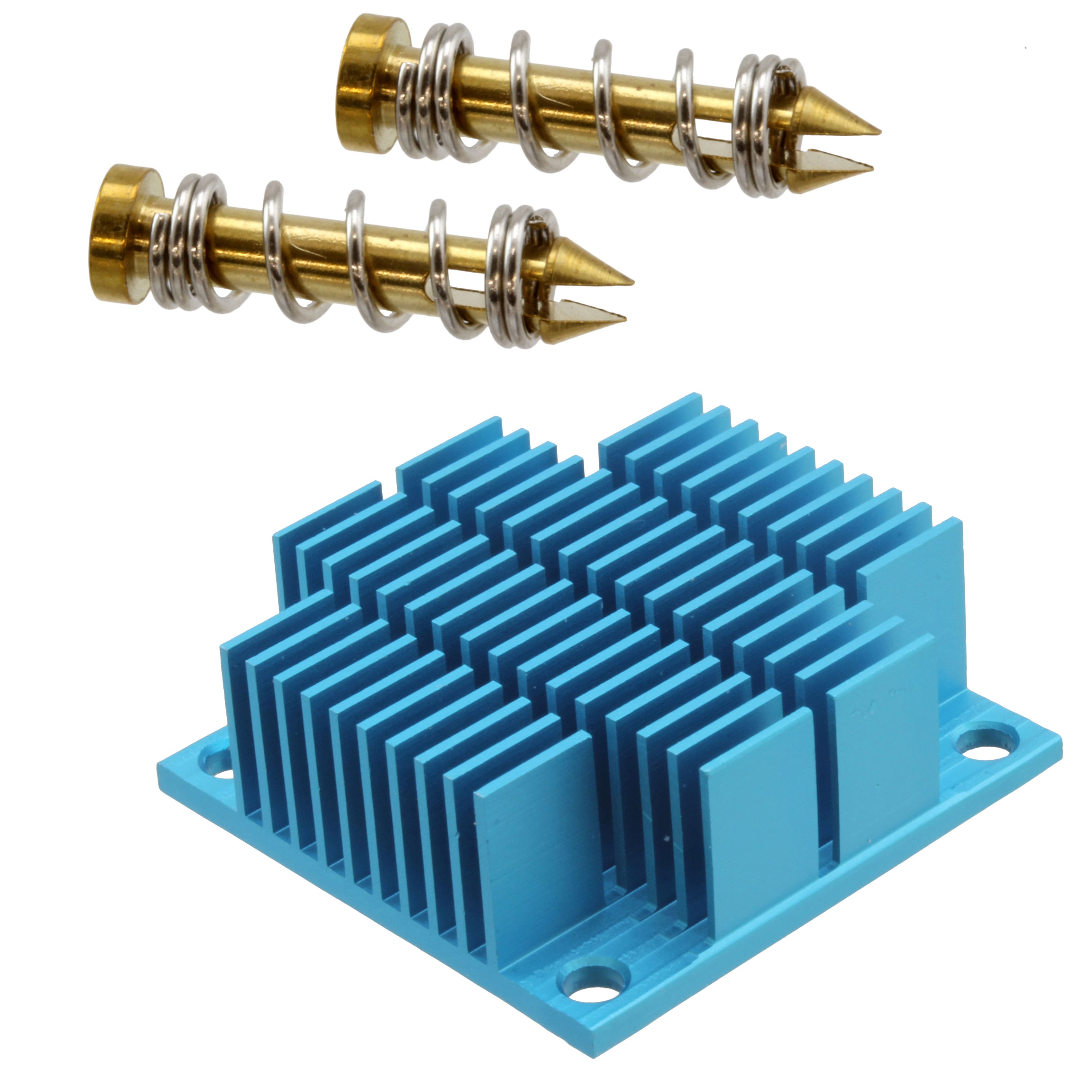
HEATSINK 25X25X15MM R-TAB T766: Industry Insight on Thermal Design
In the crowded field of board-level thermal management, the pushpin-mounted 25x25x15mm heatsink occupies a deceptively important niche. The Advanced Thermal Solutions ATS-15B-166-C2-R0 — a square extruded aluminum heatsink with a reverse tab (R-tab) and pre-applied T766 phase-change interface material — is a useful lens through which to examine where the passive cooling segment is heading. The T766 thermal interface is the quiet innovation here: a phase-change material that behaves like a solid at room temperature for stable handling and assembly, then softens at operating temperature to wet out the die and heatsink base, driving interface resistance down to levels that rival much costlier solutions. Recent generations of extruded profiles have also benefited from tighter fin-pitch tolerances and improved alloy consistency, allowing 25mm-class parts to dissipate meaningfully more power than their footprint would suggest a decade ago.
Demand for compact passive heatsinks is being pulled by several converging trends. Edge computing, industrial IoT gateways, and 5G small-cell radios all pack more processing into sealed or fanless enclosures, where forced-air cooling is impractical and every millimeter of board space is contested. Power densities in DC-DC converters, FPGA mezzanines, and PoE-powered devices continue to climb, while enclosure volumes shrink. The result is steady, broad-based demand for standardized 25mm footprint heatsinks that can be specified quickly and sourced from distribution stock rather than engineered as custom extrusions. The segment is also benefiting from the general shift toward thermal design as a first-order constraint rather than an afterthought — design teams are increasingly specifying thermal interface materials and heatsinks at the schematic stage, which favors catalog parts with documented performance data.
Supply chain dynamics for this category are moderately favorable but not without friction. Aluminum extrusion capacity is widely distributed across North America, Europe, and Asia, and the 25mm profile class is a commodity geometry with multiple qualified sources, which limits single-source risk. However, lead times for finished, interface-material-applied parts run longer than for bare extrusions — typically several weeks versus days — because the T766 lamination and cure steps add process time and because many suppliers build to order in batch quantities. Pricing is tied to aluminum ingot and alloy premiums, which have shown volatility, plus energy costs at extrusion and anodizing facilities. Expect modest upward pressure on unit pricing in the near term, offset by competitive pressure in the catalog heatsink channel. Buyers should also watch interface-material supply, where a small number of formulators dominate and qualification of alternates is slow.
Emerging applications are broadening the demand base. Automotive-adjacent electronics — ADAS sensor modules, in-cabin monitoring cameras, and zone controllers — increasingly use small passive heatsinks in environments where vibration and thermal cycling are severe. Medical point-of-care devices and portable diagnostic instruments need quiet, fanless thermal solutions. And the build-out of AI inference at the edge, from smart cameras to industrial vision systems, is pushing processor TDPs into ranges where a 25x25mm heatsink with a quality phase-change interface becomes the default thermal answer. Each of these verticals brings its own qualification burden, which raises the value of parts with traceable performance data and mature interface materials.
The technology roadmap for this component class points in three directions. First, interface innovation: phase-change and hybrid materials will continue to improve while reducing application complexity, and pre-applied formats like T766 will increasingly displace manual grease application. Second, geometry and materials: expect more use of optimized fin profiles, and gradual adoption of higher-conductivity alloys or composite baseplates in premium variants, though cost keeps standard aluminum dominant. Third, integration: heatsinks are increasingly specified as assemblies with mounting hardware, EMI shielding, or thermal pads pre-attached, shifting value from the extrusion to the finished assembly and rewarding suppliers with strong application engineering.
Regulatory factors are a steady undercurrent. RoHS and REACH compliance is table stakes for this category, and buyers should verify current declarations rather than assume legacy compliance, particularly for interface materials and any plating or anodizing chemistries. For automotive programs, AEC-Q qualification and PPAP documentation become gating requirements, and the number of catalog heatsink suppliers able to support them is smaller than the general market. Conflict-minerals and environmental reporting obligations are also creeping into supplier questionnaires, adding administrative load that favors distributors with mature compliance data management.
For procurement teams, the strategic playbook is clear. Dual-source the extrusion and the interface material separately where possible, and qualify at least one alternate phase-change material before you need it. Hold strategic buffer stock of high-runner catalog parts like the 25mm footprint family, since lead-time variability sits in the finishing steps, not the raw material. Engage suppliers on assembly-level specifications — pre-applied interface, mounting hardware, and documented thermal resistance curves — to reduce total cost of ownership rather than chasing unit price. Finally, build compliance documentation into the sourcing process now, especially if automotive or medical adjacencies are on your roadmap; retrofitting qualification later is far more expensive than specifying it upfront.
HEATSINK 25X25X15MM R-TAB T766
Advanced Thermal Solutions Inc. | ATS-15B-166-C2-R0 | $5.37