DD51 Mechanical Position Indicator CE.84670-4N: Datasheet Guide
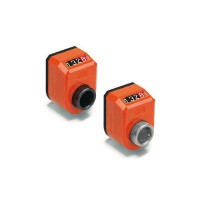
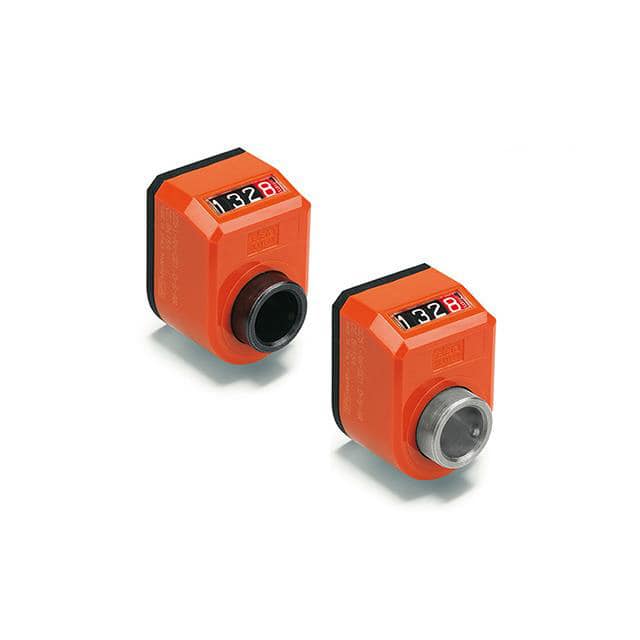
The Elesa USA Corporation DD51 mechanical position indicator, distributed under SKU CE.84670-4N, occupies an unusual niche in the component landscape: it is a purely mechanical position-sensing and display device rather than an electrically active component, yet it is frequently specified alongside electromechanical assemblies where engineers expect a conventional datasheet with voltage, current, and timing parameters. Understanding how to read its documentation requires recalibrating the usual assumptions. The DD51 family consists of direct-drive position indicators with a numerical counter readout, typically used on machine tools, valve actuators, and adjustment spindles to display shaft position. The "4N" suffix in the SKU generally denotes the display configuration and mounting variant, and this identifier must be matched exactly against the manufacturer's ordering table, since Elesa's numbering scheme encodes bore diameter, reading direction, and dial format in ways that are not interchangeable across variants.
Because the device is mechanical, the "electrical specifications" section of the datasheet is largely inapplicable, and engineers migrating from an electronic encoder should note this explicitly. There is no supply voltage, no output signal, and no quiescent current. What the datasheet does specify are mechanical and environmental parameters: the bore diameter for shaft mounting (commonly in the 6–14 mm range depending on variant), the maximum permissible shaft speed, the counter resolution (typically tenths of a revolution or direct numerical readout), the housing material (often technopolymer or die-cast aluminum), and the ingress protection rating. The IP rating is the single most consequential specification for purchasing decisions, since washdown environments demand IP65 or better, while dry machine-shop use may tolerate IP40. Where a datasheet appears to list "electrical" data, it is usually referring to optional integrated potentiometer or proximity-sensor variants, and the buyer must confirm whether the CE.84670-4N configuration includes such options.
Absolute maximum ratings for a mechanical indicator translate into mechanical limits: maximum axial and radial shaft loading, maximum torque at the drive coupling, and maximum rotational speed before the counter mechanism skips or wears prematurely. These are absolute figures with no derating margin implied, and prudent design practice applies a safety factor of at least 1.5 to 2 on torque and speed in continuous operation. Derating considerations center on temperature and contamination: the datasheet's operating temperature range (frequently −20 °C to +80 °C for technopolymer housings) should be derated for continuous operation near the upper limit, since thermal expansion of the counter mechanism can affect readout accuracy. Similarly, exposure to coolant mist or abrasive dust accelerates wear on the number wheels, so the stated IP rating should be treated as a qualification threshold rather than an operating allowance.
There is no typical application circuit in the electronic sense, but the equivalent is the mechanical integration diagram found in the datasheet's installation section. This shows the shaft coupling arrangement, the recommended bore-to-shaft fit (usually a light press or clamping collar), the permissible mounting orientation, and the clearance required for the reset or zeroing mechanism. Engineers should read this diagram as they would a pinout: the drive input, the display face, and the mounting flange each have defined interfaces, and reversing the reading direction requires selecting the correct variant rather than rewiring. The "pin configuration" equivalent is the ordering-code matrix, where each position in the part number maps to a specific mechanical feature; misreading one character yields a physically incompatible unit, and returns are typically not accepted for correctly shipped but incorrectly specified parts.
Thermal management guidance is minimal but not absent. Mechanical indicators generate negligible heat, but they are sensitive to ambient temperature through lubricant viscosity in the counter mechanism and through differential expansion between the housing and the machine shaft. The datasheet may specify a maximum temperature gradient or recommend thermal isolation when mounted on a hot spindle. In practice, mounting the indicator on an insulating bushing or offset bracket protects the technopolymer housing from conducted heat, and this is a common field modification that should be planned at the design stage rather than discovered during commissioning.
Timing diagrams give way to characteristic curves in the mechanical datasheet, typically plots of counter accuracy versus rotational speed, wear life versus load, and sometimes torque versus temperature. These curves are read the same way as semiconductor derating curves: locate the intended operating point, then verify it sits comfortably inside the recommended envelope rather than on the boundary. The speed-accuracy curve is especially important because counter skip at high rpm is a silent failure mode that produces incorrect readings without any alarm. For the CE.84670-4N, purchasers should request the current revision of the Elesa catalog page and confirm the curve applies to the specific display configuration, as counter mechanisms differ between variants. When in doubt, the distributor's application engineering support should confirm the mechanical interface dimensions against the customer's shaft drawing before order placement, since this single verification step prevents the majority of field failures associated with mechanical position indicators.