ST7FLITE02Y0B6 Troubleshooting: Fix 8BIT 1.5KB Flash MCU Issues
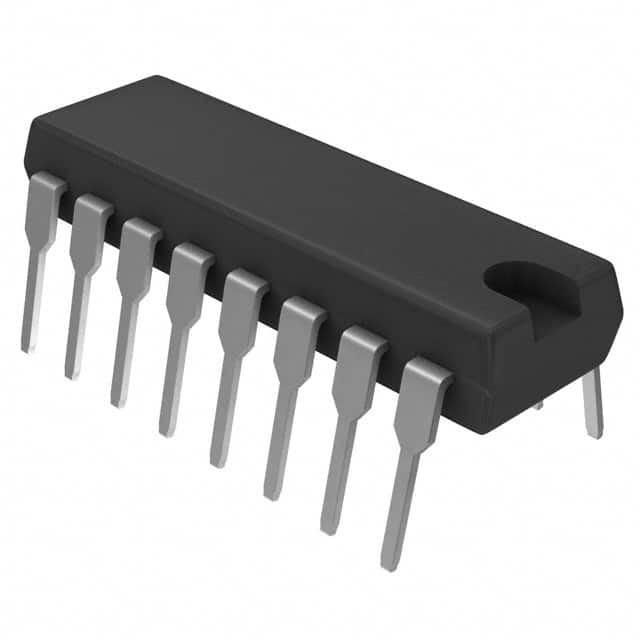
The ST7FLITE02Y0B6 is an 8-bit ST7 FLITE microcontroller in a 16-pin DIP package with 1.5KB of Flash. Its low pin count and DIP form factor make it popular for simple control tasks, but that same simplicity means mistakes in power, reset, clocking, or programming are magnified. This guide covers what I see most often in the field.
Typical failure modes and root causes. The most common symptom is a device that appears dead — no output activity after power-up. Root causes are usually a missing or slow-rising VDD, an unconnected or wrongly pulled RESET pin, or an oscillator that never starts. A second common failure is erratic behavior: outputs toggling randomly or the MCU resetting during motor or relay switching, almost always caused by insufficient decoupling or ground bounce. Third is "works on the bench, fails in the field" — typically a marginal supply voltage, missing watchdog configuration, or Flash corruption from an interrupted programming cycle. Finally, some units simply arrive dead or fail programming, which raises the authenticity question below.
Step-by-step debugging methodology. Start with power: measure VDD at the pins, not at the regulator. Confirm it is within the ST7FLITE02's specified range and check ripple with a scope. Next verify RESET is high in normal operation and that the internal or external reset circuitry is doing its job. Then confirm the clock — probe the oscillator pins or check for activity on any clock output. Only after power, reset, and clock are confirmed should you attach the programmer and attempt to read or verify the Flash. If programming fails, check the programming interface wiring and supply levels before blaming the chip. Finally, load a minimal known-good blink program to isolate firmware from hardware.
Common schematic and layout mistakes. I regularly see the decoupling capacitor placed far from the VDD pin, or omitted entirely on the assumption that "it's just a small MCU." Place a 100nF ceramic within a few millimeters of VDD and GND. The RESET pin is frequently left floating or tied through an oversized resistor, causing spurious resets; use the recommended pull-up and capacitor network. Watch for oscillator load capacitors being the wrong value or missing, which prevents startup. On the PCB, running high-current traces under the MCU or sharing an analog ground return with switching loads causes the erratic-reset behavior mentioned above. Keep the crystal loop short and do not route signals under it.
Verifying authenticity and quality. Counterfeit or re-marked parts do appear in this package. Check the date and lot code laser marking for consistency with the packaging, and compare the marking style against known-good ST samples. Measure quiescent current — a genuine part in reset draws within the datasheet range; a re-marked die often does not. Attempt to read the device signature and Flash size with the programmer; a mismatched ID is a red flag. Also inspect lead finish and pin alignment, and buy from authorized distributors whenever possible.
Measurement techniques and equipment. Use a digital multimeter for static voltages and continuity, but rely on an oscilloscope for anything dynamic — reset glitches, supply dips during load switching, and oscillator startup are invisible to a DMM. A current probe or a sense resistor with a scope helps catch brief current spikes. For programming issues, the ST7 programmer's own error codes are your first diagnostic. A logic analyzer is useful when verifying that the MCU is actually executing and driving its pins as expected.
When to suspect the component versus the circuit. Suspect the circuit first if the failure correlates with load switching, temperature, or supply variation. Suspect the component if multiple boards from the same lot fail identically, if the part cannot be read or programmed at all, or if a known-good replacement behaves correctly in the same socket. A simple swap test with a verified genuine part settles many arguments quickly.
Real-world cases. One customer reported random resets on a relay-driven board; the scope showed a 1.2V supply dip when the relay coil energized, fixed by adding bulk capacitance and a flyback diode. Another had boards that programmed once and never again — the RESET pin was tied directly to VDD with no pull-up, and the programmer could not drive it low; adding the proper reset network solved it. A third returned "dead" units from a gray-market supplier; signature reads failed and quiescent current was double spec — the parts were re-marked. And one classic: a design that worked at room temperature failed in the cold because the oscillator load capacitors were too large, preventing startup. In each case, systematic power-reset-clock verification found the root cause before the MCU was ever blamed.